
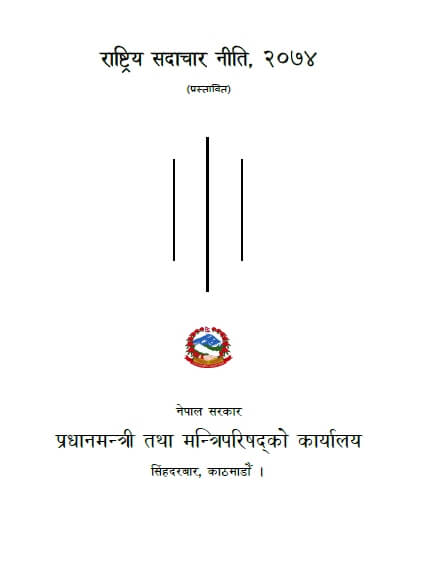
Several things come into play with the Nepal government’s new National Integrity Policy that wants to tighten control over the activities of international NGOs and donor governments. Most of them relate to the country’s sense of integrity and sovereignty.
It is quite normal for a government to monitor and control the flow of non-corporate funds coming into one’s country. There are mechanisms already in place in Nepal to ensure that aid organisations and special interest groups can channel funds to government, institutions, non-government organisations and projects in Nepal.
The bureaucracy involved for approval varies depending on project parameters. On a global scale, Nepal is considered fairly liberal in this sense, and there is a long history of foreign support for aid and infrastructure projects.
Governments in the past have also been more tolerant than most in giving free rein to outside agencies to help with infrastructure, development, and even constitution-writing, transitional justice and human rights.
Of late, such aid projects have also included extreme evangelical Christian missionaries that are seen as undermining local culture and religion and upsetting the old order. The claim is that money buys souls. Perhaps worse for the government is that money also buys politics, and with a quasi-communist coalition as the leading power, this is not appreciated.
Two emerging global powers are Nepal’s immediate neighbours: China and India which are vying for a foothold enabling them to adjust Nepal’s internal and external politics to suit their interests. Neither country is tolerant of foreigners, and have strict controls on the activities of non-governmental players and outside agencies.