In 2020, the city of Mumbai joined the C40 Cities Network, a collective of 97 cities around the world taking climate action at the sub-national level. Subsequently, the city launched the Mumbai Climate Action Plan in 2022, becoming India’s first climate action plan to set net-zero targets for 2050.
Conversation on international climate policy is often dominated by federal policies and international negotiations with representations most often from national governments. Yet, cities play a critical role to reach the Paris Agreement targets.
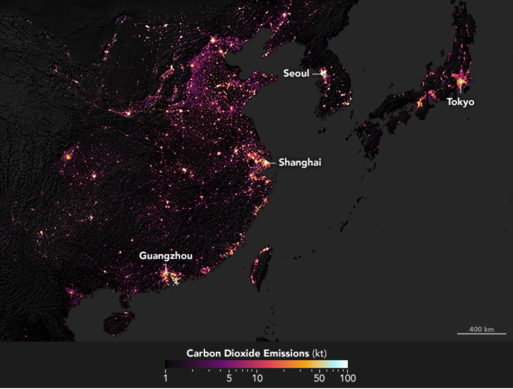
More than half of the world's population, or around 4.4 billion inhabitants, currently live in cities, and this trend is only expected to continue moving forward. By 2050, cities will be home to more than 70% of the world´s population and the majority of its industry. Although cities make up only 2% of our world, they consume the majority of global energy and produce approximately 60% of global greenhouse gas emissions, primarily through the transport and building sectors.
Increasing urbanisation strains infrastructure and services, and eventually impacts sustainability and people´s livelihood. With most of the absolute growth in population taking place in Asia, urban low-lying coastal areas are particularly vulnerable to the effects of climate change. Rising temperatures, sea level rise, and extreme weather events like floods or droughts disrupt the complex infrastructures of cities. High levels of air pollution and waste management burden the livelihood of millions of urban dwellers and exacerbate their existing vulnerability to climate impacts.
Cities are where most people live and work, where they host businesses and industries and have the best ground-level understanding of the need to balance development and urbanisation hand in hand with tackling climate change. This means cities can also be and need to be, a part of the solution. With cities being policy laboratories and incubators for climate actions, it is vital to change the way cities function while nurturing the narrative that cities can take the initiative to tackle climate change. The decisions cities take to combat climate change today will shape the future.
Kruti Munot, Project Manager at GIZ in Brussels who works with city governments on climate action says, “Cities play a key role in tackling climate change, and there is a continuous need to integrate climate into city planning, scale climate finance for urban infrastructure, and build capacities for local-level leadership to meet the Paris Agreement targets.”
While the conversation around city-level action on climate change may not yet be mainstreamed, it is happening with efforts undergoing at various levels. According to the Global Covenant of Mayors, there are more than 12,700 cities committed to reducing emissions by 2050, and both the G7 and G20 now have specific high-level meetings on urban topics.
The Mumbai climate action plan, for example, envisions a climate-resilient Mumbai by 2050 with a focus on mitigation and adaptation strategies in sustainable waste management, urban greening and biodiversity, urban flooding and water resource management, energy and buildings, air quality, and sustainable mobility.
Mumbai is one of eight South Asian cities that are part of C40 Cities, a global collaboration platform of about 100 mayors from the world´s leading cities, committed collectively to city-level climate actions. Mayors of C40 Cities use a collaborative approach to cut their cities’ emissions in half by 2030, share best practices and facilitate access to finance to improve urban resilience and foster green jobs in cities.

A traveler visiting Portugal´s C40 Cities member Lisbon might nowadays enjoy an unusual sight during their stopover: Flocks of sheep graze on the city´s meadows. Lisbon faced diverse environmental challenges ranging from droughts to flooding and extreme urban heat and water scarcity. In 2019 the city rolled out a project called life lungs, a city-level climate initiative that aims to make Lisbon greener and “cooler” by accelerating three simple tools: trees and biodiverse meadows, a water management system, and flocks of sheep.
While a water management plan balances Lisbon´s heavy precipitation and water scarcity, biodiverse meadows and trees were planted to provide more green urban space, shade, and overall combat urban heat islands within the city. On these, meadows flocks of sheep are used as a traditional method to control vegetation and help with soil conservation.
Cape Town in South Africa tries to connect the dots between city-level climate action, a circular economy, and private-sector engagement. The city runs a local initiative that supports the private sector in identifying and classifying its waste before trying to find ways to reuse it. The initiative has already diverted 100,000 tonnes of waste from landfills while avoiding more than 300,000 tonnes of greenhouse gas emissions.
Nur Sultan in Kazakhstan counts on its fleet of electric busses while Peshawar in Pakistan has added a 26km bus corridor with park-and-ride facilities, green areas, and bicycle lanes to ease traffic and congestion. Car-free Sundays are another example of city-level climate action all around the world. Jarkata designates every Sunday in one area to be car-free, while Kigali´s car-free day twice a month is part of its efforts to make Kigali a greener city. Initiatives to tackle climate change at the sub-national level are not new and there are many more examples, including from developing Asia, that can be utilised as part of a coherent and inclusive city-level climate action plan and strategy.
Alongside the focus on reducing emissions by decarbonising the energy sector, advancing waste management, and promoting low-carbon transportation solutions, it is equally important to ensure such action plans incorporate climate resilience and support both climate adaptation as well as loss and damage.
Global collaborations play an important role in transferring knowledge, and success stories on climate action to build urban resilience through a global network. Platforms such as C40 cities, city-level disclosures through the Climate Disclosure Project, and the Global Covenant of Mayors for Climate and Energy are important to set up frameworks for cities to follow and facilitate city exchanges.
This conversation is particularly important for Nepal as it has ambitious climate policies such as the nationally determined contribution (NDC) to the Paris Agreement and the long-term strategy for net-zero emissions by 2045. At the same time, Nepal also recognises the importance of local governments to integrate disaster risk management and climate actions, including both climate adaptation and mitigation, under the Local Disaster and Climate Resilient Planning (LDCRP) framework.