
While Nepal’s calendar enters the eighties on Saturday 13 April, this is a good time to pause and think about what might lie ahead for Nepal and the world in Gregorian year 2081.
The world is too late to limit the global average temperature to 1.5°C. By 2081, ocean expansion and heat stress will lead to mass migration to higher latitudes and altitudes. Multi-disasters, conflicts and food shortages will stalk the planet.
At the present rate of birth rate declines, China’s population will have shrunk to 850 million. By 2081, there will only be half as many Koreans as there are today. Nepal’s population pyramid will have inverted by then, and total inhabitants will decline to 22 million.
The outmigration of Nepalis from the mountains to the plains will likely start reversing in the next few decades. The Gulf states will be too hot to work in. Half the remaining Himalayan glaciers will have melted off, reducing the dry season flow of our rivers.
These are changes we know are coming, so we might as well prepare for them. Alas, the world is still in business as usual mode. Most politicians do not recognise the urgency of the crisis, and are haggling over who gets to sit in the best chair on the tilting deck of the Titanic.
Read also: Year of reckoning, Editorial
India, China, US
Meanwhile, 2081 BS will see elections in the two biggest democracies, India and the United States, that will have a bearing on the region and the world. Proximity means Nepal will be impacted more immediately by the outcome in India, where a third term as Prime Minister for Narendra Modi seems to be a foregone conclusion in marathon elections from 19 April to 1 June.
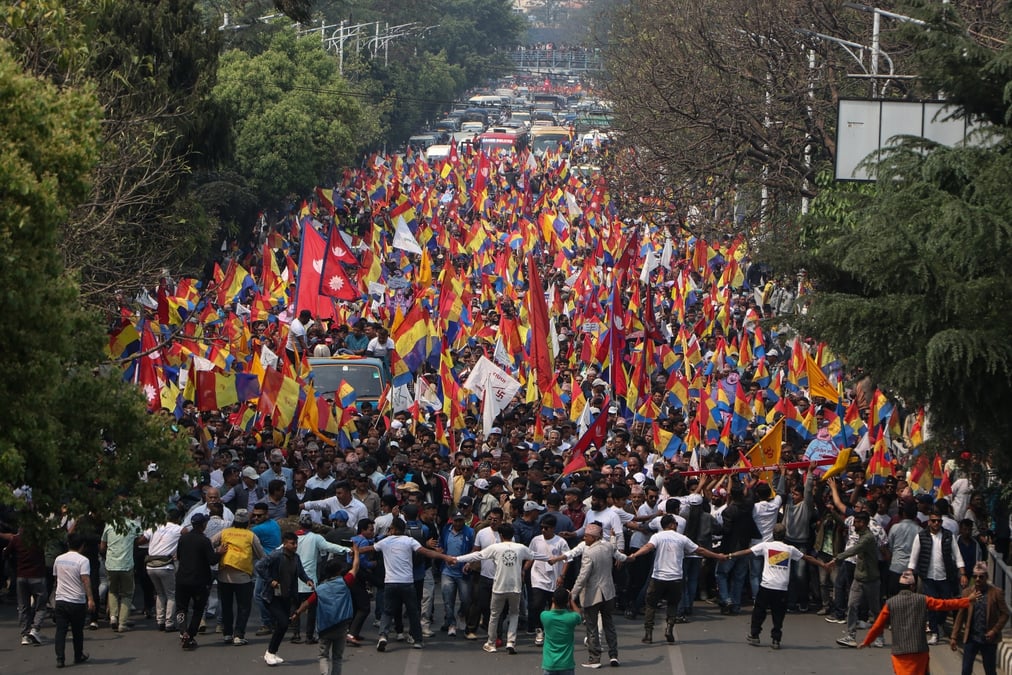
Nepal is already feeling the spillover of India’s election fever as shown by Hindu-Muslim riots in Sunsari last week, and the anti-secular pro-monarchist rally in Kathmandu on Tuesday.
Under the Hindu-supremacist BJP since 2014, India has slid into dangerous authoritarianism, intolerance and systematic persecution of minorities. There is now not even a modicum of decency as opposition leaders are thrown into jail on trumped up charges, and their vilification amplified by a pliant mass media.
The West looks away as the BJP tightens control and squelches the media and democratic values, since India’s 8% growth is important for trade. New Delhi is even excused for breaking sanctions against Russia. India’s economic engine will pull Nepal along, but its politics could tear the intricate ethnic fabric of our society.