
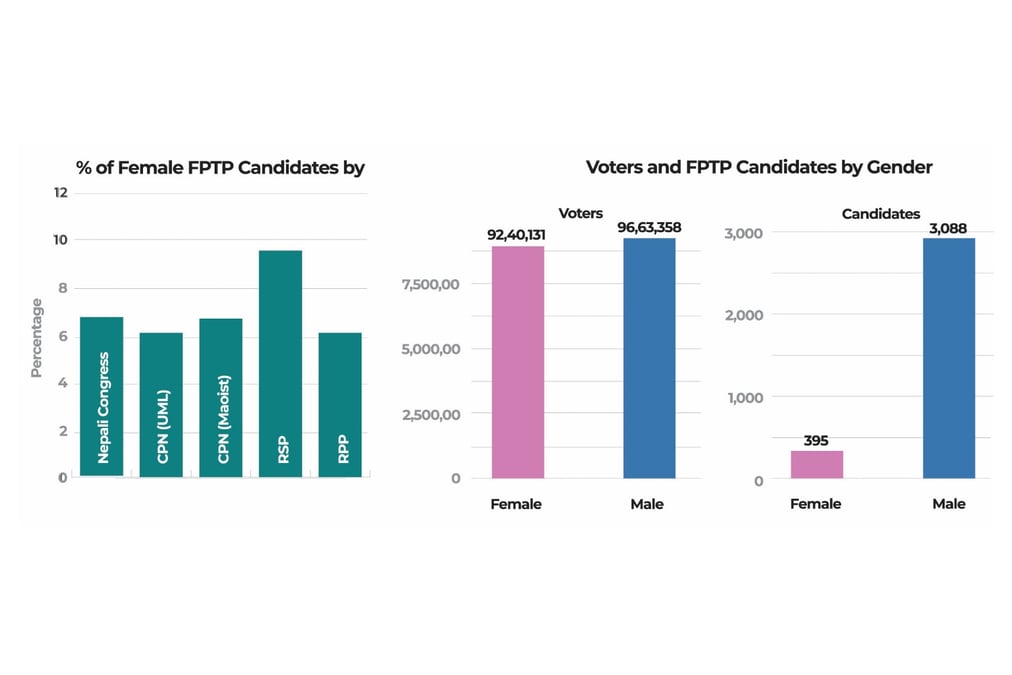
Of the total 18,903,689 registered voters for Nepal’s 5 March election, nearly half are women. But around 10% of the 3,484 first-past-the-post (FPTP) candidates are female.
RSP, the party that claims to represent the voice of the September protests, has the highest percentage of direct women candidates at 9%. All the other legacy parties, including UML, NC, NCP and RPP fielded just 6% female direct candidates.
The Constitution requires 33% seats in Parliament for women, but the Election Commission has not enforced it. Political parties try to fulfil the quota through Proportional Representation (PR), but even that does not make up one-third of the candidates.
Parties allocate women in constituencies where they are sure to lose, and ironically this means women candidates from the PR list have a better chance of becoming lawmakers than those contesting direct elections.
“Most women candidates are given tickets where stronger male candidates from established parties are contesting, ensuring their loss,” explains Babita Basnet of Media Advocacy Nepal that works on improving gender representation.
The PR list was supposed to safeguard the representation of marginalised and excluded groups, but many women PR candidates are celebrities, businesswomen — defeating the whole purpose of such affirmative action.
Many parties have included relatives and cronies in the lists which means that in the grand scheme of things, women get a consolation prize at best.
Figures for women representation are slightly better at the local levels. They made up 40.95% of all elected representatives in local elections in 2017 and 41.21% in 2022 because the Local Level Electoral Act 2017 had made it mandatory for women to either be vice mayor or mayor, and ward member. Still, it did not meet the target of 50% female representation.
In both previous elections, nearly all parties fielded women only as vice mayors. Which meant that there were only seven women mayors elected in 2017, and 13 in 2022 — out of 293 metros and municipalities. The numbers were similar for female rural municipality chairs.
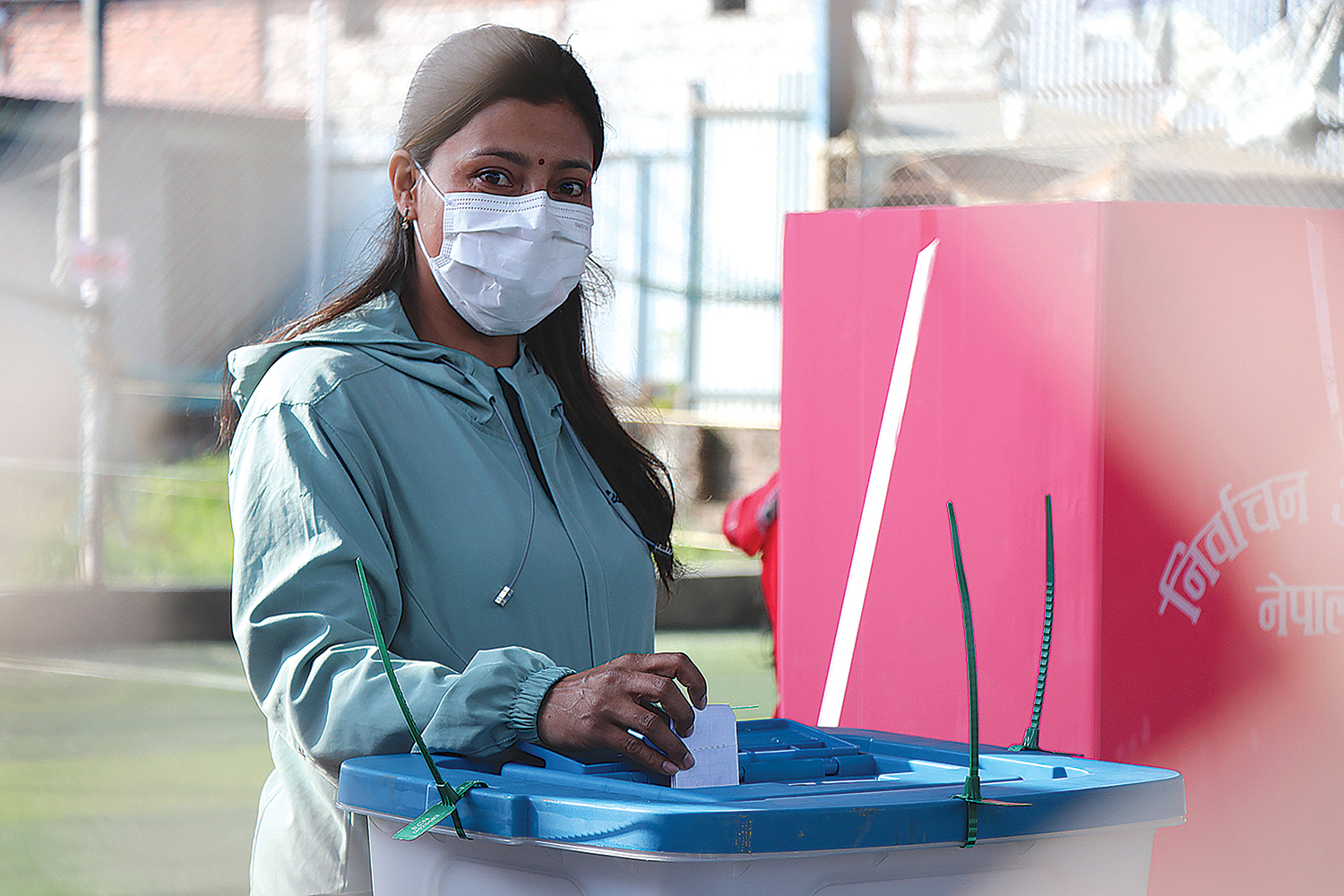
Says rights activist Stella Tamang: “Women need to become leaders not only for their community, but for the country as a whole. But most women candidates are made to believe that they are not capable enough to stand for the elections.”
The reason for this engrained patriarchy is the belief among the leadership of parties that women candidates do not have voter support, the stamina to deal with intimidation, and that they lack campaign financing capacity.
The election commission caps campaign spending at Rs200,000 for PR candidates and Rs2.5 million for FPTP. This rule is widely flouted, but most women candidates cannot even raise that much, and parties choose men who can finance their own campaigns.
This has meant that the NC saw only one woman win in 2022: Sita Gurung from Tehrathum. But the NC under its new leadership has elected Pushpa Bhusal as party vice-president, the second woman after Shailaja Acharya 25 years ago to make it to that position.
FIGHTING WOMEN
During the conflict, one-third of Maoist guerrillas were women and fought against patriarchy and for empowerment. But the NCP’s women representation in the coming elections is only 6%. The two women in direct elections are the daughter and daughter-in-law of party chair Pushpa Kamal Dahal.
Former Maoist leader Hisila Yami acknowledges this, and adds: “We share a similar political system to India, so we may need to follow its footsteps in implementing electoral provisions related to gender.”
Even in constituencies where there are women candidates in direct ballots, they are pitted against each other. The NCP’s Renu Dahal is up against Shobita Gautam of RSP in Chitwan-3, and the NC’s Sarita Prasai is battling RSP’s Indira Ranamagar in Jhapa-2.
Nepal’s election will be a referendum
No clear winner projected as personalities dominate politics in a clash between old and new
In his campaign speech in Janakpur, RSP prime ministerial candidate Balen Shah asked people to vote not because of creed or party loyalty, but for the right people in the right places.
The former Kathmandu mayor is contesting from Jhapa-5 which has been former prime minister K P Oli’s stronghold for decades, and creating a frenzy wherever he campaigns. Just like RSP chair Rabi Lamichhane in 2022, Balen Shah is the protest candidate against the establishment.
Jhapa-5 is being keenly watched because in this early election triggered by the GenZ protests, it is seen as a referendum between the old and new, and a chance for a generational transformation in Nepal’s politics. What has thrown a small pall over the RSP, however, was the acquittal by Attorney General Sabita Bhandari this week of Lamichanne and his at-large co-accused in the cooperatives scam. The party’s support was also jolted by a PR list populated by celebrities and businessmen.
Shah’s strategy in contesting from Jhapa rather than his Kathmandu base is a direct message that he is now a politician of national stature. As first choice for prime minister for GenZ activists, he represents their aspirations. But it remains to be seen how much of his vast social media support will translate into physical ballots in March.
In an interview with AFP this week Shah said: ‘This should not be perceived as an egoistic decision. The ripple effect would simply be greater if I contest from Jhapa … [it] signals that I am not taking the easy way out.’
Unlike previous polls, this time there are no announced electoral alliances, and this means no party is a clear projected winner. Most of the electoral races are between heavyweight politicians with no clear ideological differences.
RIPPLE EFFECT
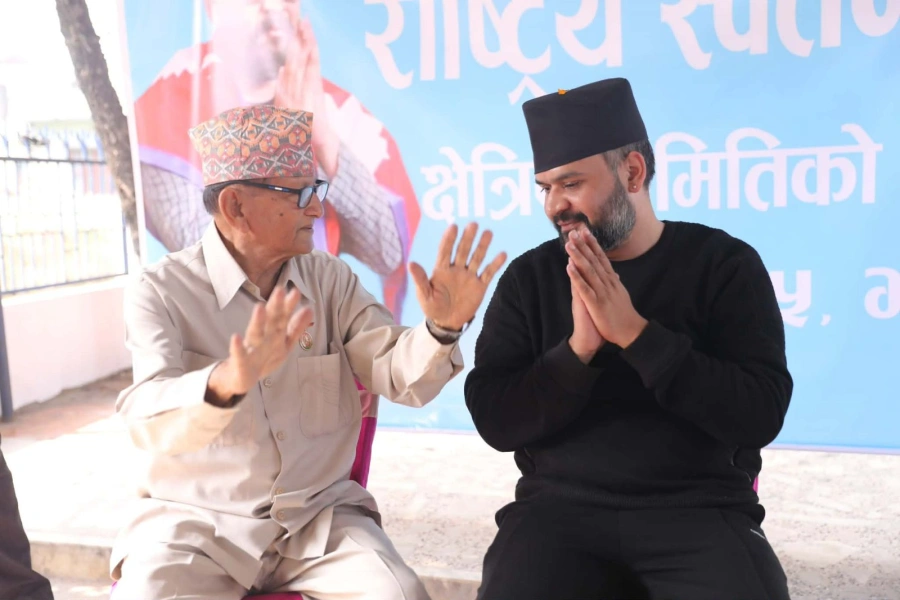
The biggest impact of the September protests is seen in the NC which nearly split and elected Gagan Thapa as its new president — a clear departure from his predecessor Sher Bahadur Deuba who has been prime minister five times since 1995. The NC’s electoral tickets have also gone to new faces.
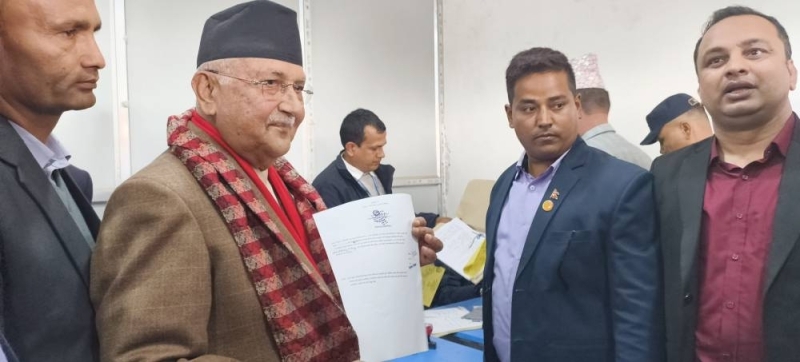
The UML’s K P Oli was prime minister during the GenZ-led protests that ousted his coalition. He has been the most resistant to change and has kept his tight grip on the party. He has sidelined dissidents in ticket allocation, but has fielded new younger candidates.
However, only 16.73% of candidates fall in the 24-35 age bracket, while nearly half are between 35-50. One third of candidates are still between 51-65 and there are a handful above 65.
There are 3,484 candidates contesting in 165 constituencies, and 68 political parties are participating while 1,187 are independent candidates. Only 11.34% of candidates are women.
As elsewhere in the world, politicians have overshadowed politics and ideology. March promises to be a clash of personalities in which age and populist novelty will be determinant.
“There is a culture of male-dominated populism, and unless representation of women is increased in the party hierarchies, gender will take a back seat,” says Hisila Yami. “There is a failure of progressivism and a rightwing drift across the world.”
PM Karki’s interim government is called ‘Ama Sarkar’, and there was hope that her leadership as a motherly figure would bring change. But five of her ministers who rode GenZ support to Cabinet positions have resigned to join various parties — mostly the RSP.
Concludes Babita Basnet, “Many young girls and women today can dream of a better tomorrow and a future in politics. Prime Minister Sushila Karki has made that symbolically possible, but that ethos of inclusion has to be espoused by the political parties.”