
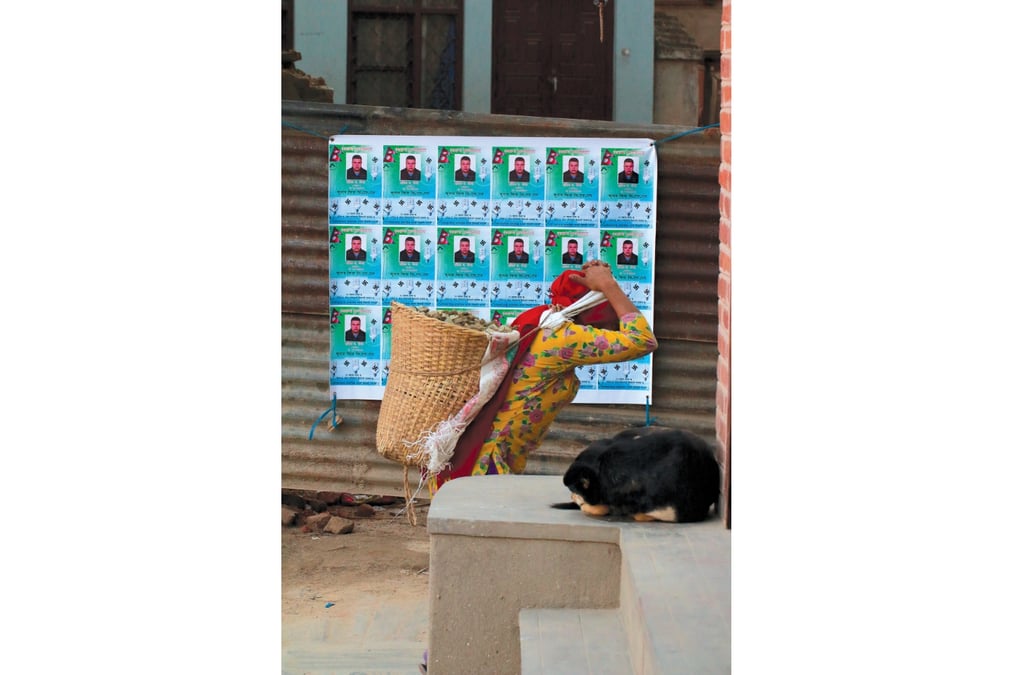
Of the nearly 19 million eligible voters in next week’s election in Nepal, an estimated 5 million are abroad and cannot cast their ballots. Many others within Nepal must travel to their home districts, and might decide not to because of the cost.
Flights into Kathmandu these days are full of global Nepalis returning just to vote, but almost as many are leaving for overseas jobs. Most of those coming or going are in the 20-40 age group, and a majority want Nepal to see a change in leadership.
Bangladesh held an election this month in which citizens overseas could vote by mail.
“Bangladesh made maximum use of technology not just for campaigning but also for polling itself. We could have also managed this, so people within Nepal did not have to travel to their home districts to vote,” says Mohna Ansari, former head of Nepal’s National Human Rights Commission who was an election observer in Bangladesh.
A 3-day holiday has been declared so people can travel to their home constituencies to cast ballots. Even if there was not enough time to manage ballots for overseas Nepalis, it could have been done for Nepalis within Nepal.
Former Chief Election Commissioner Bhojraj Pokharel reckons that physical voting in countries with a large Nepali diaspora would have been a logistical nightmare, but in the PR system, using electronic voting machines or paper ballot could have been piloted in some places. It is not possible to manage the entire voting process until we introduce the internet voting system.
“First of all, there needs to be political will to bring the policy and be ready to undertake that level of investment and it is not a one-time cost,” Pokharel says. “A government formed by the GenZ could have atr least issed an ordinance ensuring this right, piloted out-of-country voting where possible, which could have built pressure for the future Parliament and the government. It would have given people hope. It is a lost opportunity.”
All major political parties called for voting rights for global Nepalis in their manifestos, but these very leaders blocked legislation allowing it despite a 2017 Supreme Court ruling out of fear that it would be anti-incumbent.
Why so late?
Bangladesh delivered election results in just one day, but the final results of Nepal's last local polls in 2022 including that of Kathmandu constituencies took nearly a month.
Acting Chief Election Commissioner Ram Prasad Bhandari said this week that the results of the First-Past-The-Post (FPTP) ballot counting would “likely” be published within 24 hours of the poll closing at 5PM on 5 March. But many are skeptical.
“I wonder if we lack the capacity or know-how to announce results as quickly as possible,” says Mohna Ansari.
Former Chief Election Commissioner Pokharel says manual ballot paper counting in Nepal is inherently slow because of the large numner of political parties and/or candidates on the ballot, the counting mechanism, the political behaviour of the candidates/parties and some managerial issues during counting.
“Our present policy is to count all the ballot papers at the returning officers' officies, located at the district headquarters. It requires collecting ballot boxes safetly first. This takes time, and there have been cases of ballot boxes being damaged or stolen during transport. In a few highly difficult, geographically remote polling centres, we use a helicopter or transport. But sometimes, accommodating the party and candidates' representatives remains challenging,” explains Pokharel. A solution could be counting ballots at the very booths where they are cast.
Another reason for the delay is simply the number of political parties, and the need for each ballot paper to be examined by booth representatives for consensus. In close races, the smallest difference can lead to tense situations, further delaying results, even though counting centres are protected by metal fencing so there is no disruption.
After this, then it is the turn of Proportional Representation (PR) ballots to be counted. Weeks pass by the time the results of candidates and parties are tallied and verified. But the most common delay is because election officers think ballot counting is a nine-to-five job.
“The efficiency of poll station officers is most important, and they are incentivised for this,” says Ansari, adding that counting can even start within an hour after voting closes.
In remote areas, local resources could be mobilised to make counting quicker, but there is a crisis of trust, adds Ansari.
That could be easily solved with electronic voting which the EC implemented in the 2008 polls but discontinued because political parties felt the machines could be hacked or manipulated.