
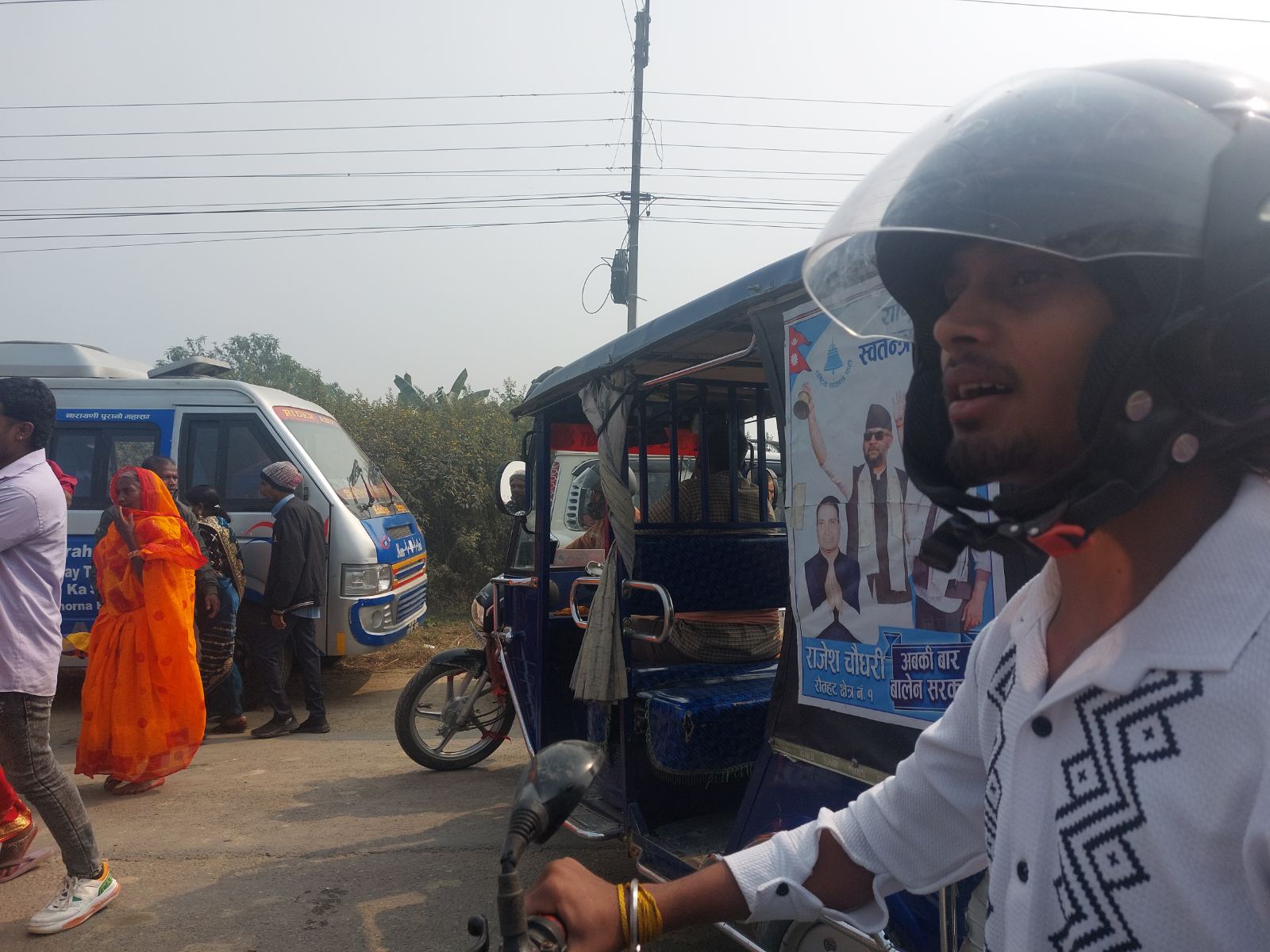
Party flags and banners wave from electric poles, houses and e-rickshaws are festooned with posters. Madhes Province is in the grip of election fever, and in a tour through four of its districts, there is the sense that any efforts by mainstream political parties at reforms have come too little too late.
Among the banners, the sky blue of the RSP is more prominent here this time, and the rallying cry across the country for new and improved leadership is echoed on the ground.
“For the people around here, whatever these old leaders are saying has become just noise,” says a lassi shop operator in Janakpur, waving a dismissive hand at flags with the NC’s tree symbol across the street.
In Janakpur, UML nominee Raghubir Mahaseth was barred from canvassing door-to-door. Campaign posters of the mainstream parties have been torn from walls and replaced with RSP posters.
In Inarwari village of Rautahat in the Madhes heartland, local elected officials whose parties have been merged into the Nepali Communist Party hope to retain enough supporters this election. But not many residents say they would vote for its candidate.
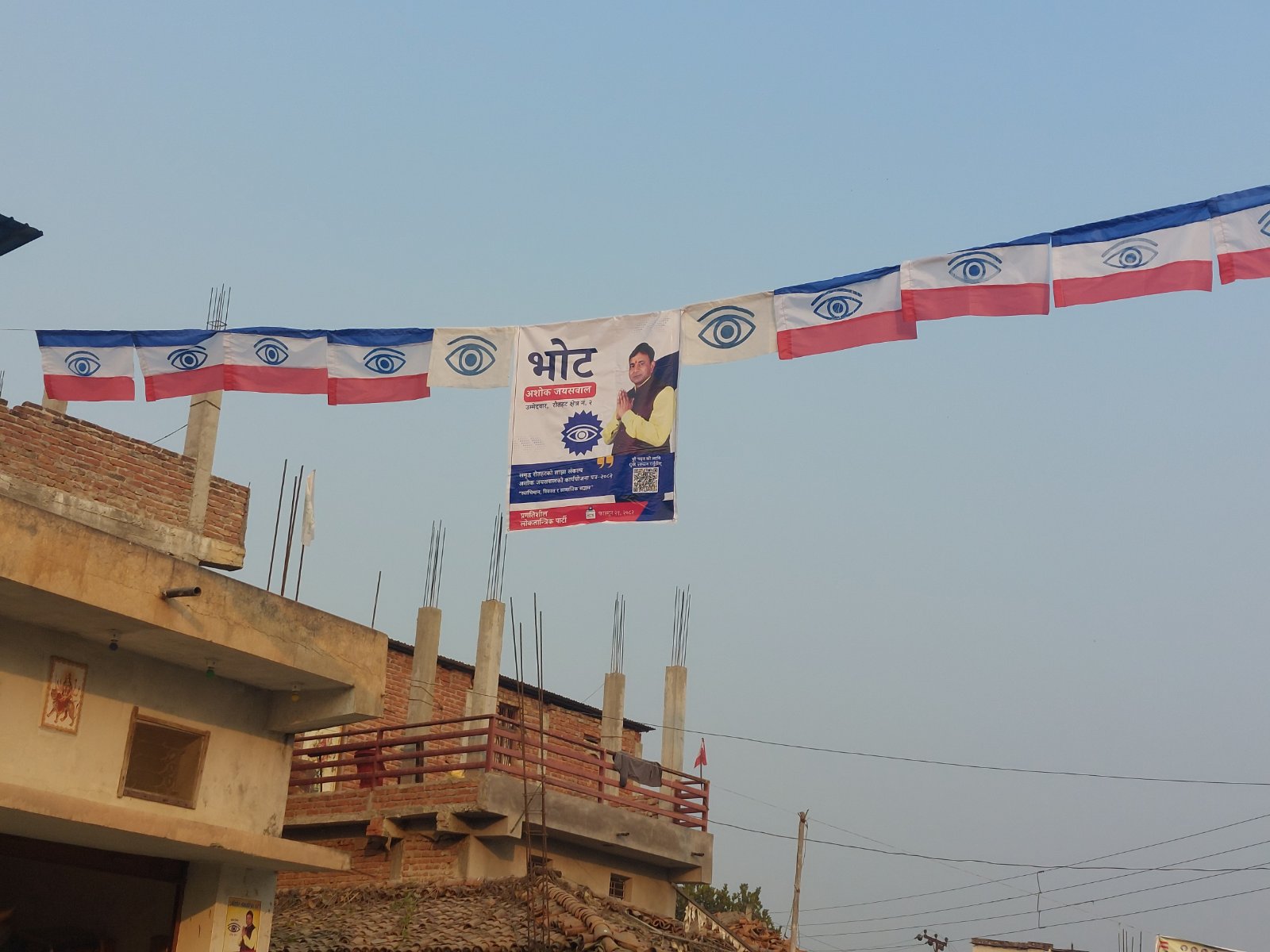
A first-time voter in Sarlahi’s Haripur is home on a semester break from medical school in Kathmandu, and is waiting excitedly for 5 March. “You can’t really say out loud whom you’re voting for around here,” he says, as he mimes ringing a bell. “It is time for someone new to be in-charge."
In the highway town of Bardibas, an elderly teashop owner says that all she hears are calls for घण्टी, the RSP’s bell symbol. “After all, bells are rung in the house of gods,” she says. “It seems like the right choice.”
The RSP wave sweeping the nation after the GenZ movement is seen in Madhes, and the PR ballots might reflect that, notes political analyst Tula Narayan Shah.
“But the socio-cultural networks, organisational setup, and legacy of democratic movement of traditional parties might still give them a fighting chance on the first past the post ballot,” he says. “The door-to-door campaign style of candidates has always been more prominent in Madhes than elsewhere.”
Villages like Dhankaul in Sarlahi-4 where Gagan Thapa of the Nepali Congress (NC) is running against incumbent Amresh Singh, is an NC stronghold. Singh won the election here twice before in 2013 and 2017 when he was an NC leader, and still had goodwill among NC voters when he ran and won as an independent during the 2022 election.
“I voted for him twice before when he was in the NC, but he did not do anything for this or other villages. Once he is elected, he has not set foot here,” says Rajiv Yadav, a voter in Dhanakul. “The RSP will get more votes here than last time, but Gagan is sure to win. This village will vote for him.”
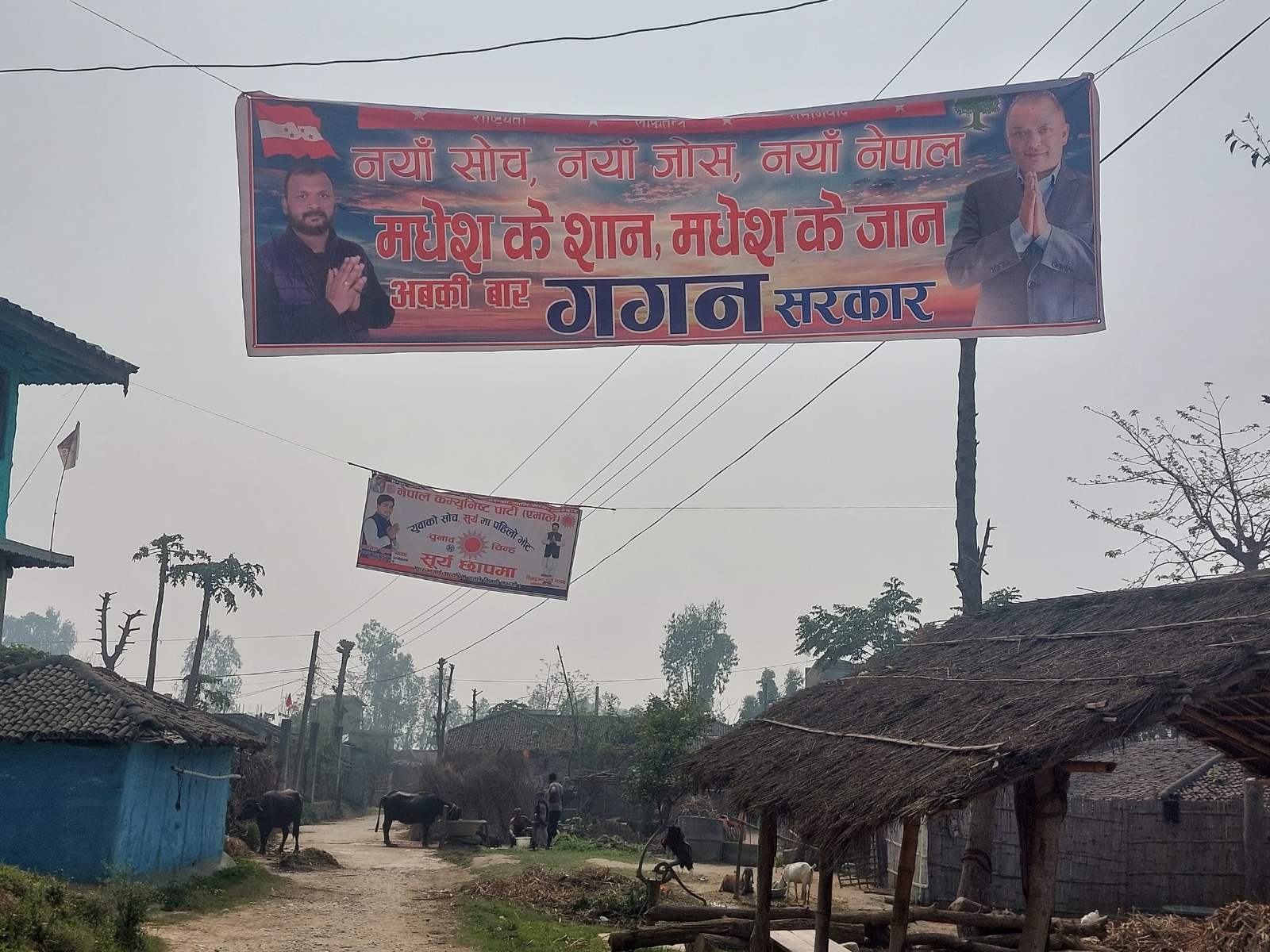
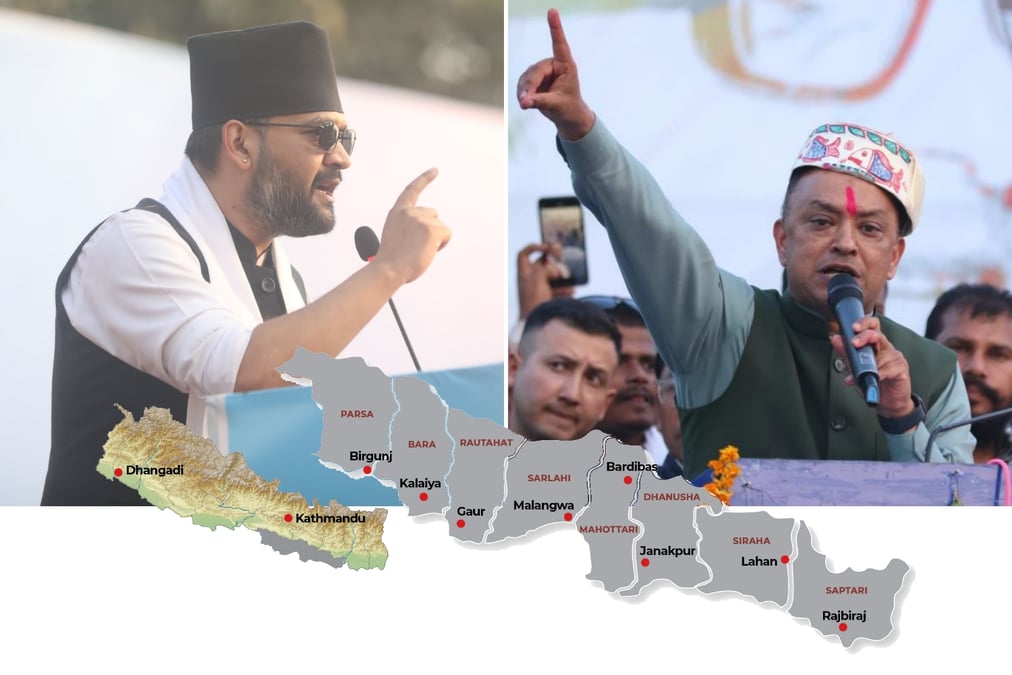
Madhes is in the spotlight this election because two prime ministerial candidates have focused their attention in the region. Balen Shah began his campaign in Janakpur (main picture, left) in January as a ‘Son of Madhes’, and Gagan Thapa chose Sarlahi-4 as his constituency over Kathmandu-4, from where he has been elected since 2013.
The Madhes has always been the battleground for Nepal’s electoral politics, and candidates from here, like Krishna Prasad Bhattarai from Parsa, Pushpa Kamal Dahal from Siraha, Jhala Nath Khanal from Sarlahi, and Madhav Kumar Nepal from Rautahat, have all been prime ministers.
Despite electing politicians to high office in Kathmandu, districts of Madhes have consistently ranked low in development and service delivery indicators, especially in basic healthcare and education. Socio-economic inequalities stemming from a lack of opportunities has also meant that Madhes districts have the highest rate of out-migration in the country.
What is different this time is that the people of the province have a Madhesi prime ministerial candidate who will represent them in national politics, and the main competition ultimately will be between the NC and RSP prime ministerial candidates. Interestingly, voters seem to be looking beyond Madhes-based parties who have historically campaigned on identity and federalism.
“Leaders of Madhes parties have glorified their struggle for votes but failed to perform on good governance at local and provincial levels,” explains Tula Narayan Shah. “Now, Balen has become a PM candidate as a face of the region, and as someone who will deliver based on his work as Kathmandu mayor.”
If the RSP wins, it will be governing in the absence of provincial leadership that would play a crucial mediatory role between Kathmandu and local units. On Wednesday, RSP’s Madhes province chair Mamta Sharma resigned from the party and joined the NC. There is also some underlying tension between RSP cadre loyal to Balen Shah and Rabi Lamichhane.
“It is not prudent to predict who will win the election and whether parties will deliver on promises,” says Tula Narayan Shah. “But win or lose, there is little basis at this time to believe that the RSP will be committed to making the federal system and provinces more functional.”
Voters here in the heart of the federalism movement, however, are willing to give the RSP the benefit of the doubt. Resident Brahma Dev in Janakpur told us: “The RSP, like parties that came before them, deserve a chance to prove their leadership in the next five years. If they do not deliver, we can always vote them out next time.”
On Wednesday, NC leaders unveiled the party’s 10-point election manifesto at a large rally in Janakpur (main picture, right). Gagan Thapa began by addressing a cheering crowd in Maithili, and said the NC was reformed, adding:
“The GenZ did not reject us, they told us to change our ways.”
Also on Wednesday 800km away at the other end of the country in Dhangadi, Balen Shah, in a speech that lasted just three minutes, he said: “Don’t vote for us, give us work to do.”