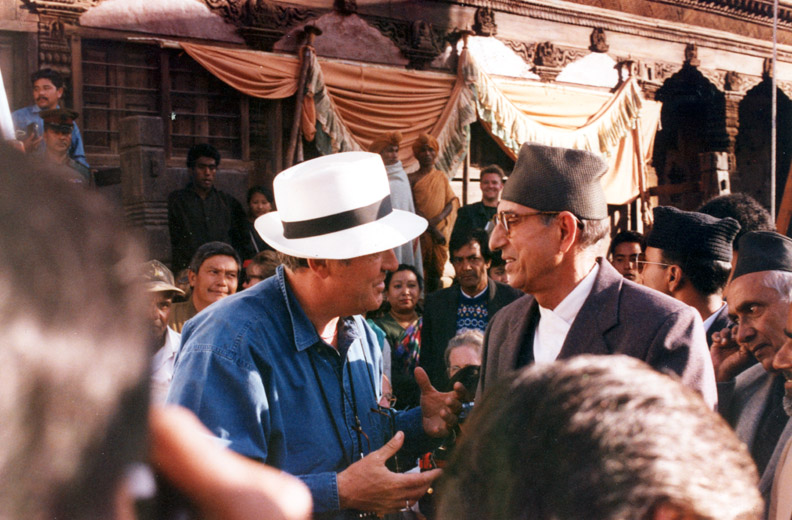
It was a glowing autumn afternoon in Bhaktapur with the sun warming the terracotta roof tiles and moulded brick facades. Keanu Reeves had just finished shooting the kabaddi sequence in the temple square, liberally enhanced with fibre glass sculptures and carved wood trellises to transform it into Prince Siddhartha’s contemporary Kapilvastu palace.
The crowd of extras lining the Little Buddha set stirred with excitement as the prime minister arrived in an official bustle of shiny black cars and watchful bodyguards, greeted by the movie’s Italian director Bernardo Bertolucci in a stylish panama hat. No one noticed Niranjan amongst his entourage, characteristically keeping in the background but without whom this film would never have been possible.
Niranjan Koirala was the self-effacing adviser to the tourism ministry who enabled us to pull off this major international movie that not only showcased Nepal’s heritage, architecture and scenery to a global audience, but employed hundreds of locals and added millions of dollars representing ten percent to that years’ total tourism revenue.
Niranjan had recognised its potential value for Nepal, arranged our film permit, and urged his newly elected uncle Girija Prasad Koirala, leader of the first democratic government of the recent era, to give us his full personal support.
It was 1992 and there were no less than 13 Oscar awards amongst Bertolucci’s multi-national film crew, many fresh from success with the first movie shot on location in China, The Last Emperor. Thanks to Niranjan, we were granted direct access to the prime minister’s office over the eight months that the production team worked in dozens of locations throughout Kathmandu Valley and Chitwan. If we encountered any hitches with the filming of Little Lama (as it was code named prior to release), they were swiftly resolved at the highest level.
Although a fully-fledged member of the Biratnagar-based Koirala dynasty, direct descendent of the great BP and uncle of the matchless Manisha, ‘Niruda’ as he was known in the family wore his politics lightly and preferred a life in the shadows savouring the freedom to travel and study.
Having witnessed the upheavals of the royal takeover in 1961, he studied political science in Banaras Hindu University and the University of California Berkeley, then worked in tourism before retreating to academia in the United States.
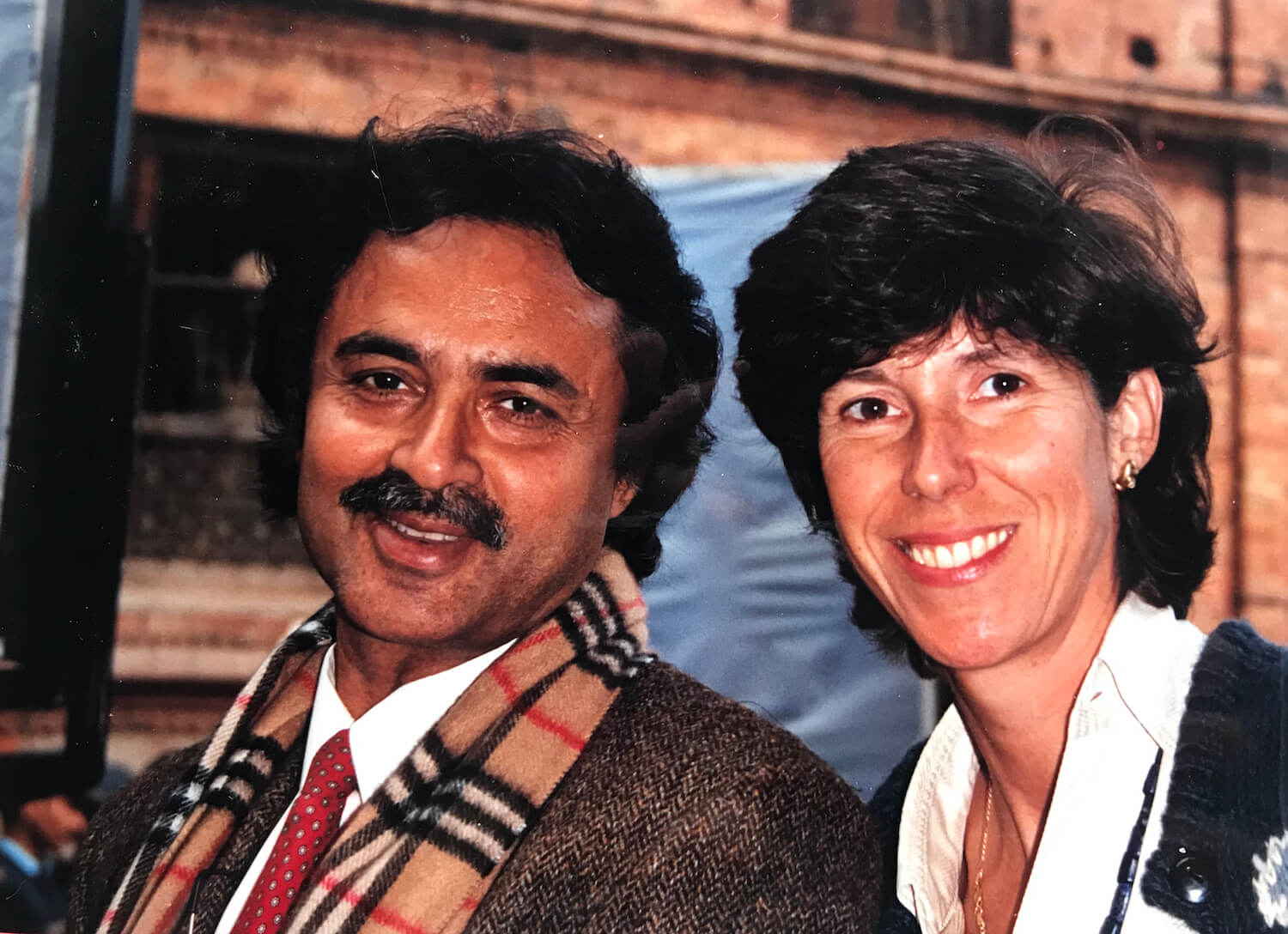
I met Niranjan only after he was wrenched back to Nepal public life as political adviser to the Minister of Tourism and Civil Aviation, Ram Hari Joshi. He was an unlikely figure amongst the dusty desks, smeared windows and civil service culture, more professorial than political, gentle but determined, smiling but steely, preferring tweed jackets and colourful sweaters, a neat moustache and thick hair curling carelessly over his collar.