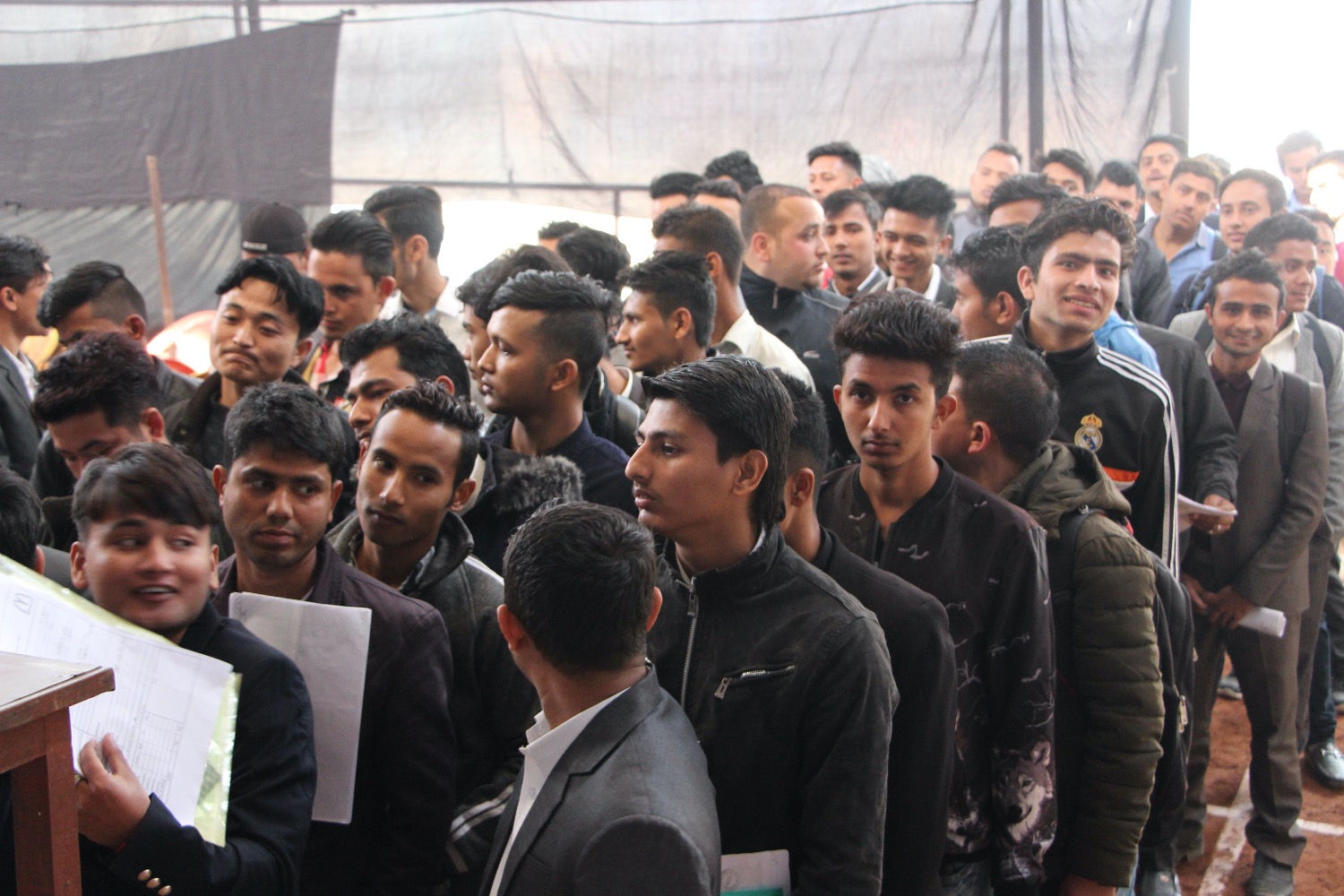
Nepal’s Department of Foreign Employment (DoFE) issued more than 240,000 labour permits for migrant workers in 2021, even as the country reeled under the Covid-19 pandemic.
Since 2008, the DoFE has issued labour permits to more than 4 million Nepali migrant workers. But this figure does not include Nepalis living and working across the border in India, which does not require labour approvals as per the 1950 Nepal-India bilateral treaty. Nor does it include workers who travel overseas through backchannels.
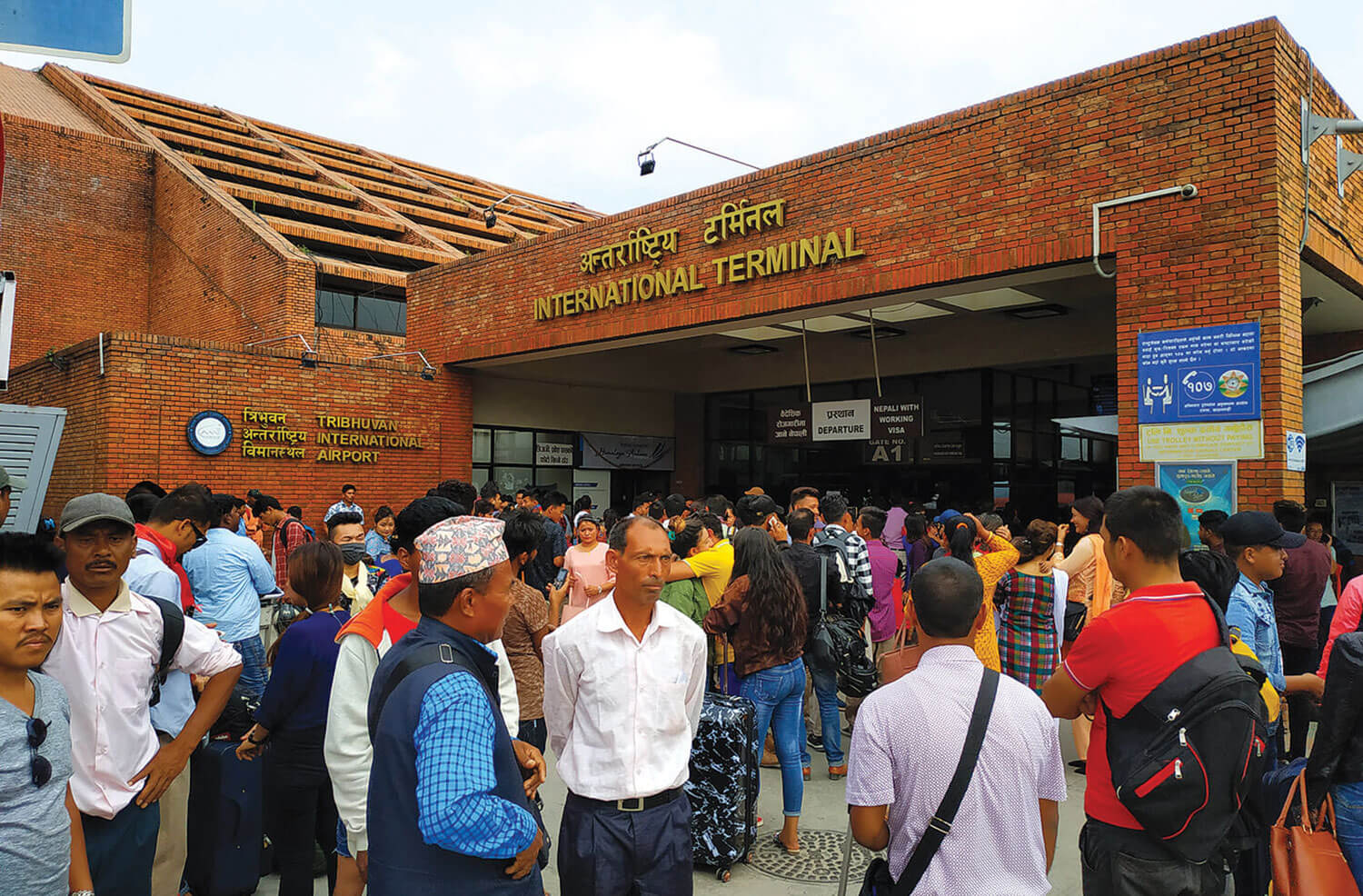
Even the 2020 migration report from the Ministry shows that the number of Nepali workers seeking labour approvals has steadily declined since 2013, with Malaysia followed by countries of the Gulf Cooperation Council (GCC) Qatar, UAE and Saudi Arabia being the primary destinations.
Conversely, remittances sent by migrant workers are now worth over a quarter of Nepal’s annual GDP, and the conversation is shifting to the varying degrees of access of Nepalis from different backgrounds to destination countries.
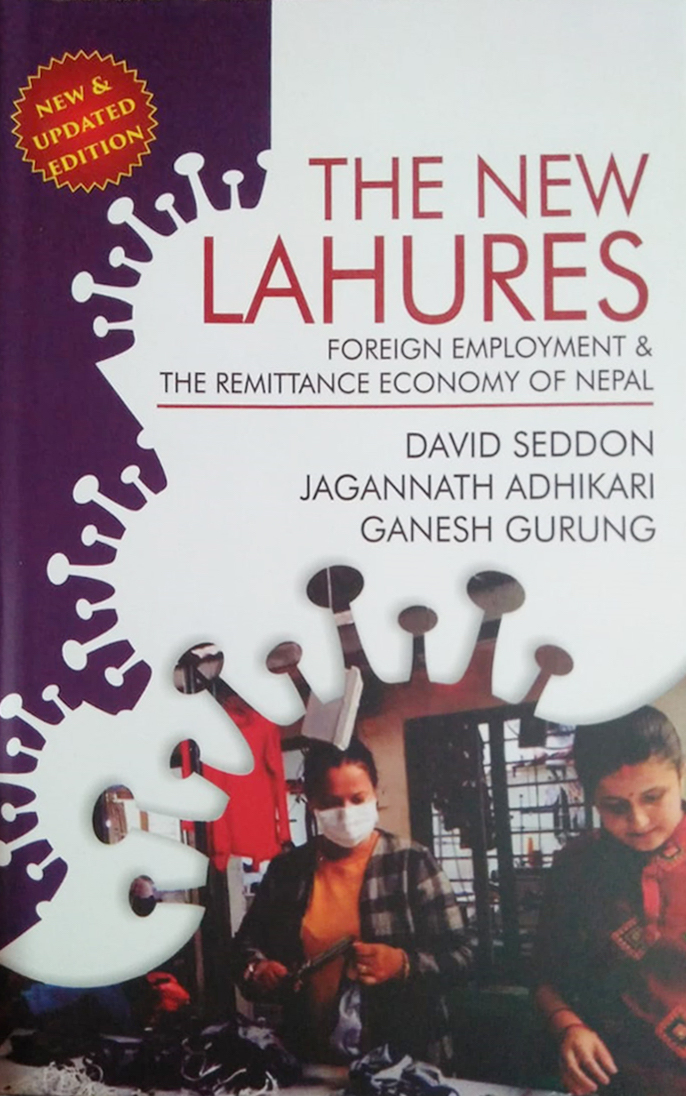
‘The tendency is for the better-off to earn higher wages and to be able to send back remittances of a higher value, and for the poor to earn lower wages and to be less able to send back remittances to the family members remaining in Nepal,’ write researchers David Seddon, Jagannath Adhikari, and Ganesh Gurung in their book The New Lahures: Foreign Employment and the Remittance Economy of Nepal.
‘Those from the more affluent backgrounds are in a better position to gain access to higher pay and more secure employment, while those from less affluent backgrounds are in a relatively poor position in this regard.’
The book includes findings of research conducted by the authors from 1997 to 1999 on Nepal’s foreign labour migration and remittance economy, and later studies into the labour migration sector. A new edition of the 2001 book has been updated to include the changing dynamics of migration and the remittance economy in the last 20 years, especially during the Covid-19 pandemic.
The abuse and death of a Nepali domestic worker at the hands of employers in Kuwait in 1998 prompted the Nepal government to ban women from going to the Gulf to work as domestics. The ban was eventually lifted, but similar immigration policies that limit female mobility have been introduced in the years between, including a 2021 proposal requiring Nepali women under 40 travelling to the Gulf or Africa to present consent from a guardian and local government.
In August 2004, 12 Nepali labour migrants led to Iraq for work under false pretences were abducted and killed by insurgents, their execution filmed and released by the extremists for the world to see. Thirteen Nepali security contractors were killed and five injured by a suicide bombing in 2016 while en route to their jobs at the Canadian embassy.
A July 2021 mobile video of a Nepali security guard in Malaysia getting beaten up by his supervisor prompted Nepalis to share their own experiences of violence against migrant workers in Malaysia.
The Taliban takeover of Kabul in August 2021 brought to light the plights of potentially thousands of stranded Nepalis working to protect embassies of US and NATO countries, as well as undocumented migrants in Afghanistan.
In Qatar, as many as 1,600 Nepali workers are believed to have died in the past decade after the country won the bid to host the FIFA World Cup 2022.
Read also: The Days of International Migration
These incidents are only the highlights of Nepal’s tragic migrant history that made it to the media. Yet, there are many more success stories of workers who have done well for themselves and supported families back home, while at the same time keeping Nepal’s economy afloat.
Yet, over the years, the Nepal government’s treatment of the labour export sector, whether in terms of policy-making or bilateral discussions, have not brought long-term benefits to workers. On the contrary, many Nepalis have had to resort to taking illegal channels and routes to travel and work overseas, further risking their lives.
This has also made it impossible for Nepal’s authorities to pinpoint the number of undocumented Nepali migrants across Asia and the Gulf, let alone ensure their rights and safety. Preliminary data of the 2021 census released this week shows that there are only 2.6 million Nepali workers abroad, which seems to be a gross undercount (see box, below).
“While economic diplomacy has been incorporated into our foreign policy, discussions about labour diplomacy have not moved forward,” said migration expert Ganesh Gurung, co-author of The New Lahures, in his keynote address at the Kantipur Migration and Remit Summit 2021.