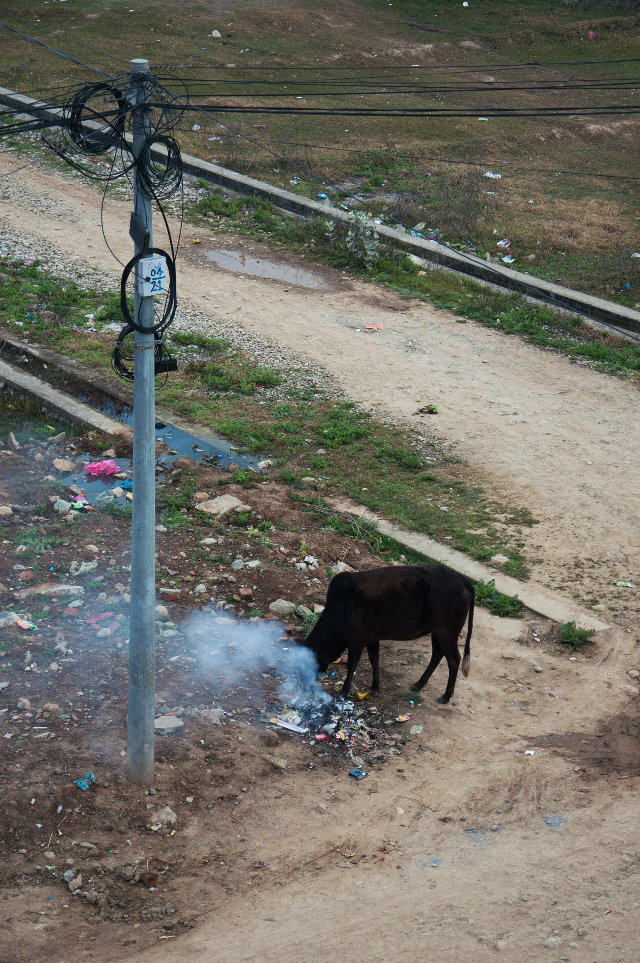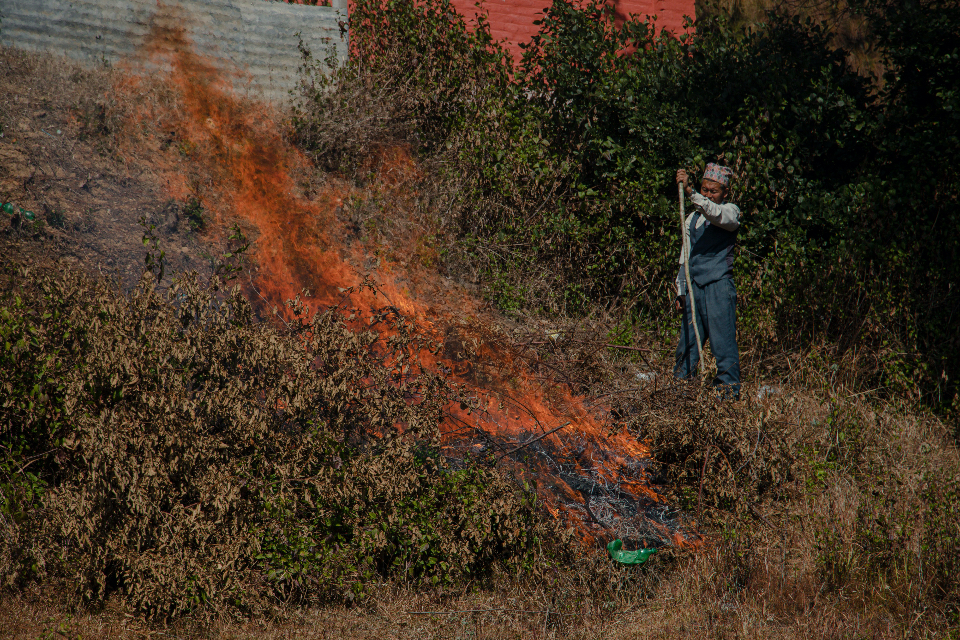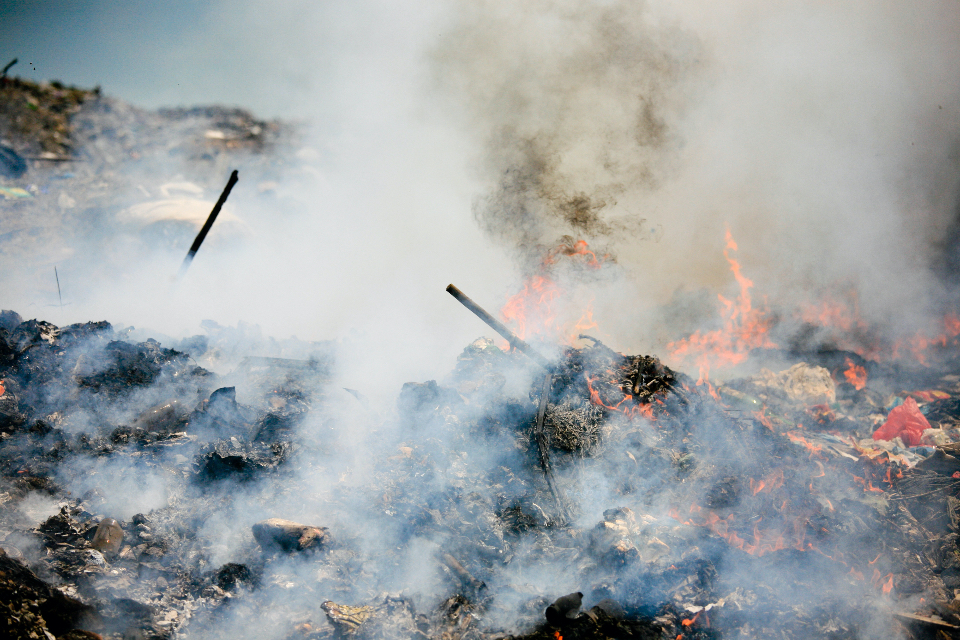
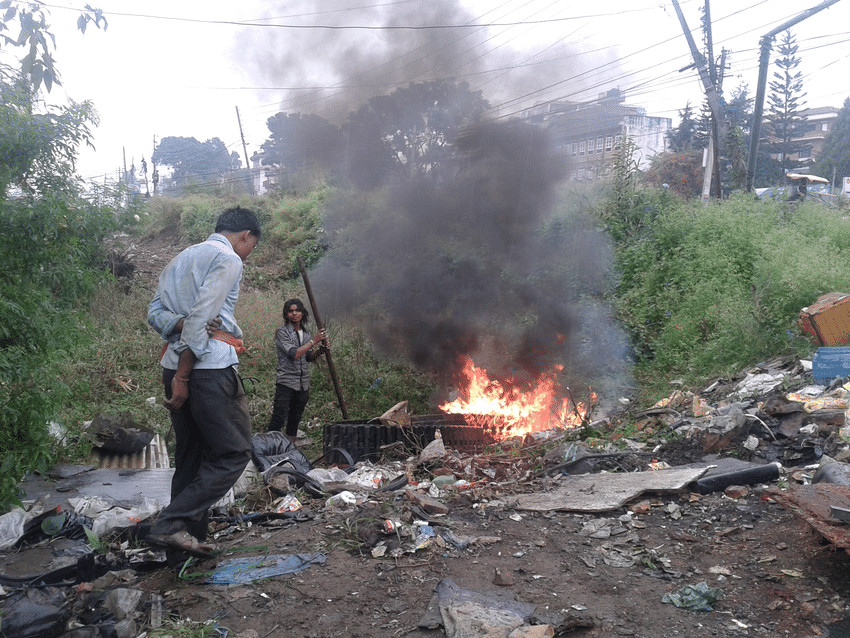
Perhaps the most overlooked source of the tiny particulate matter that makes Kathmandu’s air so hazardous is the open burning of household waste. Even in wealthy areas, lawyers, teachers, and doctors burn yard waste and garbage, including plastics. In doing so, they endanger their own health and that of their neighbours.
Most people -- even government officials – do not realise the scale of the problem. ‘Open burning of municipal solid waste,’ Tribhuvan University's Bhubendra Das has written, ‘is a poorly-characterized and frequently-underestimated source of air pollution in developing countries.’
In a 2018 study, Das and his team discovered that Nepal has three times as much open burning as officials think.
The topic is often misunderstood. ‘Unlike vehicle exhaust and industrial emissions,’ Das writes, ‘the common public and elected officials are relatively unaware of the significance and harmful impacts of open burning.’
A 2020 study found that garbage burning increased PM2.5 concentrations by nearly 30% in India and Nepal, and kills thousands upon thousands each year.
Another recent study, by Kathmandu University’s Prof Khanal and Kundan Chaudhary, shows that 9% of Kathmandu's waste is burned. That means Valley residents burn one in every 10 plastic bags, toothbrushes, and plastic buckets, launching toxic contaminants into the open air. Imagine the putrid fumes of a fire with all these plastic bags, toothbrushes, and buckets in the open lot next to your house, blowing into your young child’s window.
Read also:
Everest garbage caravan, Sonia Awale
Waste should not be wasted, Bhrikuti Rai
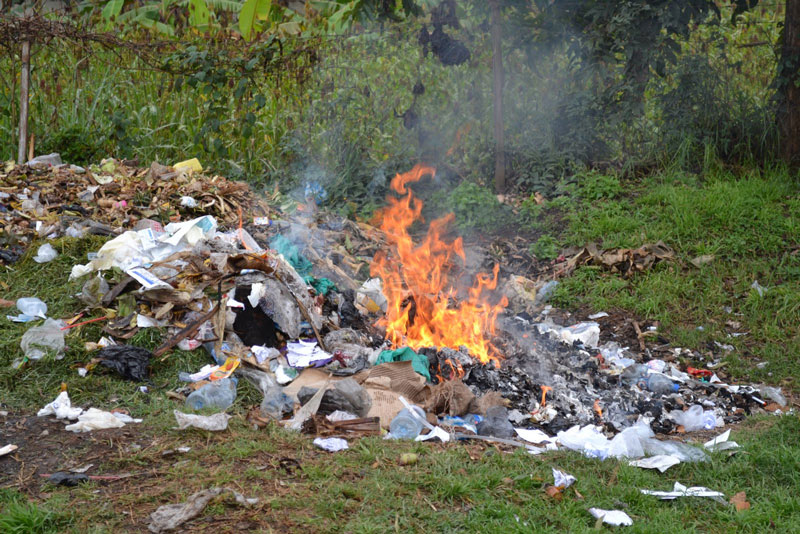
In Kathmandu, the open waste burning epidemic is tied to the city’s waste disposal problem. The two are linked.
‘People fail to realise that by burning waste, you are simply transporting the waste from the land to the air we breathe, which will ultimately affect our health,’ Shilshila Acharya, director at the waste management company Avni Ventures, recently told the Kathmandu Post.
Much of Kathmandu’s deadly air starts as waste – the dried plant matter, plastics of all kinds, and other household items that we no longer find useful. Burning it becomes the easy way to get rid of it – except that it often returns as the tiny toxic particles that we breathe into our lungs.
Traditionally, Kathmandu households collected waste in empty lots. The Newar scholar Todd Lewis has written, ‘have long designated certain small side courtyards as garbage dumping spaces called sāga, places that were to be cleaned out once a year.’ Government sweepers also helped clear away refuse.
Over the decades, Mary Slusser observed, Kathmandu’s inner core, which sat on a bluff above the Bishumati, was extended outward by filling in low areas with refuse. Buildings erected on such unstable land sometimes collapsed during the rainy season.
But, as early as the 1960s, Kathmandu’s garbage began piling up. In 1966, Gorkhapatra reported about ‘the heaps of garbage from courtyards and lanes’ endangering public health.1 ‘Some portions of the city,’ it warned, ‘are dirty and constitute a danger to public health. Prompt action is necessary.’
Prompt action did not arrive.
Read also: Where to take a dump, Bhushan Tuladhar
Increasingly, Kathmanduites turned to a convenient dumping ground: the Valley's sacred waterways. ‘Domestic and shop refuse,’ a 1971 WHO report noted, ‘is either thrown into the street or allowed to accumulate in private courtyards.’ But refuse swept up from the streets ‘is carried in baskets to one of the rivers, where it is dumped in the river bed or on the bank, thereby attracting flies and rats, and causing foul odours, water pollution and the desecration of beautiful scenery.’
Tourists, the report added, often complained about stench and eyesore. That was 1971, 50 years ago. Today, it is hard to imagine that Kathmandu's growing reputation as one of the world's most polluted places is attracting people to the city. It is astonishing that a city that makes its money from tourism pays so little attention to the pollution that tourists find so revolting.
Kathmandu is hardly the first city that has struggled to dispose of its waste. In the US and other parts of the world, waste has long been a problem. But other places have built systems that keep the water and air cleaner.
In mid 19th-century American cities, garbage was given to pigs or “swill children” who piled it in carts. These children scavenged edible parts, sold compost to farmers, and sold the metal, bones, and bottles to junk dealers. Ragmen sold rags for making paper. Women fed leftover scraps to chickens and pigs.
But the system collapsed in the late 19th century: with industrialisation and new consumer items and packaging, the waste piles grew into mountains. City governments responded aggressively, taking control of waste management. Some cities burned, others dumped. Chicago dumped its waste into Lake Michigan, St. Louis and New Orleans into the Mississippi River. In 1886, New York City pitched 80% of its 1.3 million cartloads of garbage into the sea. Neither burning nor dumping was friendly to the environment.
And despite these efforts, by the mid 20th century America’s waste situation had grown dire. As manufacturers began to build “planned obsolescence” into their products, and as Americans grew more and more obsessed with consumption, convenience, and disposability, waste exploded.
Read also: The COVID-19 plastic pandemic, Sonia Awale and Ramesh Kumar
Between 1940 and 1968, Americans doubled their per capita waste, from 2 to 4 pounds each year (about 1 kg to 2 kg per person). Much was plastic packaging. By 1964, the nation’s 192 million people each consumed 2,000 packages a year – 384,000,000,000 in total. In 1976, Americans purchased more plastic by volume than all steel, copper, and aluminum combined.