

“All of us write songs. All of us make music.”
I pause when I hear you say this. I want to say, I do not know anything about music. Instead, I say, tell me more.
You carry on: “Playing with thoughts is also emoting. It is not very different from writing a lyric or composing music. It is song-writing and melody-making. Voice is just an instrument after that.”
You describe songwriting as a form of storytelling, where one borrows from the conscious as well as the subconscious, like all storytelling.
Friends from nowhere
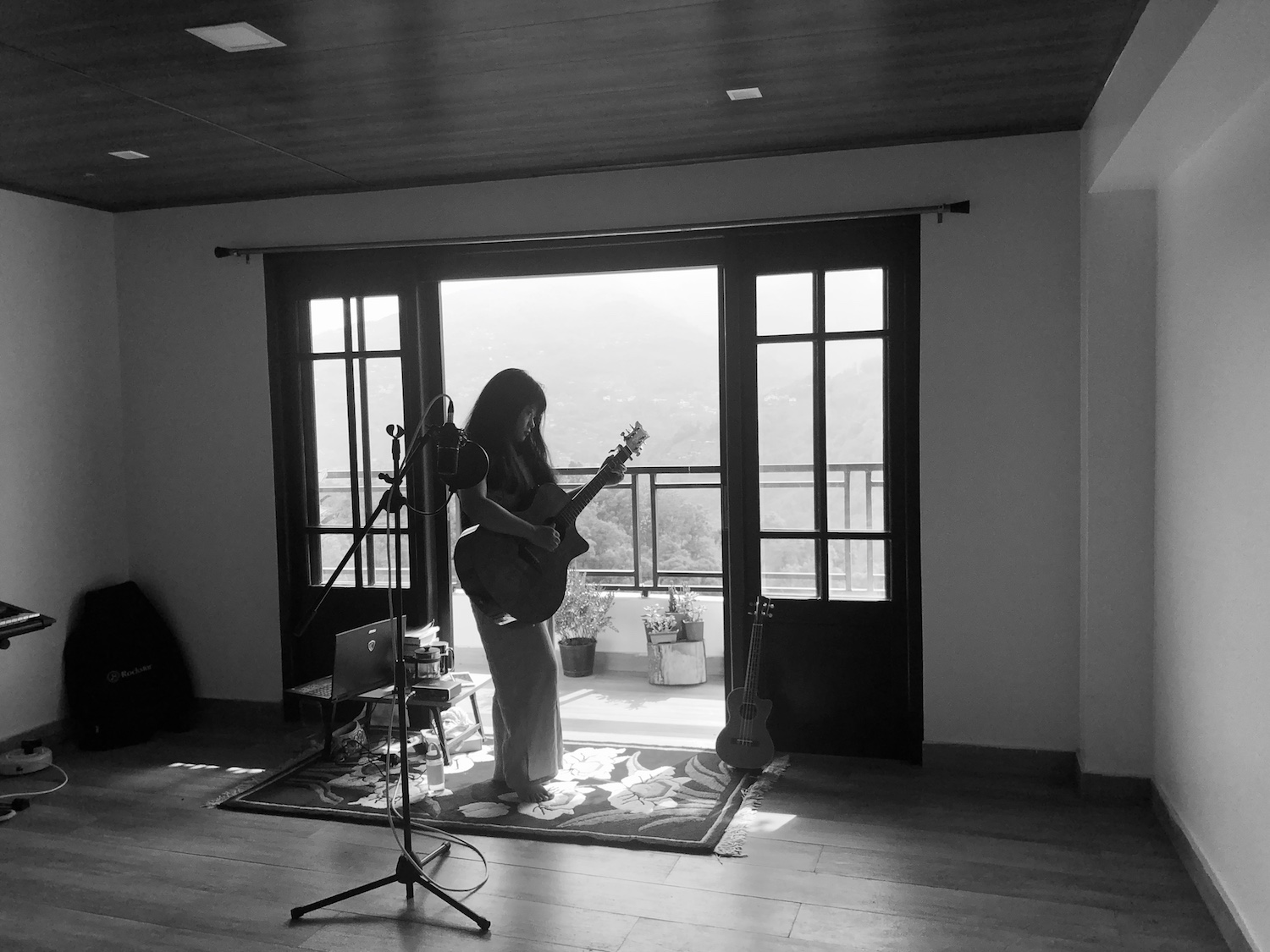
The first time I heard you sing was on Instagram. You were seated on the floor of your room, guitar cradled on your lap, your fringe forming an awning for your face as you sang. The floorboards stretched all the way behind you, racing towards the balcony. Above it, the hills rose, forming a fortress for your room in Gangtok, Sikkim. In my head you were a magician-- your voice, the deepest I had ever heard and your background, surreal.
The pandemic had just set in.
I think my head draws this image of you from a collage of images I have put together from your social media. Social media allows for that to happen-- you can re-live many moments vicariously. It is what I have done through your stories.
Now, sitting across me, you are somehow transported across time and space to a coffee table in a cafe in Kathmandu.
The homecoming
“If someone speaks two Nepali words or talks about Nepali music, it is like primal instinct, my body and mind react to it.” But you did not realise the real connection until you were in the land, “amongst its people”.
You mention
, Bartika, Yugal, Bipul. I start to gather fragments of your thoughts on my phone in the form of notes, while my heart busts with questions.In December, you posted a cover of Danny Denzongpa’s Chiso Chiso Hawa Ma, giving the song a life away from the original sound track. I ask what you think of how Nepali audience always want to lay a claim on Nepali artists from India.
“Kathmandu has always been that home to Nepali musicians all across the globe, especially the hills of Kalimpong, Darjeeling, Kuresong and Sikkim. People here have always received them, listened to them, allowing them to teach in schools and explore their creative side. So, it is okay for Nepali people to claim Danny. I think it comes from a place of love and acceptance,” you smile and I do, too.
Art is indulgence but also struggle
Your parents are proud of you being Dr Smyrna Samten Sherpa. Your father, who placed a guitar in your arms when you were ten and prodded you on to the stage asking you to sing at church, still much prefers to introduce you as a medical professional.
So, there is a catch in your voice when we go into how lonely the journey of pursuing art can be, but laugh and say: “I will always have music with me no matter where I am in my life…My parents will always be my parents even if they don’t agree with all that I do-- music has been home too.”