
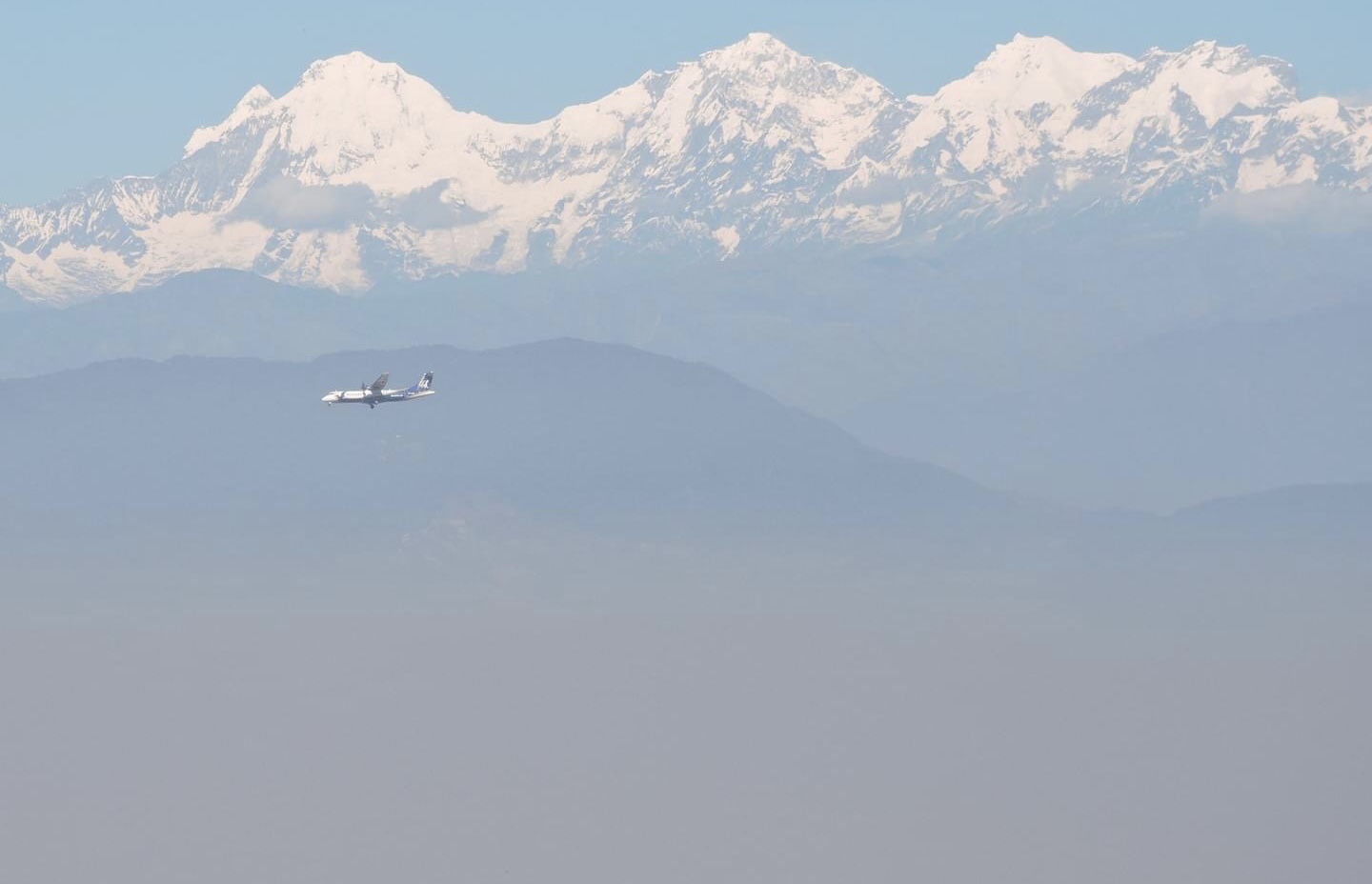
With domestic and international flights now near pre-Covid levels, and the onset of winter means Kathmandu airport is once more living up to its reputation for congestion and flight delays.
In the past week, heavy industrial pollution and smoke haze from crop fires in India have increased air pollution and reduced visibility in Kathmandu Valley. Combined with the capital’s increasing vehicular emissions and winter inversion, the pollution is trapped at ground level reducing visibility at the airport.
The direct impact of this is on flights in and out of Kathmandu, which with its single runway was already operating at maximum capacity even before the pandemic.
“Passengers arrive at the airport at the stipulated time, but because of the congestion caused by poor visibility, they have to wait for hours because of delayed flights, it is not within the control of the operators,” says Dipendra Karna of Buddha Air, Nepal’s largest domestic airline.
Karna pinpoints the main reason for delays as air traffic congestion caused by visibility below minimum at Kathmandu airport, and because under Instrument Flying Rules (IFR) the runway can take only one landing every 7 minutes.
Under IFR conditions, flights can only land from the south, and the taxiway does not extend to the end of the runway, leading to added delays also for departures. Both international and domestic flights have to hold sometimes for hours to wait for their turn to land or takeoff at Kathmandu, burning expensive fuel.
Many international flights in winter end up diverting to Lucknow, Kolkata or Delhi because of the lack of alternative airports for big jets in Nepal. This situation could improve with the new Pokhara and Lumbini airports coming into operation next year.