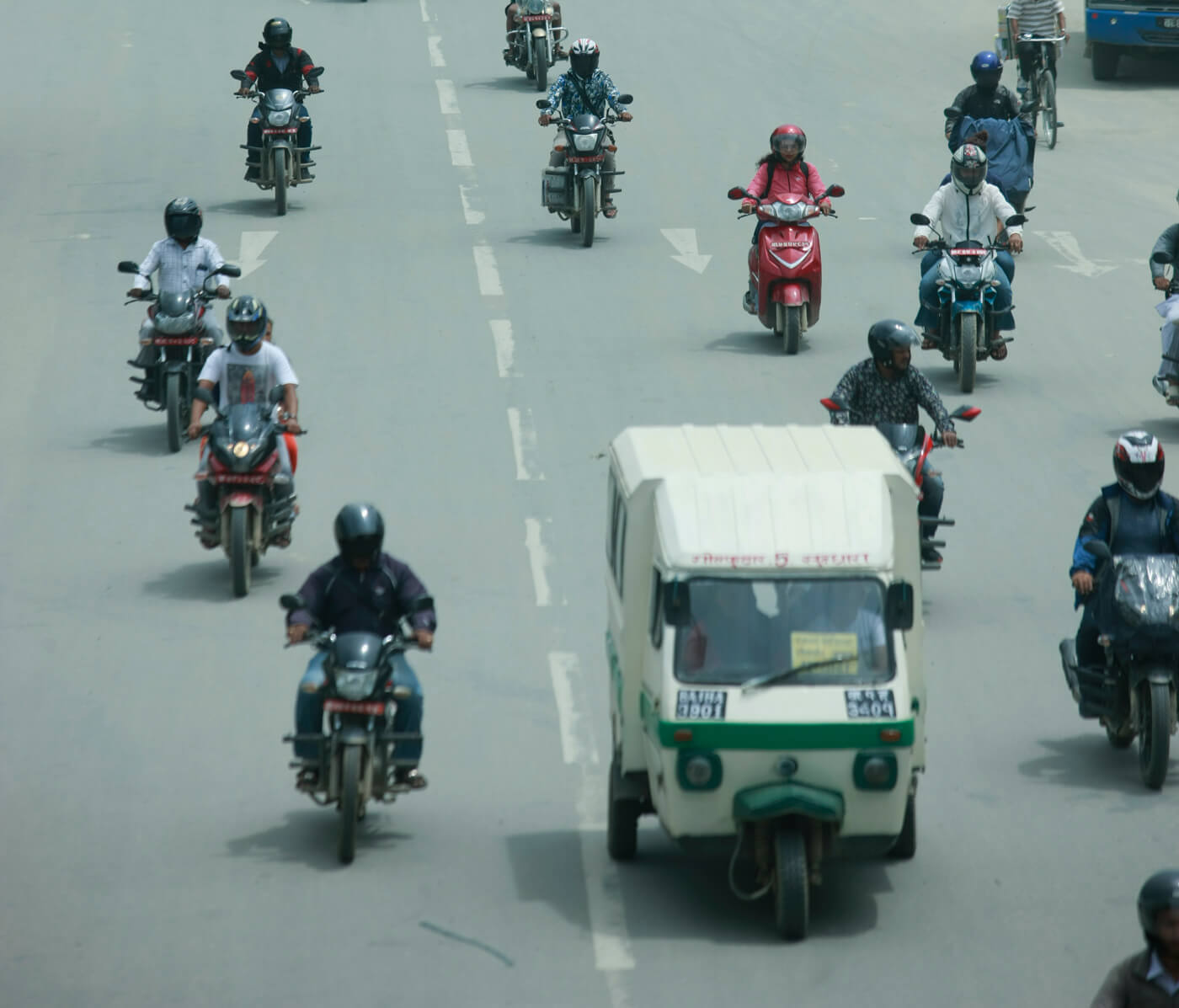
Most residents of Kathmandu are aware of the dust and smoke in the air, but few know that their masks do not protect them from the poisonous gas emissions from the capital’s ubiquitous motorcycles.
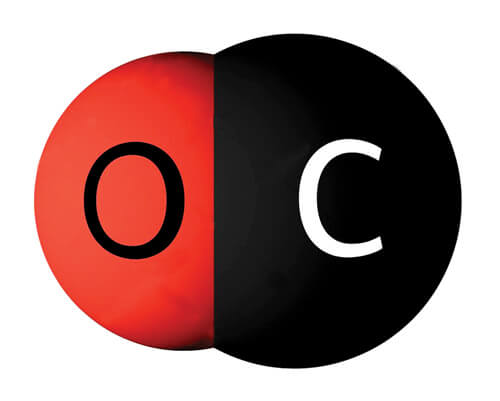
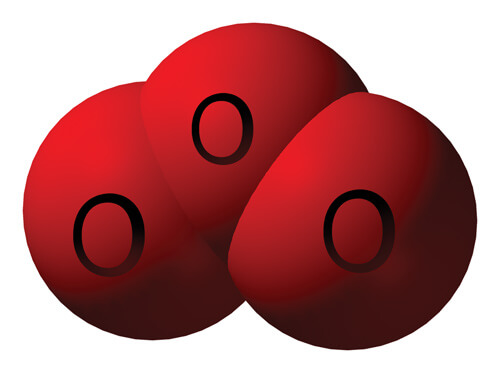
Because of the nature of their engines, two-wheeler exhausts give off carbon monoxide, nitrous oxides, and elevate the concentration of street-level ozone. Doctors say these poisonous gases have led to a worrying increase in respiratory ailments, cancers, Alzheimer’s Disease, diabetes and heart attacks.
“A few motorcycles would not be so dangerous, but there are now nearly 1 million of them on the city streets and their emission is a great public health hazard,” warns respiratory health expert Raju Pangeni at HAMS Hospital in Dhumbarahi.
Although motorcycles burn much less petrol than four-wheelers, they are up to ten times more polluting per passenger- kilometre than buses and cars. The internal combustion engine of motorcycles is also less efficient, and their exhaust systems lack catalytic converters.
Because there are fewer two-wheelers on the roads in the West, emission standards for them are more lax than for four-wheelers. However, in places like Nepal, Vietnam or Indonesia, where motorcycles outnumber cars, their cumulative emissions poison the city's air with noxious gases.
Also Read: Highway Robbery, Shreejana Shrestha
Figuring out what to do, Arnico Pande
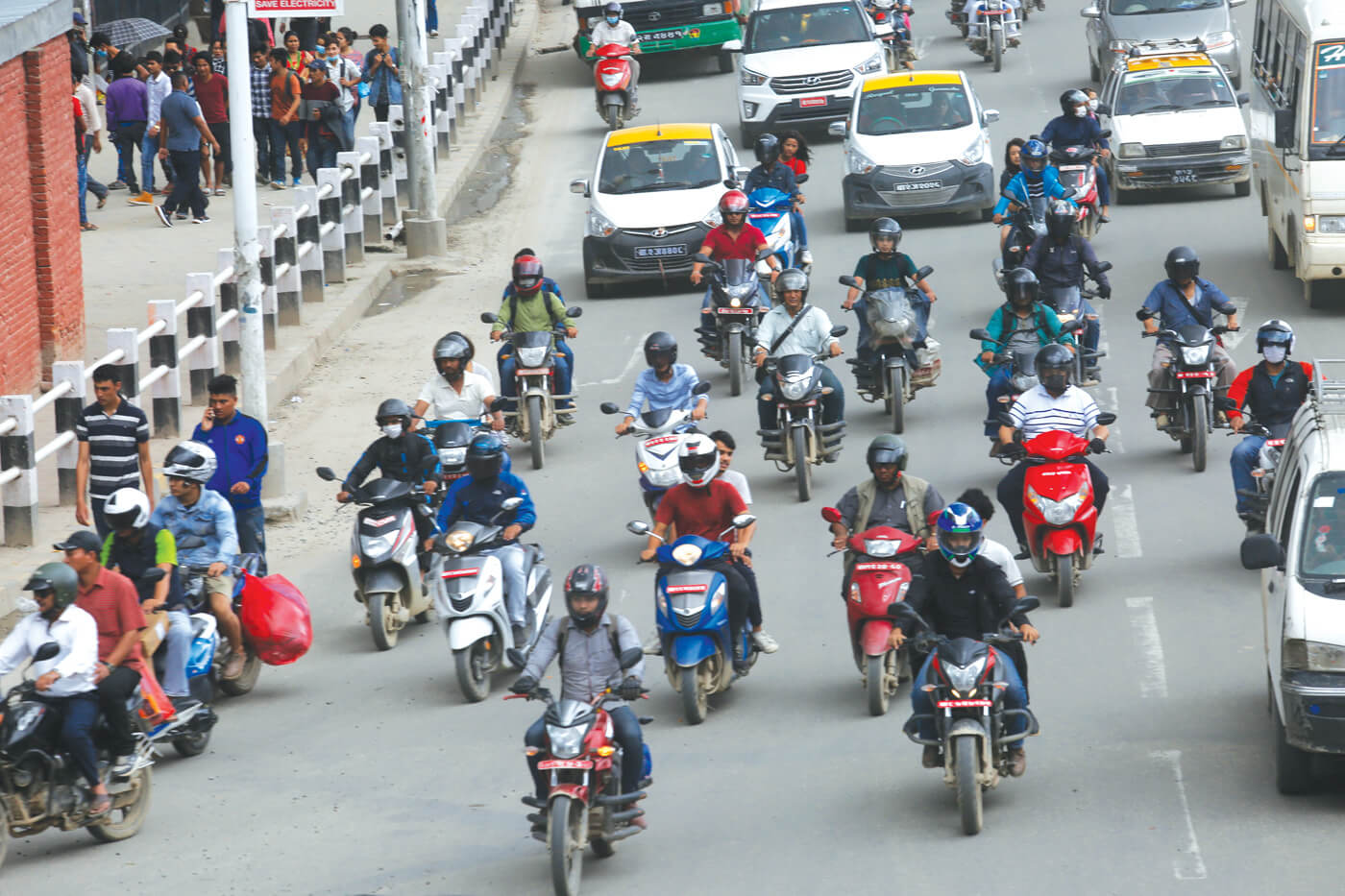
A recent study showed that up to 2% of poorly-maintained motorcycles contributed to close to half the total pollution from two-wheelers on Kathmandu’s streets.
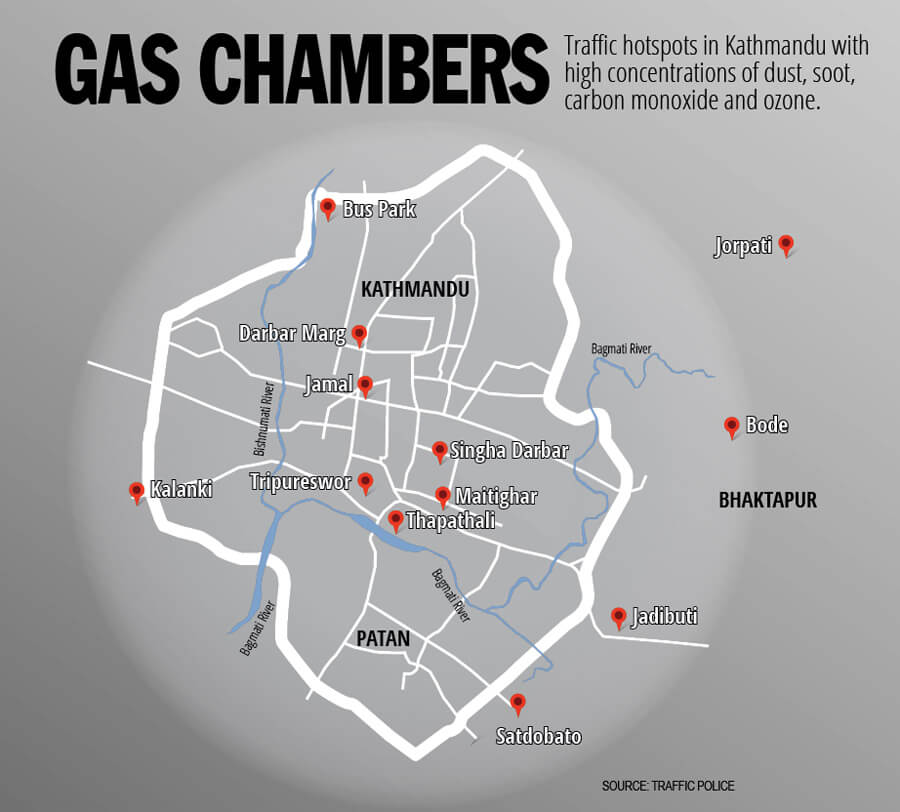
“The recent spike in cardio-vascular diseases in Kathmandu hospitals is partly a result of slow carbon monoxide poisoning, mainly from motorcycles,” confirms cardiologist Prakash Regmi at Bir Hospital. Residents near congested intersections in Kathmandu with thousands of motorcycles emitting gaseous pollutants are the most at risk (see map).
Ozone is the other toxic gas formed when carbon monoxide and nitrous oxides in motorcycle exhaust react in the presence of sunlight with volatile organic carbons. Large parts of Nepal have ground-level ozone in much higher concentrations than the WHO standard in the spring, as per several studies published last year in the journal Atmospheric Chemistry and Physics.
Arnico Panday, atmospheric scientist at the International Centre for Integrated Mountain Development (ICIMOD) who co-authored the papers, explains that incomplete combustion of fuel in motorcycles engines gives off carbon monoxide, volatile organic compounds like benzene, and oxides of nitrogen (NOx) which are precursor gases to ground-level ozone -- itself a highly reactive gas that can aggravate chronic respiratory diseases like asthma, bronchitis and emphysema.
Also read: Not business as usual, Nessim J Ahmad and Kaveh Zahedi
The studies showed that minor servicing of two-wheelers did not reduce gaseous pollutants much, and motorcycles were a major source of carbon monoxide in Kathmandu Valley air.
Public awareness about air pollution has grown in the past two years after suspended dust particles from road-widening and water mains laying work worsened air quality that was already thick with soot particles from diesel exhaust and garbage burning.
But only a few commuters interviewed for this article in the past week knew of invisible and odourless gases like carbon monoxide, ozone and nitrous oxides. Nine of ten motorcyclists had no idea about the poisonous gases, and blamed only dust and diesel smoke for poor air quality.
Kathmandu air pollution levels on most winter mornings are the worst in the world. The hourly Air Quality Index (AQI) from the U.S. Embassy and Phora Darbar stations which feed live into the Nepali Times website is a composite of the concentration of ozone and particles finer than 2.5 microns in the air. The daily averages in this paper (page 10) show AQI is high even during the monsoon, proving that the rains are not enough to clean the air of pollutants.
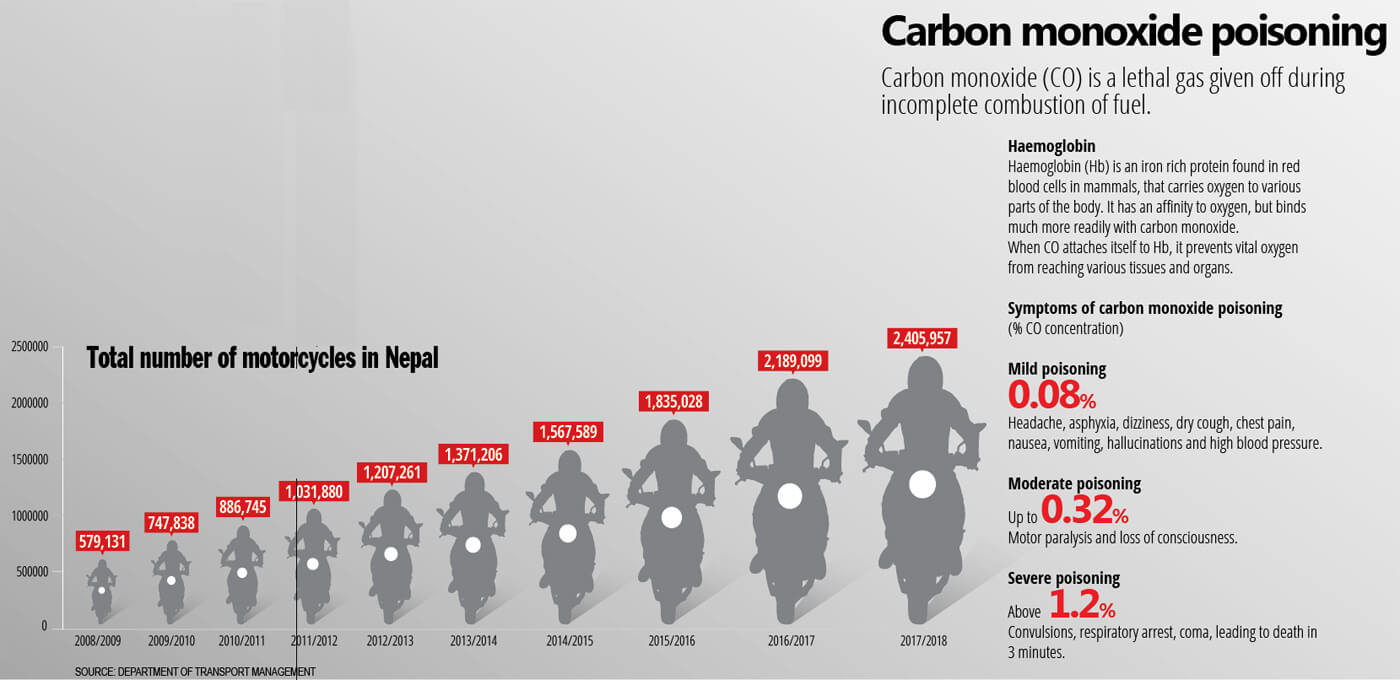
“Given that 80% of total vehicles today in Nepal are motorcycles and scooters, there should be a mechanism to monitor and control their emissions, like issuing green stickers," says BhusanTuladhar of UN-HABITAT. In the longer term, however, only an efficient public transportation service can reduce the number of motorcycles and cars on the roads.