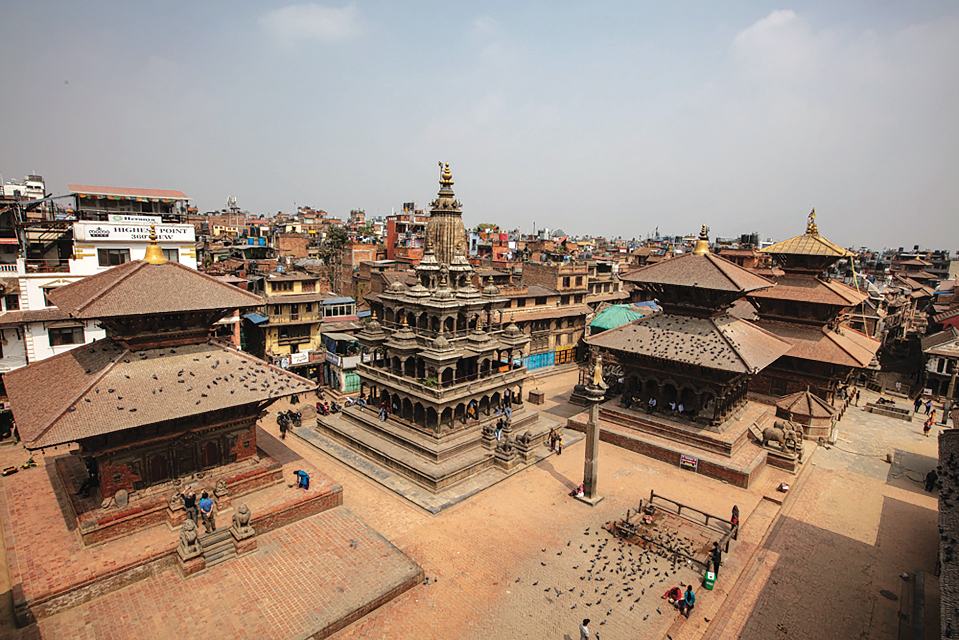
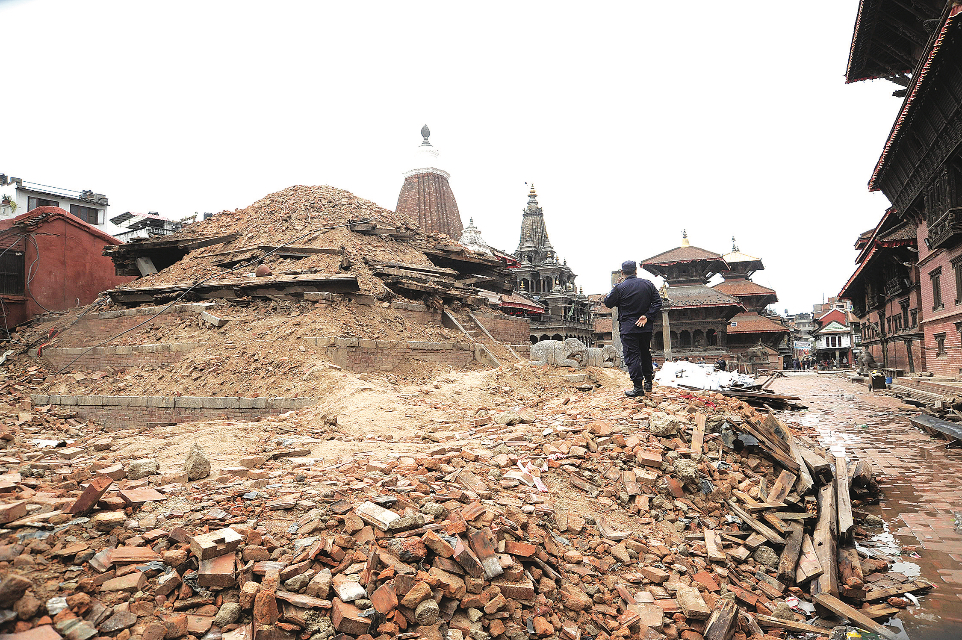
Much of Kathmandu’s centuries-old architectural heritage was destroyed in 45 seconds on a Saturday afternoon in 2015. Many of the temples built by the Malla kings in 16th and 17th century in the three Darbar Squares of Kathmandu, Bhaktapur and Patan, collapsed.
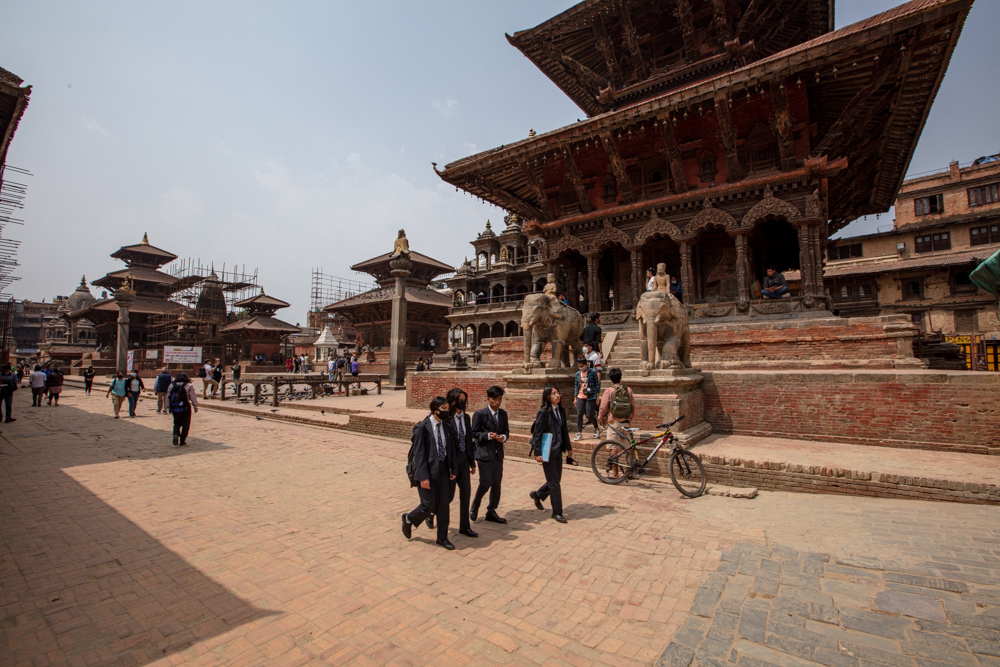
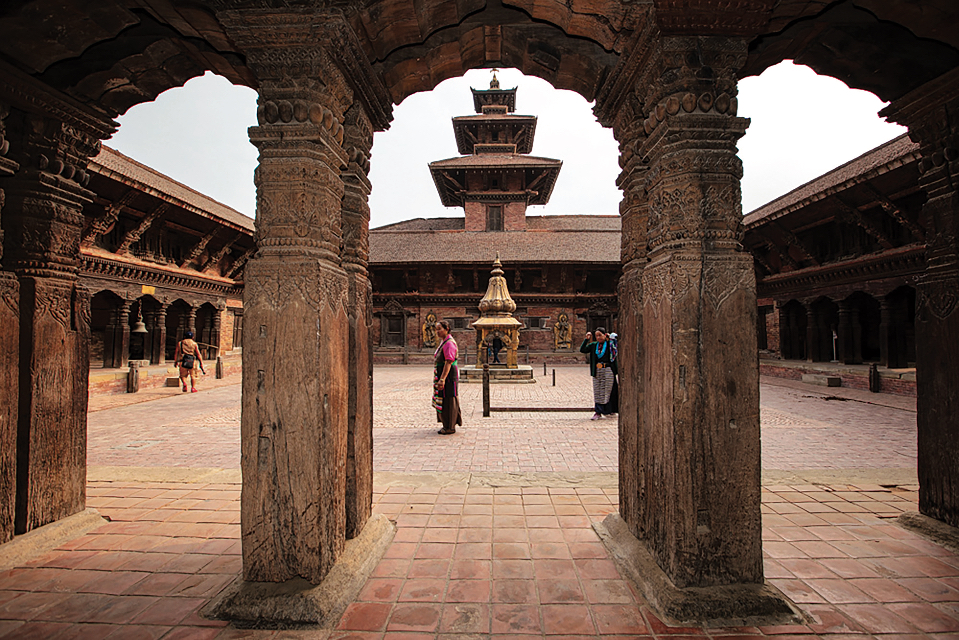
But in the aftermath of the 2015 earthquake, the Patan Darbar Square stood out as a model of the conservation effort.
Immediately after the earthquake, local volunteers gathered to collect and protect the remnants of the temples,cordoning off the premises and keeping the struts, columns and pillars safe in the Patan Museum courtyard.
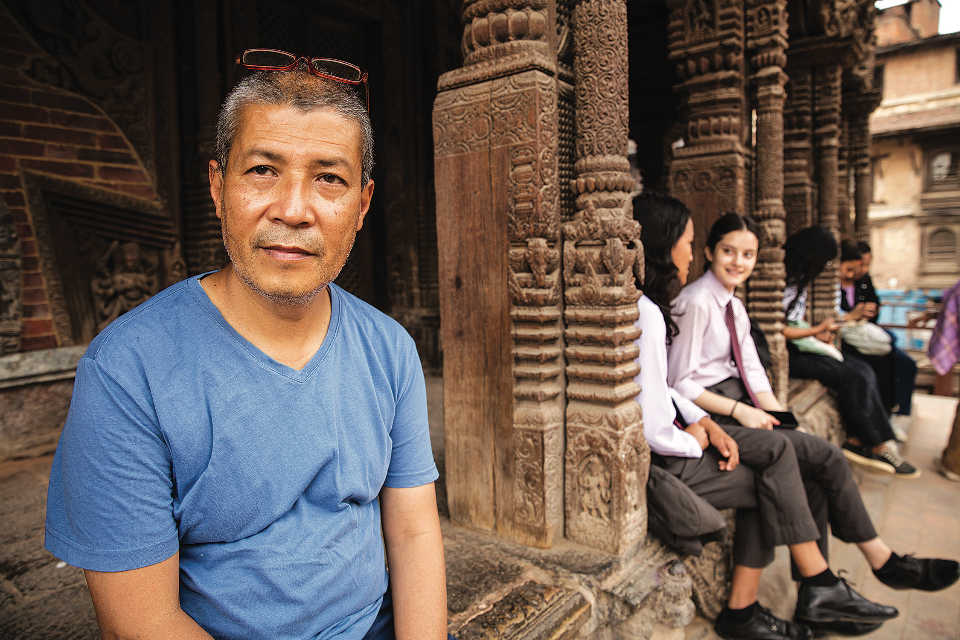
Led by the Kathmandu Valley Preservation Trust (KVPT) in cooperation with the Department of Archaeology the quadrangle palace complex is being restored piece by piece with care and patience.
“I don’t view the earthquake only as a negative,” reflects Rohit Ranjitkar, director of KVPT, the non-profit that has worked in the Valley for three decades. “Before the earthquake, a lot of people did not value the heritage here. But when the temples collapsed, they suddenly had no place to worship. They recognised the historical and religious value of their shrines. The earthquake brought both the intangible and tangible heritage together.”
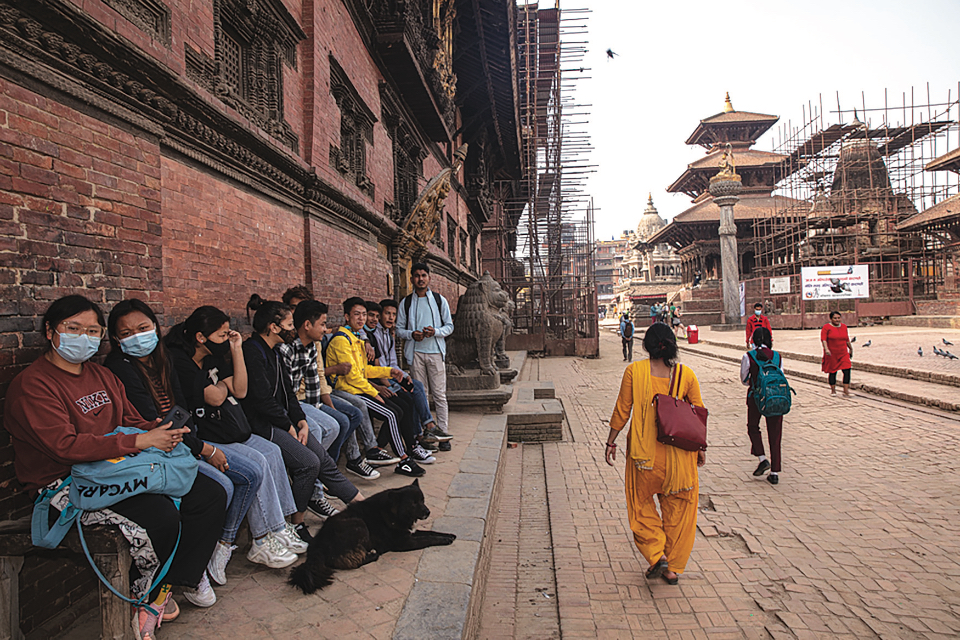
Restoration of a number of temples is still on-going. But as the national priorities have shifted and building costs increased after the pandemic, the process has slowed down.
Char Narayan Mandir
The oldest major temple in Patan Darbar Square, Char Narayan Mandir collapsed down to the plinth. But within a week, local volunteers rescued and stacked the original veneer bricks and carved elements around the square.
With the help of old photos, five broken struts and other parts were reused and repaired, so that the temple could be restored in its original form.
Built primarily of brick in the pagoda style, Char Nayaran has two tiered roofs supported by carved struts. In Newa woodcarving, the temple struts surpass their functional purpose, as they are also artistic, protective, and divine. Twelve of the twenty struts that support Char Narayan’s lower roof depict Vishnu in his manifestation as the cow herding Krishna.
Read also: Learning from Nepal's past to rebuilt its future, Prakriti Kandel
Char Narayan’s construction started in 1563, and struts of this era often feature deities with 16 arms in different positions, often holding objects identified with the deity. When the temple came down, 162 arms were rescued from the rubble of the temple and nearby Harishankar temple.
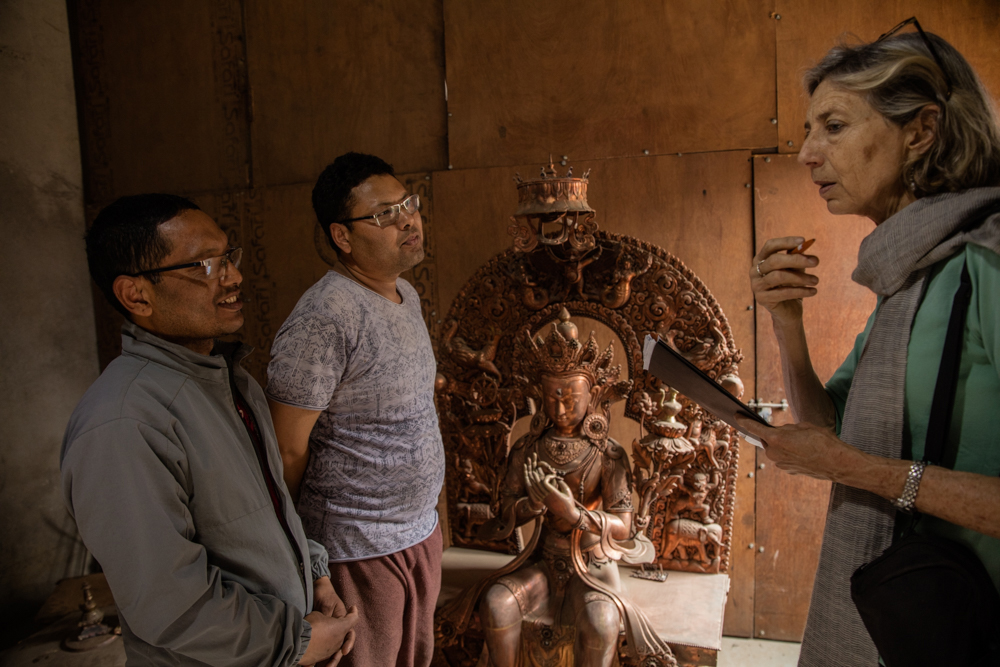
The team installed the struts in their proper cardinal directions and the 102 arms that could not be put back are displayed in the Patan Museum in an exhibition dedicated to post-earthquake rescue and conservation efforts.
Two years ago, KVPT appointed Shiva Chauguthi as the head carpenter on the scaffoldings of temple roofs and to oversee the restoration according to precise measurements.
“Joining timber correctly that high up is the hardest thing for a carpenter to learn,” says Chauguthi.
Born in Bhaktapur, a city famous for its woodworkers and carvers, Chauguthi learned to make furniture as a boy. “When I was first recruited, I wondered, how can I do this? But now I can show what I achieved,” he says.
Some of the timber pieces were 4 metres long, until recent years, wood was abundant in Nepal. It is in this medium that Newa craftsmen excelled in, but larger pieces of timber have become harder to get ,and the younger generations have moved away from woodwork.
“We need the government or an organisation created to teach the word carving art and give certification,” says Indra Kaji Shilpakar.
Indra Kaji and his son Indra Prasad worked and oversaw the carvings in several temples around Patan Darbar Squareafter 2015. He is from a generation which learnt wood carving from his father and uncle at the age of 12 using traditional tools.
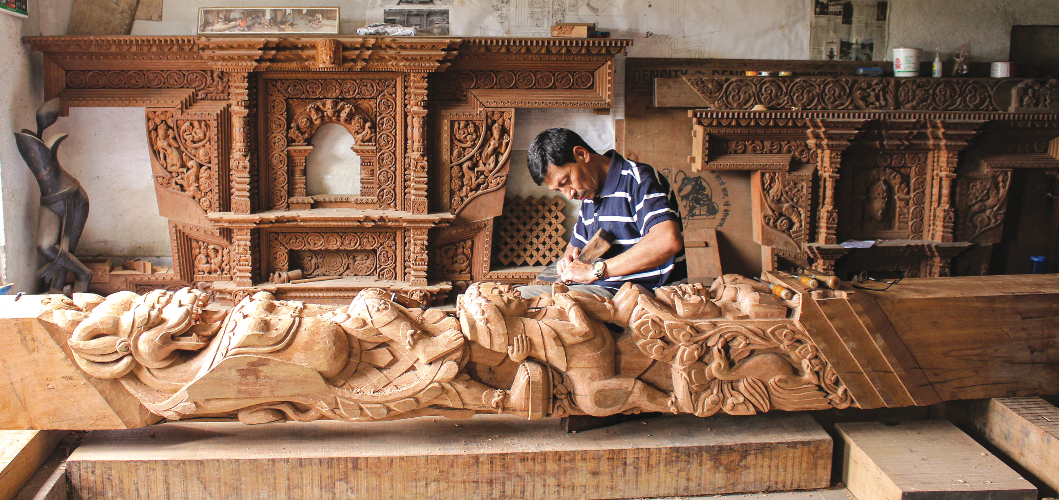
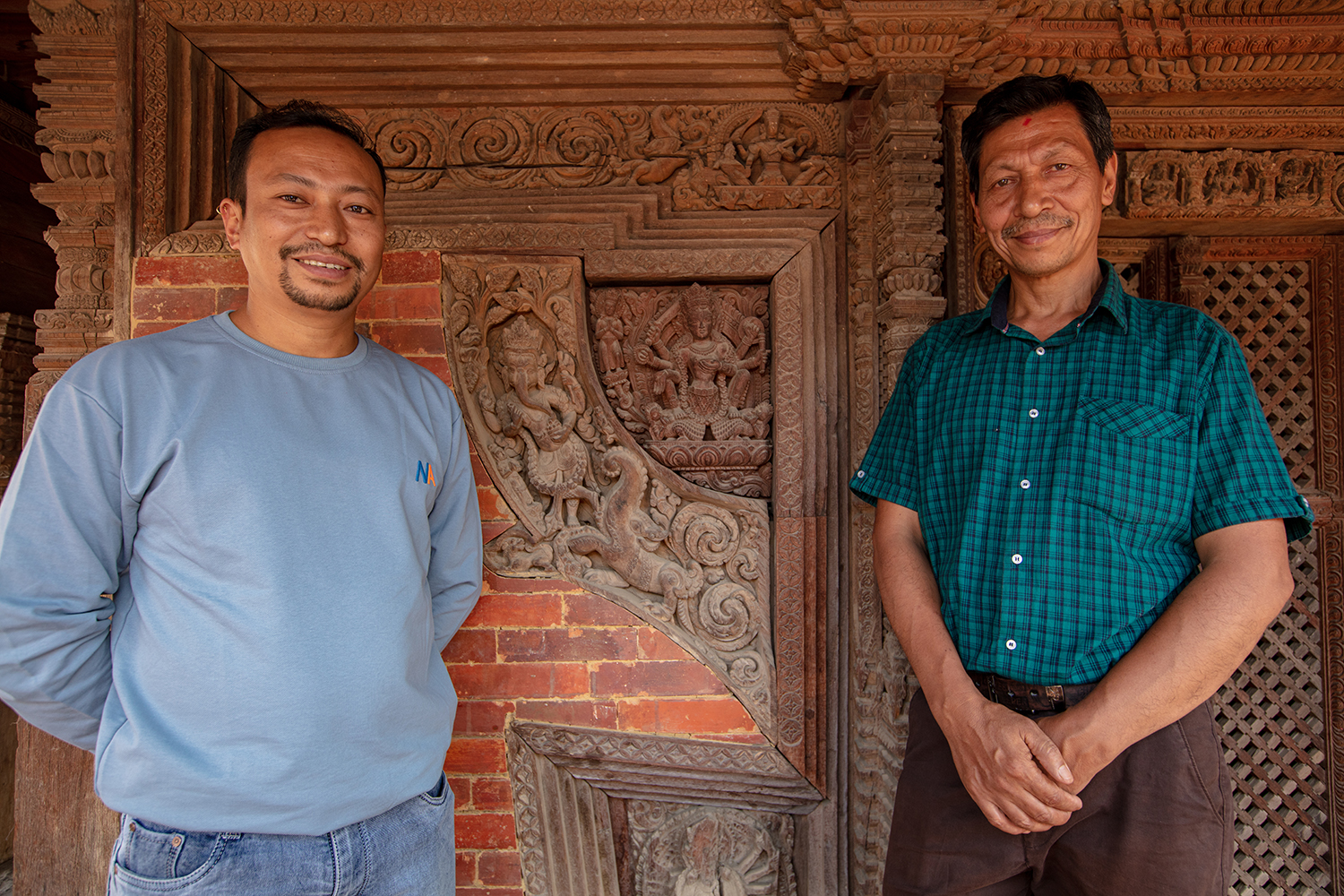
Familiar with traditional iconography and equipped with his grandfather’s drawings, Indra Kaji draws the imagery onto the wood to reproduce or repair the struts or door panel. The wood carvers then carve the details out.
Then he or his son complete the final intricate designs and install the piece based on traditional knowledge. It takes up to five months to carve out a whole torana, the ornamental arched piece above a portal and a single panel flanking a door or window 5-6 weeks.
“One thing we did not know before the earthquake is how our ancestors saved time, putting the most intricate carving closer to the ground where we can best see it. So, a first-floor temple window may have the carving of a god. The floor above may have a lion, and then above that a bird, and then perhaps only a small motif on the top level,” says Indra Prasad.
Periodic earthquakes also offer the chance for this inter-generational knowledge and craftsmanship to be revived and passed on.
Harishankar Mandir
The Harishankar temple survived the earthquakes of 1809, 1833 and 1934, but the three-tiered shrine built in 1706 collapsed almost completely in 2015.
The rebuilding involved sorting, documenting and repairing 2,000 parts. In 2017, the first storey temple ambulatory including columns, capitals and beams was test-assembled in KVPT’s workshop, then disassembled and reassembled on the original plinth.
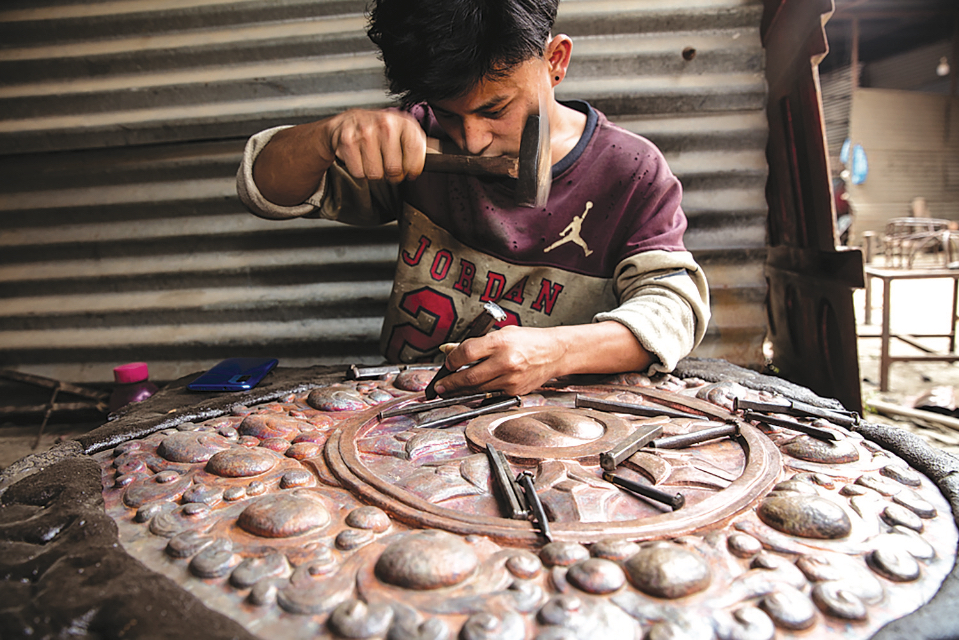
In 2018 the second storey woodwork was installed and in 2019 the third storey was completed. 16 truckloads of yellow mud topped by overlapping clay jhingati tiles to cover the roofs. Finally, metalsmiths Babu Ratna and Binod repaired and re-gilded the roof pinnacle.
The reconstruction spanned four years and used 90% of the original recovered materials while improving seismic strength.
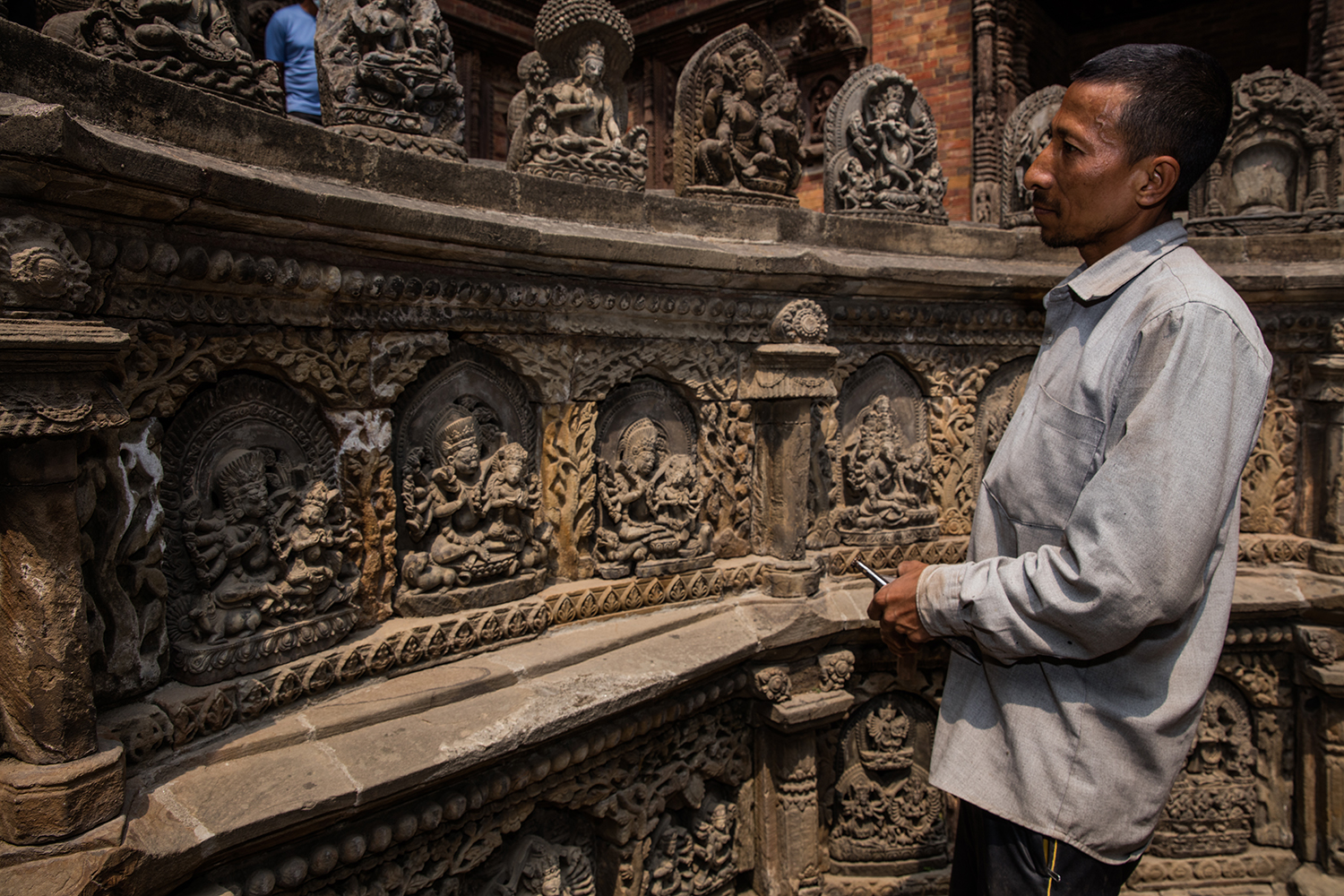
The image of Harishankar was damaged diagonally at the waist during the earthquake. Local engineers, craftsmen and a team from University of Applied Arts, Vienna helped repair the one and a half-meter tall, eight armed manifestation of Vishnu (Hari) and Shiva (Shankar), that stood in the sanctum of the temple.
But local customs dictate that a broken statue cannot be worshipped. So it was Amar Shakya, master stone carver who carefully sculpted out a replica with the help of a photograph.
The temple priest gave the new statue life during a homa puja, a ritual of regeneration. Both the original and the new god reside together to receive worshippers in the temple’s sanctum.
“Before I was hired to work on the square, I did not take so much notice of it. But now I’ve looked hard at everything and it has inspired me in my profession,” says Shakya, who also helped KVPT restore and replace stone images that were stolen in other temples.
He is particularly proud of an image of Mahalakshmi, eternal companion of Lord Vishnu, which he carved to replace a stolen image in the Vishveshwara temple.
The Priestess
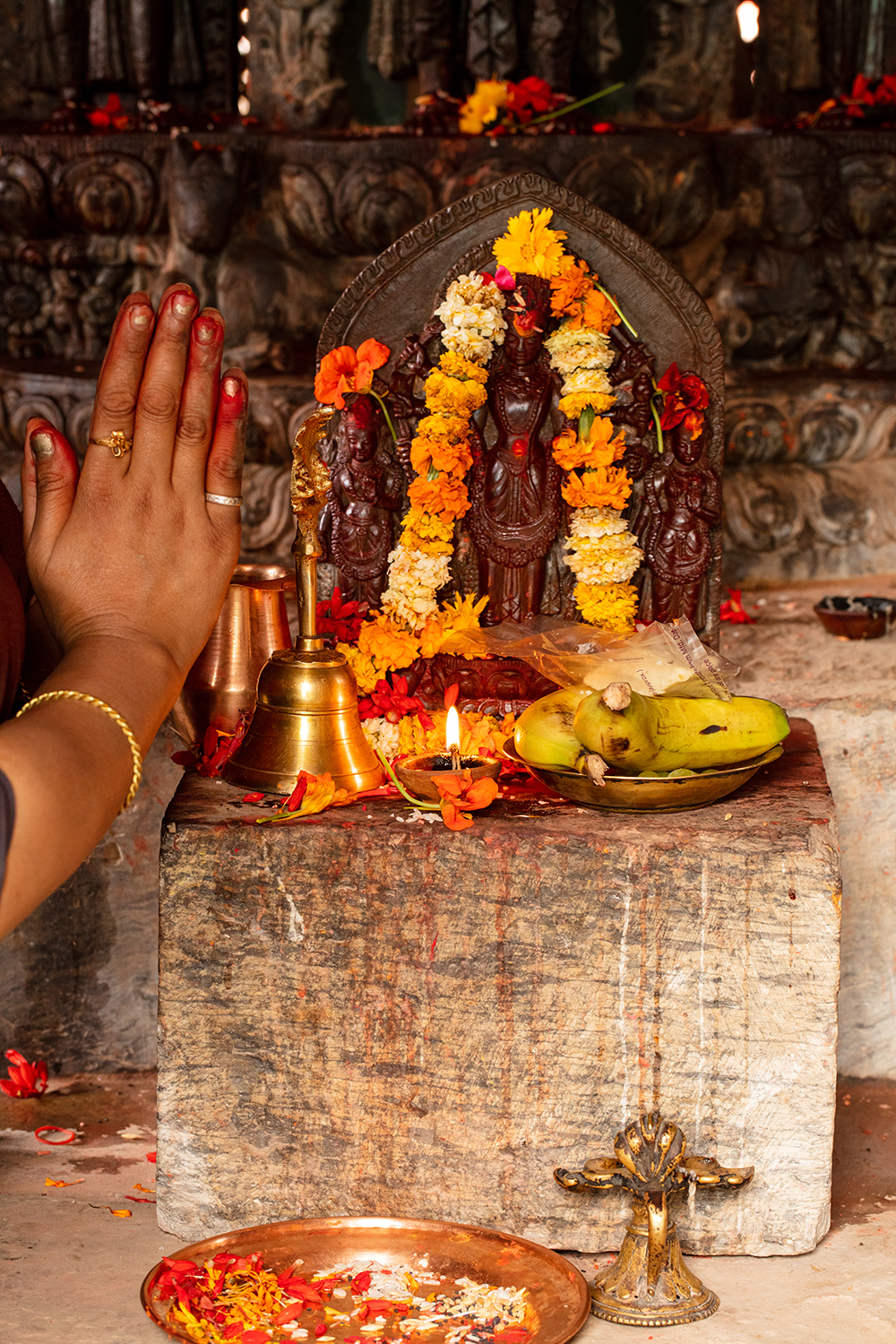
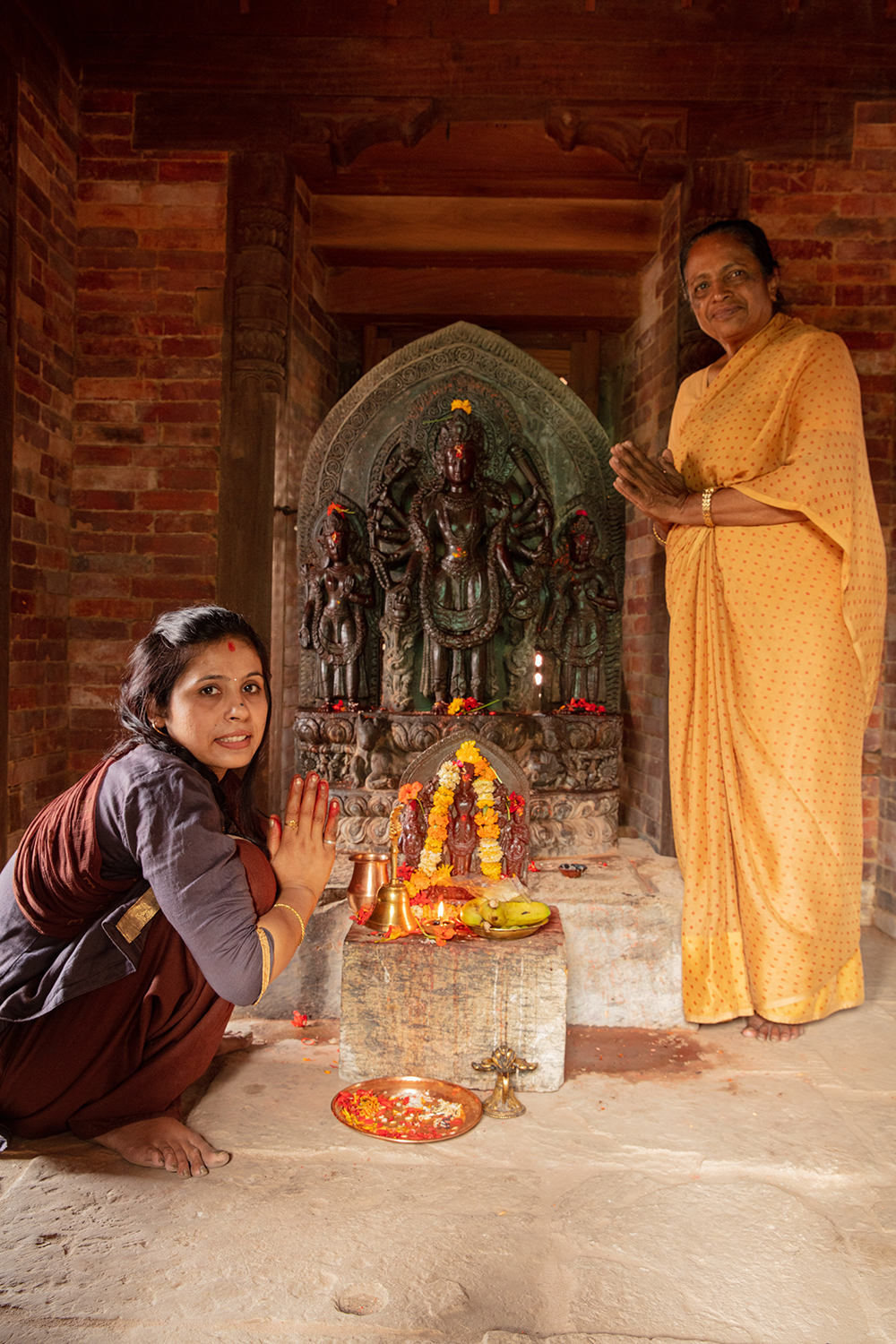
For hundreds of years, the relatives of Bandana Jha, 35 performed daily ritual puja at the temples in the square. When a priest who had performed puja for the Harishankar temple could not carry on, she and her mother-in-law took over.
Every day starting at 4am, Jha goes to the various temples in the neighbourhood. After completing the rituals at Krishna temple in the southern end of the square, she makes her way to Hari Shankar temple.
Read also: The history of heritage, Ashish Dhakal
She opens the door to the inner sanctum after cleaning off the dust and popsicle sticks in front of it. In the center of the sanctum stands the impressive statue of Hari Shankar. The right half of the image, Shiva, is flanked by a smaller Uma Parvati, while the left half, Vishnu, is accompanied by Laxmi.