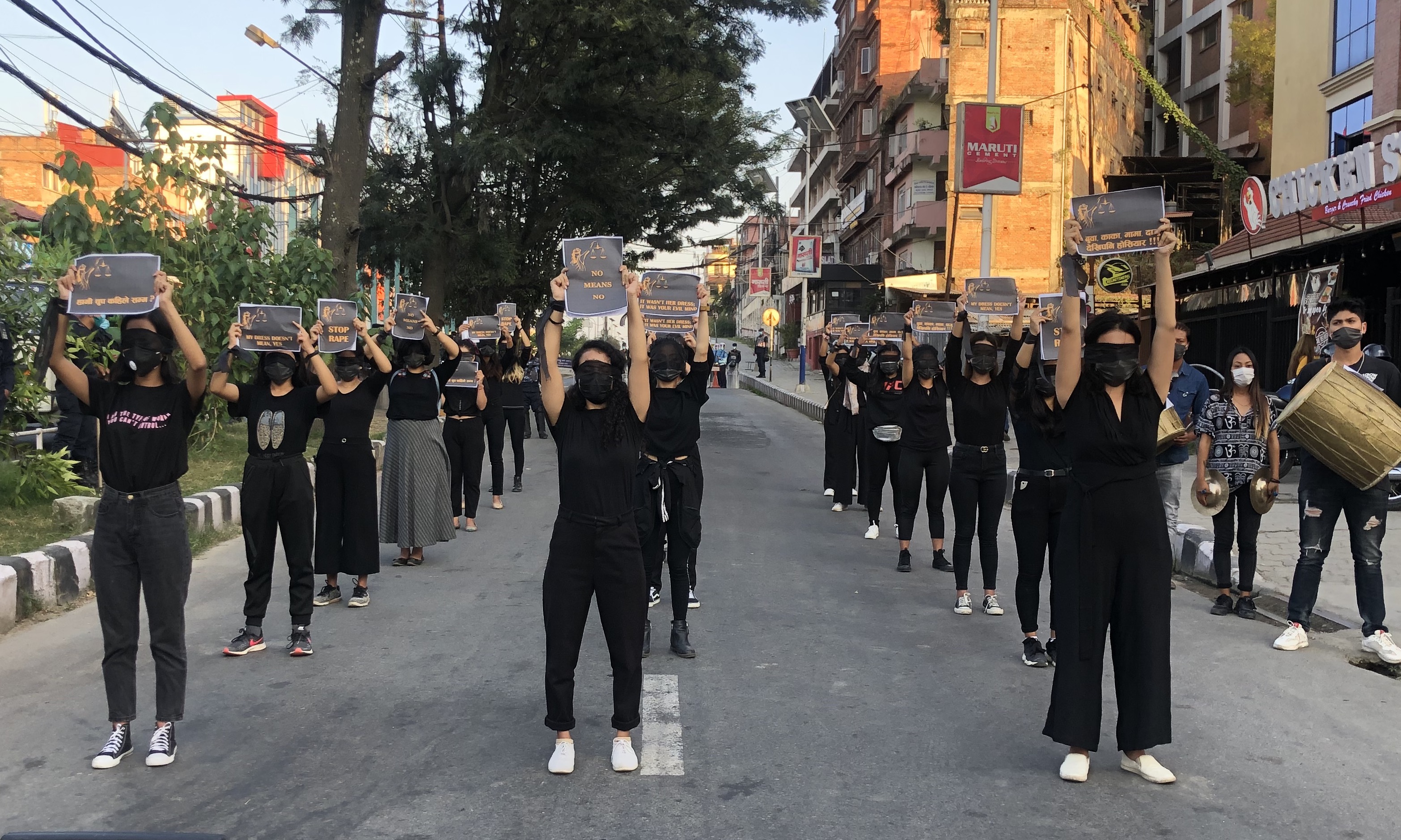
On 10 October 2020, the #ajhaikatisahane movement went viral on social media and gained attention like we were hoping it would. In the weeks before it, public outrage had grown in response to the rape cases in Bajhang and Bhaktapur.
It was crucial for such scrutiny of the government, and outrage against its failure in the investigation of the cases. But the movement was overtaken by demands for capital punishment.
The #ajhaikatisahane movement brought to light the social, legal and moral grounds on why the death penalty is not a solution for such heinous crimes, as well as demands including the need for gender-neutral definitions and punishment to mediators in cases of rape.
Forming and being a part of this team required people with aligning views on capital punishment, determination to take the risks, and most importantly, the ability to maintain solidarity for what lay ahead.
For many of us in the team, it was our first experience participating in a street demonstration, and we were surprised by the outcome. After a flash mob at Maitighar, we saw hundreds of instant shares on social media, and we started getting approached by people in positions of power with whom we were able to voice our concerns.
The movement received widespread support and appreciation but also criticism, with some limiting our efforts to just a performance. Comments included labelling us as ‘सडकमा नाच्दैमा बलात्कार रोकिएलार ?', चटकीहरु चटक देखाउँछन्', 'डलरडानस' (‘Will street dancing stop rape? Magicians’ tricks, Dollar Dance). There seemed to be a general misunderstanding of people towards initiatives led by young women.
Shockingly, such reaction was not restricted to a few individuals on social media sites but even public officials and political leaders who flippantly passed judgement about what we wore and our street performances.
They completely overlooked our efforts in coordinating the movement in creative ways. More so, such insensitive remarks only strengthened our resolve and convinced us that the struggle was not just against the perpetrators but the society at large, which is still guided by patriarchal beliefs and values.
The freedom of women in our societies has been curtailed for centuries, and their leadership questioned. Ironically, it is even more pronounced when women rebel to gain control over rights and decisions.