

At the edge of Tika Vidyashram School in Sanepa rises a new, three-storey building, much bigger than the one damaged in the earthquake. The classrooms are airy, bright and spacious, the staircases are wide and there is even a balcony that overlooks the grounds.
The government school was built 70 years ago with traditional mud mortar and bricks, and had to be demolished after the 2015 earthquake. The new blocks have been designed and built with reinforced concrete to be earthquake resistant, as well as to provide a child friendly, comfortable environment.

“The old school was dark, and the students looked gloomy. But the new classrooms provide a much better environment for children, and even the teachers are happy with the improved facilities, which means a better learning experience,” says principal Bimala Lamichhane. Like Tika School, many government schools in the earthquake areas have not only been rebuilt, but they have been built back better.
Read also:
Shaking up the health sector, Sewa Bhattarai
Lessons Unlearnt, Editorial
Tall order, Sewa Bhattarai and Prakriti Kandel
Tika School’s reconstruction is financed by loans from the Japan International Cooperation Agency (JICA) to the Nepal government. The main academic block of the school now has nine rooms, a building for science practicals is being erected nearby with four large rooms spread over two floors that will house a library, science lab, computer room and music room.
Tika School is among 8,000 schools undergoing reconstruction after being damaged in the earthquake. A majority of them are government schools and follow similar earthquake-resistant designs created by the Central Level Project Implementation Unit under the National Reconstruction Authority (NRA).
Engineers from the District Level Project Implementation Unit (DLPIU) oversee the construction and ensure that quality is maintained. The NRA says 4,201 of the damaged and destroyed schools have been rebuilt while 2,619 schools are under construction with help from various donors like JICA, USAID, and private groups.
Read also:
Nepal’s traditional seismic resistant designs, Sheilin Teo
Building back cheaper and stronger, Sapana Shakya and Aman Raj Khatakho
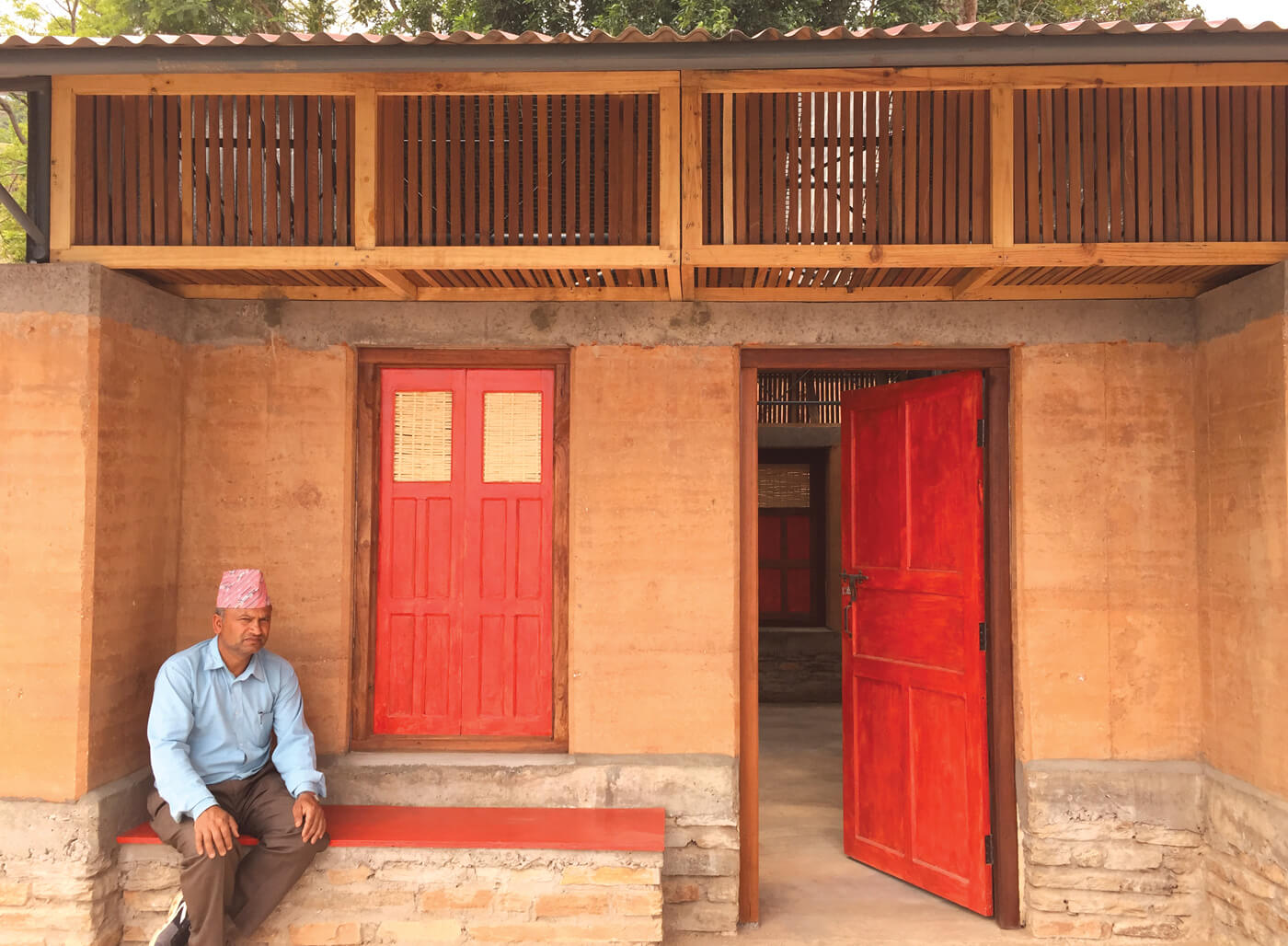
One private group working to rebuild schools is Sustainable Future, which uses non-traditional building technologies that are said to be environmentally friendly and earthquake resistant. Two schools destroyed in the earthquake, Dwarpaleswor and Bageswori schools of Kavre district, are being rebuilt using rammed earth technology.
Sustainable Future is also involved in the project that is using the same technology to expand Bayalpata Hospital in Achham, a facility run by the organisation Possible under a public-private-partnership with the central government. Sustainable Future collaborated with Namaste Nepal in building Bageswori school.