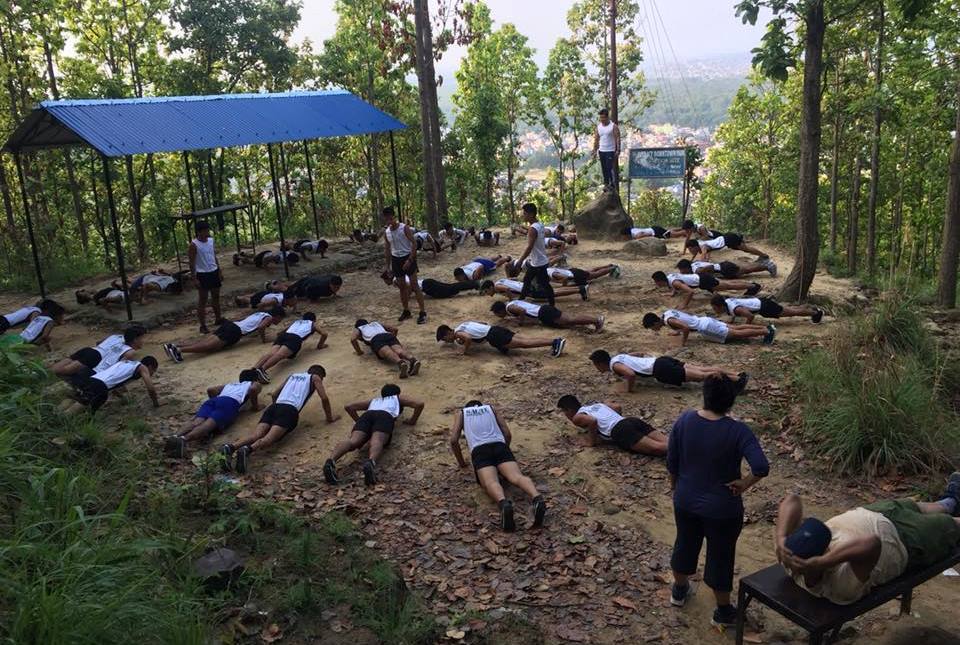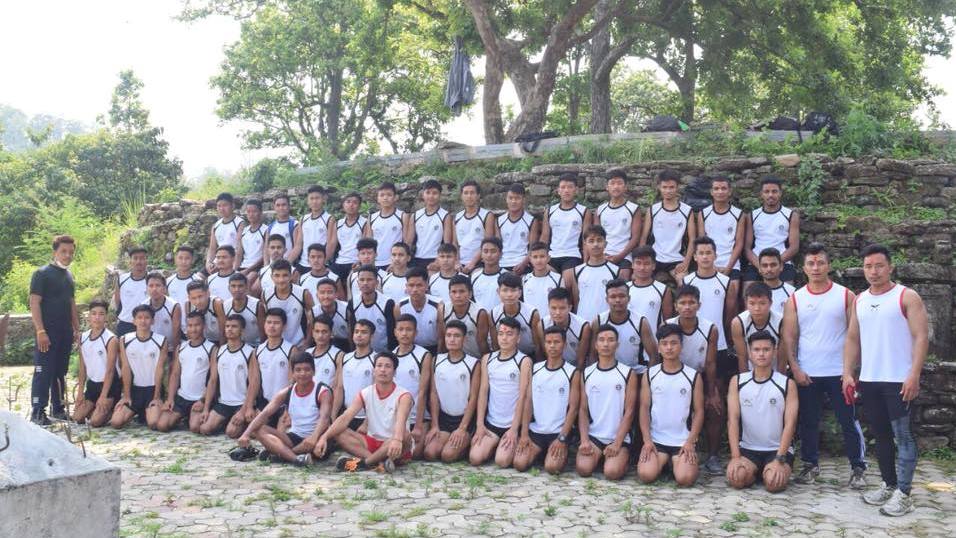
This time of year last year, the phone at the headquarters of Salute Gorkha Training Centre in Pokhara was ringing off the hook. Callers wanted to know if recruitment of Nepali soldiers into the Indian Army had started.
This year, the phone has not rung at all. The office is quiet.
Many young men from the mountains who had spent more than six months in training in Pokhara to be recruited as an Indian Gorkha soldier have given up. They are now trying their luck to find jobs in the Gulf.
Even so, whenever retired Butwal-based Indian Army soldier Laxman Shrestha gets calls from his village in southeastern Gulmi, the most frequently asked question is: “Dai, has the recruitment process begun?"
Shrestha retired four years ago after having served for more than 17 years in the Indian Army’s Gorkha Rifles, and currently operates a business in Butwal.
Read also: In the Line of Fire, Editorial
He also supports young people from his home village in the mountains who want to follow his footsteps. But with the uncertainty about India’s military reform plan called Agnipath, he is not able to give them a clear answer.
The Indian Army suspended Gorkha recruitment for two years from 2020 to 2021 due to the Covid-19 pandemic. But even afterwards, there are new conditions for applicants.
Introduced last July, Agnipath only allows recruits aged 17.5 to 23 years old to be hired as soldiers for four-year periods, after which they will be discharged with a lump sum of Rs1.8 million, but will not be eligible for a lifetime pension. Only 25% of trained soldiers will be offered a 15-year extension after the initial four years.
Recruitment did start in Butwal and Dharan, but the selection process was halted soon after by the Sher Bahadur Deuba-led government, saying that Nepal needed further study into the scheme.
Read also: India’s trial by fire for soldiers from Nepal, Anita Shrestha
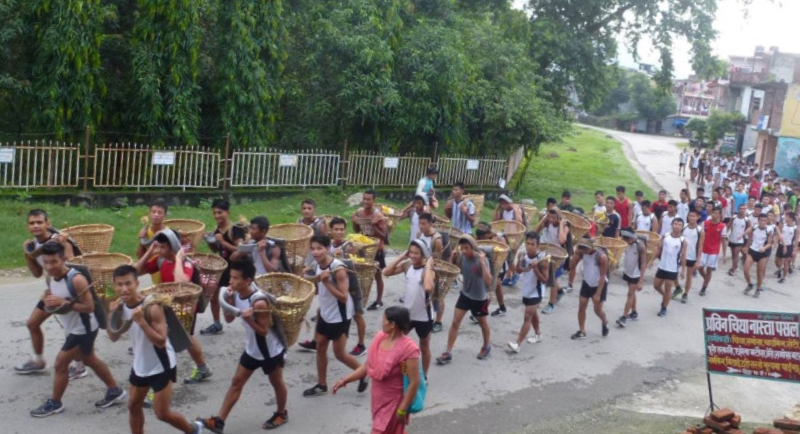
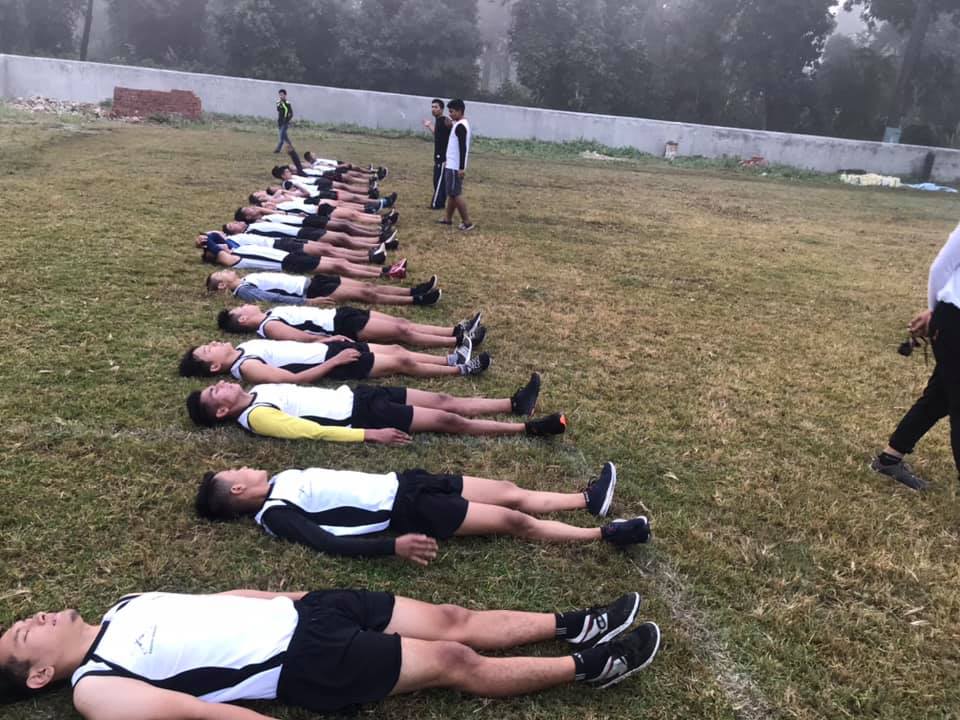
The decision was a blow to young Nepalis who wanted to be selected to the Indian Army. Some 306 applicants from the mountains of central Nepal had already enrolled at Salute Gorkha Training Institute in Butwal. Most are now trying to get an overseas job, and some want to try for the British Army. There are currently 4,100 Nepali Gurkha soldiers in the British Army, and 205 were selected this year from about 25,000 applicants, despite a long-running dispute over pensions. The British Army also recruits Nepalis on behalf of the Singapore, Oman and Brunei security forces.
“The selection for the Indian army is easier than the British Army and the Singapore police. That is why many trainees who enrol in our institute tend to try for the Indian military,” explains Lokesh Thapa, director of Salute Gorkha Training Institute who has been training aspiring recruits for 13 years. “But with the future uncertain, we cannot enrol a new batch.”
Trainees pay fees up to Rs80,000 each at the institute's branches in Butwal, Kathmandu, Lalitpur, Dang, Chitwan, and Dharan, and it is among 30 other similar centres.
“The fees they have paid has gone to waste,” says retired Indian Army Junior Commissioned Officer Kul Bahadur KC. “They have nowhere to go and no one who can answer their questions.”
Read also: Tales of courage and suffering, Nepali Times
In February, India’s Foreign Secretary Vinay Mohan Kwatra paid an official visit to Nepal to discuss Agnipath among other things, but no outcome was made public. Former Indian Army Captain Chok Bahadur Gurung has made up his mind about what it means: “Agnipath has shown that India is ignoring the Nepali government.”
Prime Minister Pushpa Kamal Dahal said he raised the Agnipath issue with Narendra Modi when the two met in New Delhi in May, but there was no joint mention of it. Even retired Indian Army major general Ashok Mehta who has served in the Gorkha Brigades is outraged.
He told Nepali Times: “The existing recruitment system was overturned without notice or consultation with a strategic Himalayan neighbour with whom India claims special relations. India-Nepal relations are like between daju and bhai, but this was not very big brotherly.”
A Tripartite Agreement in 1947 allowed the continued recruitment of Nepalis into the British and Indian Armies, but Nepali fighters went over to the British side even before the end of the 1814-16 war with the East India Company following which Nepal signed the Sugauli Treaty.
Read also: Gorkhas on the frontline between India and China, Pratistha Rijal
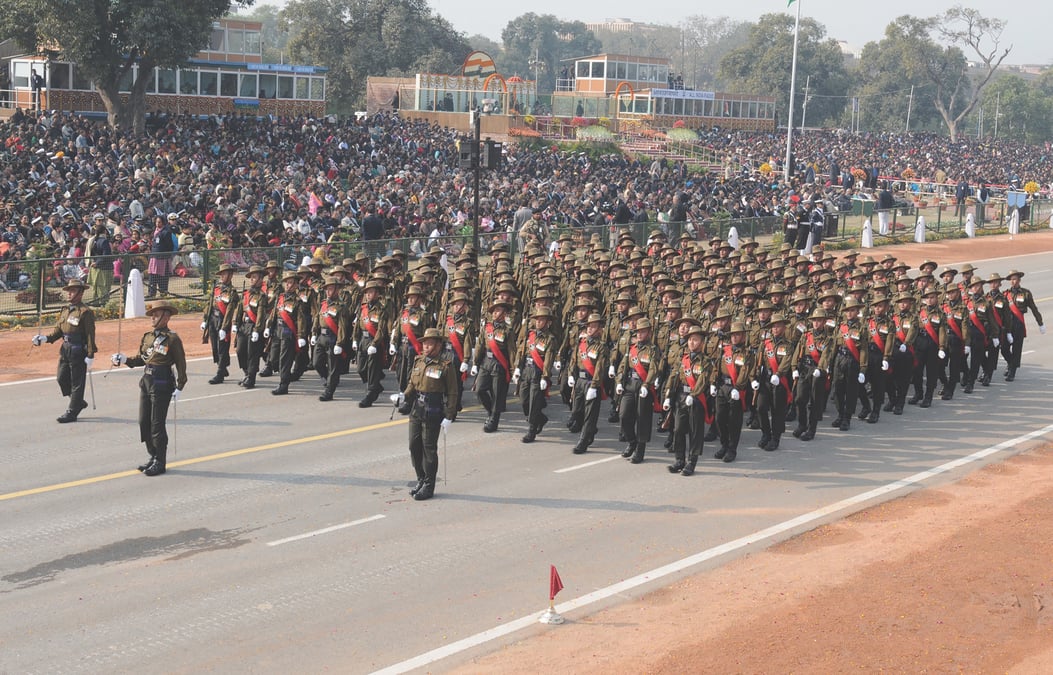
By the end of World War II, there were 10 Gurkha regiments in the British Army, and six of them were assigned to India and four to Britain after Indian independence. India has since added another Gorkha Regiment. (India refers to its Nepali soldiers as 'Gorkhas', while the British prefer ‘Gurkhas’.)
Former soldier Mukta Prasad Shrestha from Gulmi served 21 years as an Indian Gorkha soldier and still sees young people in his village training to do what he did as a young man. He agrees that the Agnipath scheme puts the livelihoods of Nepali soldiers at risk.