
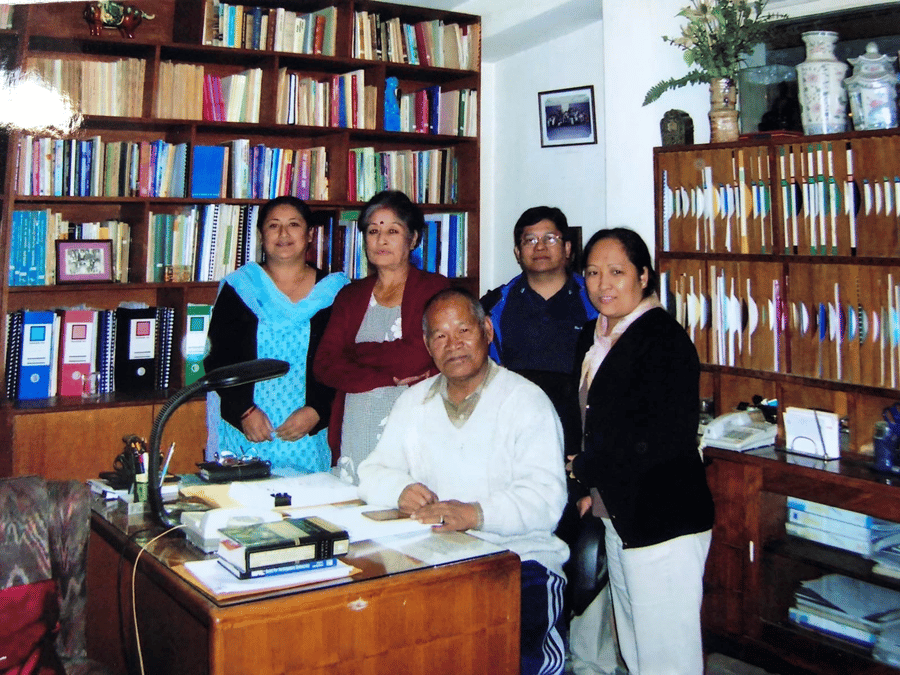
Harka Gurung, Nepal’s pioneer geographer, conservationist and government minister would have been 87 this month, marking the 20th anniversary of his death in the Ghunsa helicopter crash.
On 23 September 2006, Nepal suffered the devastating loss of its top environmentalists when the helicopter collided into a mountain in bad weather just after taking off following the inauguration of the handover of the Kangchenjunga Conservation Area to the local community.
Along with Harka Gurung, Mingma Norbu Sherpa, Chandra Gurung, Tirtha Man Maskey, as well as representatives of the World Wildlife Fund, USAID were among the 24 killed in the tragedy.
In the aftermath of the Bhote Kosi-Trisuli disaster, many have been asking what Harka Gurung’s advice may have been to prevent such a devastating loss of lives and assets. From the numerous books he has written about Nepal, we can hear his gruff voice telling us in his usual direct manner: “Know your geography before you plan anything.”
Indeed, as the search and rescue team turn their attention to retrieval of bodies and assessment of the damage to roads, bridges, and hydropower plants, it is clear that poor preparedness, lack of implementation of zoning laws and haphazard growth along the floodplain were the reasons for the great cost in human life and infrastructure.
Nepal’s most distinguished geographer, development thinker, conservationist and public intellectuals would have had a word or two to say about how if this disaster had happened in Dolpo, it would have been called a ‘natural disaster’.
Two decades after Gurung’s death, the shock of that tragedy has faded with time, but the significance of his life and work has not. Indeed, Nepal today needs the kind of intellectual courage, public commitment and interdisciplinary vision that he represented more than ever.
Harka Gurung was a rare combination of scholar, policymaker, administrator, writer, mountaineer, conservationist and sportsman. His intellectual interests ranged across geography, demography, development planning, sociology, environment, tourism and the social and cultural dimensions of Nepal. The American Association of Geographers described him as ‘a prominent conservation expert and a leading authority on the Himalaya’.
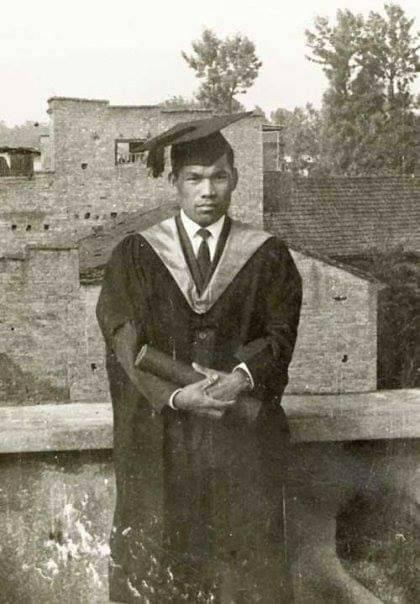
His academic journey reflects the breath of his knowledge. After early education in Nepal and India, he pursued higher studies in geography and earned his PhD from the University of Edinburgh in 1965. His then taught at SOAS, University of London, Tribhuvan University and research and conducted many research projects.
But Gurung’s wisdom was not just theoretical, it came from his wide experience in fieldwork and travels across Nepal. After the Swiss development expert Toni Hagen, Harka Gurung was perhaps the most widely travelled in Nepal at a time when the country had few roads.
Gurung was never content to remain within the confines of academia. He believed that knowledge had to serve society and inform public policy. That conviction brought him into the heart of Nepal’s development-planning process. He served as a member of the National Planning Commission (NPC) and became its Vice-Chairman.
This job coincided with a formative period in Nepal’s efforts to understand and address the country’s extraordinary geographical and socio-economic diversity. A surviving NPC document from 1975, bears his name and has themes and priorities that are more valid than ever, and would possibly have prevented Nepal from making the same mistakes over and over in the past half-century.
For Gurung, Nepal’s mountains, hills and plains were not merely physical landscapes, they shaped the opportunities, constraints and inequalities experienced by its people. His work therefore consistently connected geography with development, infrastructure, population, migration, environment and regional planning.
He later entered government as a minister, serving in different portfolios including education, industry and commerce, tourism, and public works and transport. His years in public office reflected another characteristic of his personality: a willingness to translate ideas into action.
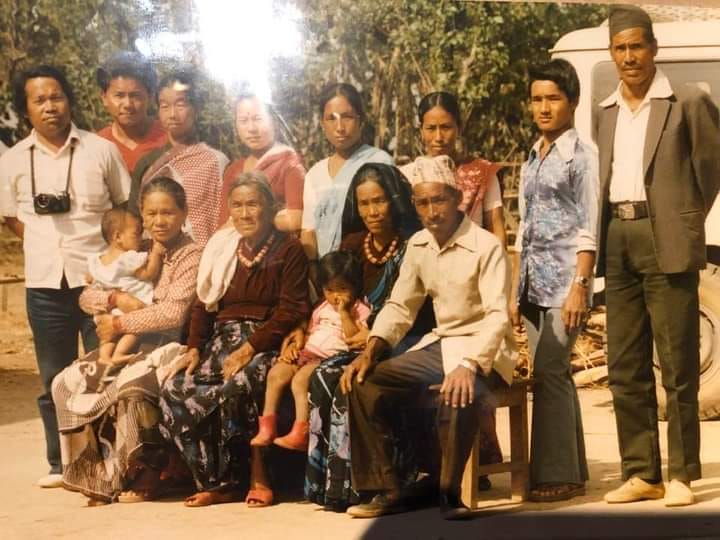
RENAISSANCE MAN
It is difficult to fit Gurung into a single professional category. He was a geographer, but his geography was inseparable from questions of development and society. He was a development expert, but he understood that development without attention to people, culture and environment could be deeply problematic. He was a conservationist, yet he believed conservation should involve and benefit local communities.
He was also an important voice on questions of social inclusion and national identity. His writings examined Nepal’s ethnic, cultural and political diversity and challenged approaches to nation-building that excluded sections of society. His message the book Trident and Thunderbolt: Cultural Dynamics in Nepalese Politics about a more inclusive Nepali nationalism, one capable of creating a genuine sense of belonging among different communities, was way ahead of its time.
Nepal has undergone profound political and social transformation since his death. Federalism, inclusion, identity, migration, urbanisation, environmental pressures and regional inequality have become central questions of national debate. Many of the issues Gurung examined decades ago remain unfinished business.
His intellectual legacy therefore deserves to be revisited not merely as history, but as a resource for thinking about Nepal’s future. He contributed to the promotion of mountain tourism and was involved in the government committee responsible for giving indigenous names to Himalayan peaks.
He understood that the long-term protection of Nepal’s natural heritage could not be achieved by simply drawing boundaries around protected areas. Local communities had to be partners in conservation.
It was therefore tragically symbolic that his final journey was connected to precisely such an effort. The people aboard the helicopter were returning after an event associated with transferring management of the Kangchenjunga Conservation Area to the local community – a cause he had tirelessly championed.
There was another side to Harka Gurung that is sometimes overshadowed by his academic and public achievements: he was a sportsman and an adventurer. His interest in mountaineering and the Himalaya was not that of a distant observer. He engaged with the landscape directly, travelling through it, studying it and experiencing its challenges. He was equally at home with maps and mountains, research and public policy, books and the football field.
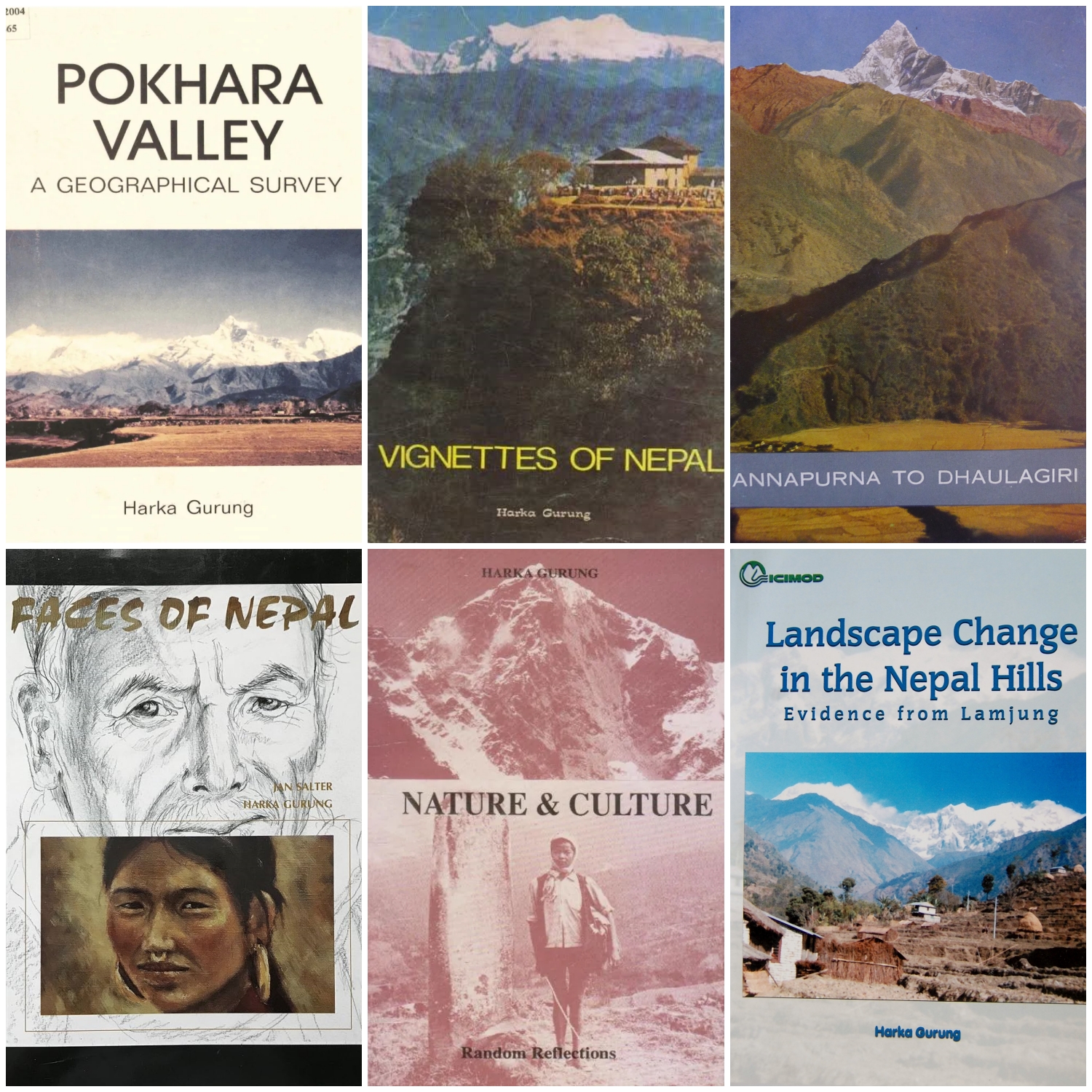
Harka Gurung left behind a substantial body of scholarship on geography, development, environment, demography, tourism, culture, mountaineering and Nepal’s social and political structure. His publications include works such as Pokhara Valley: A Geographical Survey, Vignettes of Nepal, Annapurna to Dhaulagiri, A Decade of Mountaineering in Nepal Himalaya, 1950–1960, Faces of Nepal, Nature and Culture, From Exclusion to Inclusion and Nepali Nationalism.
His writings remain valuable because they were not simply descriptive. They asked difficult questions about what Nepal was, how it was developing and who was benefiting from that development.
He brought a geographer’s eye to the country’s physical landscape, a social scientist’s understanding of communities, a planner’s concern for development, and a nationalist’s desire to see Nepal become a more confident and inclusive country.
The best way to pay tribute to Harka Gurung today is not just to praise his achievements. It is to ask: Would he have been satisfied with the quality of Nepal’s development today? Would he have accepted the continuing gap between Kathmandu and the rest of the country?
Would he have been silent about environmental degradation, unmanaged urbanisation, depopulation of the hills, the pressures on mountain communities, or the exclusion of marginalised groups?
Most definitely not. His legacy reminds us that development must be geographically sensitive, socially inclusive and environmentally sustainable. It reminds us that Nepal cannot be understood from Kathmandu. And it reminds us that national progress requires serious scholarship, evidence-based planning and the courage to challenge conventional wisdom.
Perhaps most importantly, he demonstrated that a public intellectual need not be detached from public life. A scholar can enter government without surrendering intellectual independence. A policymaker can remain a researcher. A conservationist can be an advocate for communities. A nationalist can believe in diversity and inclusion.
That synthesis is rare—and that is precisely why his absence continues to be felt. On the 20th anniversary of his death, we must remember Harka Gurung with a sense of unfinished responsibility.
Nepal has changed enormously since that September day in 2006. Yet many of the questions that occupied Gurung remain before us: How should development be distributed across regions? How can Nepal protect its fragile environment while creating economic opportunity? How can its enormous cultural diversity become a source of strength rather than division? How can the Himalaya be protected while the people who inhabit it enjoy dignity and opportunity?
These are not merely questions for government. They are questions for scholars, planners, conservationists, educators, citizens and a new generation of Nepalis.
The helicopter crash took his life, but it could not take away his ideas. His books remain. His scholarship remains. His contribution to planning, geography and conservation remains. His vision of a more inclusive Nepal remains.
The most fitting tribute to Harka Gurung would be for Nepal to continue the journey he began—to build a country that understands its geography, values its diversity, protects its natural heritage and places knowledge at the service of its people. To help build a Nepal he believed was possible.
Jit Gurung is a native of Tangting, Kaski and is currently serving with the United Nations in the Central African Republic.