
On 23 September 2006, a helicopter carrying many of Nepal’s foremost conservationists, along with diplomats, politicians, journalists and crew crashed in Ghunsa of Taplejung district.
None of the 24 on board survived when the aircraft hit a mountain during a monsoon storm. The 29 September 2006 edition of this newspaper carried a front page tribute with only one word: VOID.

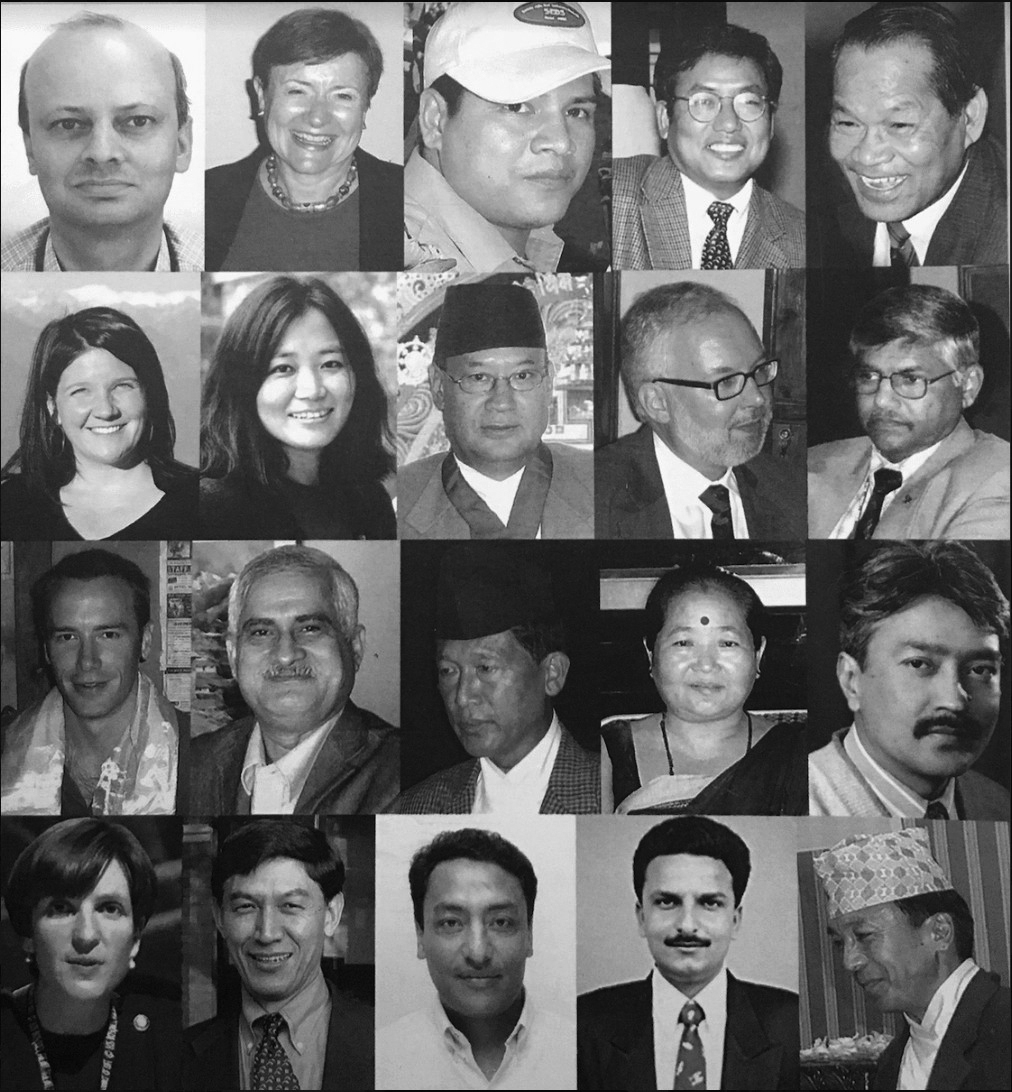
Among those on board were WWF Nepal’s Chandra Prasad Gurung who helped design the concept of ‘conservation areas’ instead of ‘national parks’ in Nepal.
Mingma Norbu Sherpa headed the WWF’s Eastern Himalayas Program based in Bhutan, a Nepali who had won international recognition for empowering communities to own nature conservation initiatives.
Harka Gurung was Nepal’s veteran geographer, author and as the foremost authority on the Himalaya advised many governments on ecotourism. He was also in charge of naming many of Nepal’s unnamed peaks.
Tirtha Man Maskey was four-time director general of the Department of National Parks and Wildlife Conservation and was widely credited with the early success in curbing poaching of tigers and rhinos at Chitwan National Park.
Among the other internationals on board were Pauli Mustonen the Charge d’Affaires of the Finland Embassy in Kathmandu, USAID Nepal deputy director Margaret Alexander, Jillian Bowling Schlaepfer and Jennifer Headley of WWF-UK.
The team had been returning after handing over the management of Kangchenjanga Conservation Area from the government to local communities the day before. The narrow valley at Ghunsa was covered in late monsoon clouds, and it was raining heavily.
Reports said the Russian pilots of the MI-8 helicopter were under pressure from officials who were in a hurry to get back to Kathmandu for a meeting. First reports said the helicopter was missing, but a day later everyone’s worst fears came true.
“There was a sense of horror and anguish in the conservation community,” recalls Lisa Choegyal, New Zealand’s honorary consul in Nepal. “It was difficult to believe.”
This week marks two decades since the tragedy. In the weeks and months after the crash, there were fears about whether Nepal’s conservation institutions could recover from this loss.
“Many said WWF Nepal would be weakened and unable to function properly. But we turned our grief into strength and moved forward,” says WWF Nepal country director Ghana Gurung, who was supposed to be on the helicopter but had to give his seat to someone else.
That resolve is reflected in the progress the conservation sector has made in the years since the crash as Nepal’s environmental movement strived to build on the legacy that their fallen colleagues were committed to. Nepal’s forest cover has reached 46%, tiger numbers have crossed 400, and wildlife poaching, especially of rhinos, has fallen sharply.
Nepal’s tiger population stands at 429 this year, up from 121 in 2010. The rhino population increased from 645 in 2015 to 752, while snow leopard research and conservation have also expanded. Nepal now holds the fourth-largest snow leopard population among the species’ 12 range states. These are all apex species, and protecting them protects their ecosystem.
Gurung says these gains are the result of sustained cooperation across communities and institutions: “We have reached significant milestones in conserving biodiversity through the collective efforts of local youth, authorities, Nepal Police and the Nepali Army.”
FELLOWSHIPS
But perhaps the most enduring legacy of Ghunsa has been the opportunity for a whole new generation of young Nepali conservationists to get higher education abroad in the theory and practice of safeguarding people’s livelihoods to protect nature.
In the aftermath of the tragedy, five scholarships were created in memory of those who died: the Chandra Gurung Memorial Fellowship, Nepal Conservation Memorial Scholarship, Mingma Norbu Memorial Scholarship, Jennifer Headley Memorial Scholarship, and Jillian Bowling Schlaepfer Memorial Scholarship.
These programs have facilitated students from Nepal’s diverse communities access to undergraduate and postgraduate study in Nepal and abroad, offering training, exposure and a chance to build professional skills for students who might otherwise have viewed higher education as unattainable.
The Mingma Norbu Memorial Scholarship, for instance, enables students to pursue a master’s degree at Lincoln University in New Zealand, where Sherpa himself once studied under a scholarship set up by Edmund Hillary. Two students are selected for the award every two years ever since 2006.
“I had a great experience to learn about natural resources, biodiversity and conservation,” says Sonam Tashi Lama, who is now with the Red Panda Network in Taplejung. “The scholarship helped me fill the gap in my learning.”
Since its inception, more than 200 students from Nepal’s rural and underserved communities and mostly women, have received assistance across the scholarship categories and completed undergraduate or postgraduate studies.
“The Nepali students have a good reputation, they are good at stepping up, organising themselves and making the most of the opportunities provided to them,” says Choegyal.
Beyond financial support, the scholarship provides international exposure and allows students to examine biodiversity and conservation from global perspectives. Nepal has benefited when graduates bring home academic knowledge and research experience, while New Zealand learns from Nepal’s experience in community-based conservation.
These efforts have aimed to build awareness, expertise and commitment needed to sustain conservation work and pass it to future generations. WWF Nepal has also sought to bridge the generational gap through school eco-clubs and support for undergraduate and postgraduate education.
“The scholarships have helped nurture the next generation of conservationists by enabling them to develop technical expertise and skills, and apply them in jobs in conservation areas in Nepal,” says Gurung.
There are two memorials in Kathmandu and Taplejung for those who perished 20 years ago. Choegyal says the memorials are not just reminders of those who died but they also reflect how far Nepal’s conservation sector has come since the tragedy.
“I thought the crash was the end for Nepal and conservation. But we were proved wrong,” she says. “Nepal is now far ahead in areas including tourism and community forestry.”
But while that progress offers grounds for optimism, it does not lessen the scale of the work still ahead. Conservation, as well as building a pool of expertise, has become increasingly important as conservation faces pressures from climate change, unchecked and unregulated development, and human-wildlife conflict.
The Bhote Kosi-Trisuli flood disaster is also a stark reminder that development has to go hand-in-hand with conservation, and that we ignore nature at our own peril. Building on those gains in the aftermath of Ghunsa will require sound policy, long-term planning, public investment and leadership from qualified professionals and officials.
Just as importantly, the next phase will depend on strengthening coexistence between people and wildlife. As development expands, conservation measures and wildlife-sensitive infrastructure will need to keep pace.
Says WWF’s Ghana Gurung: “There is a need for coexistence between humans and wildlife. For that, nature-based solutions that take people’s livelihoods into account is the number one answer.”
MEMORIALS
.jpeg)
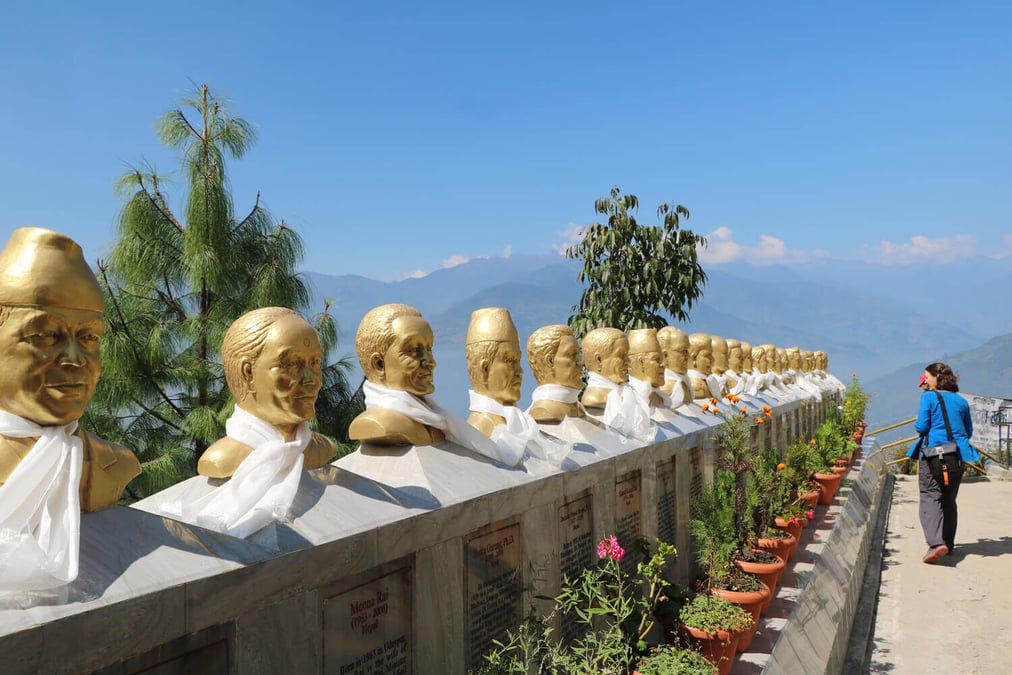
Ghunsa’s legacy is marked not just with conservation scholarships, but also in stone. There is a memorial in Taplejung with the statues of the 24 who died with a service held every year on 23 September.
There is also a Conservationist Memorial Statue Park at Ramkot in Nagarjun Municipality on the western rim of Kathmandu Valley. This memorial with cement likeness of the conservation heros was built by the Ministry of Urban Development, but it is dilapidated, overgrown with vegetation, and in a sad state.
While some statues still bear the names of those they commemorate, on others, the names have faded or disappeared.