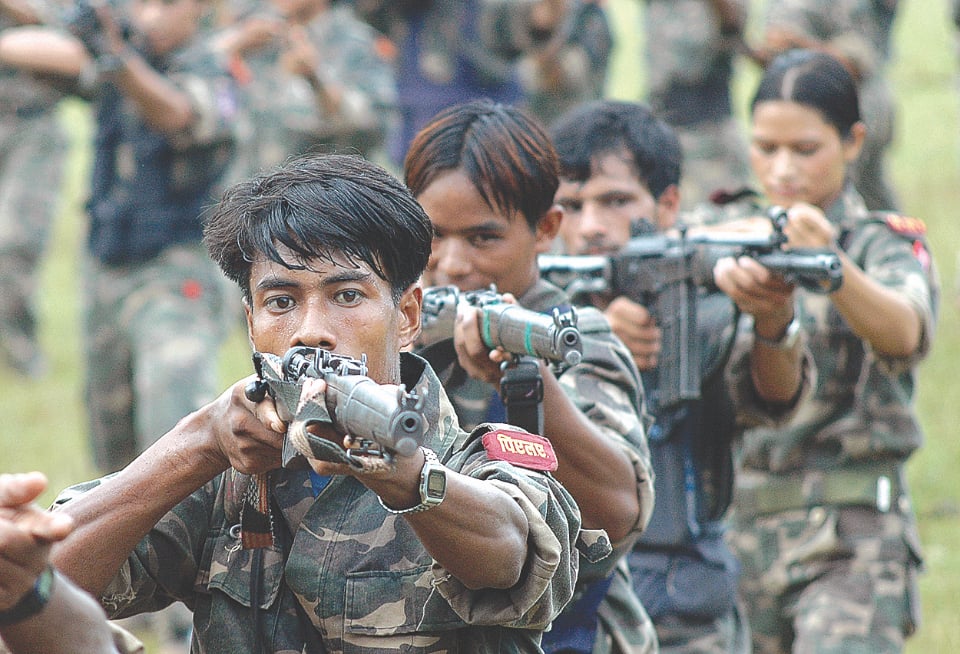
People like myself were too young during the decade of the Maoist War to remember its horrors. We often wonder what life was truly like back then. Perhaps the closest we have come to experiencing a national crisis of that scale – with the protests, violence, curfews, and political maneuvering – was the GenZ movement in September.
How did people cope? What did they fear? What was it like in the cities and villages? How was it that the king still held so much power? What motivated the guerrillas? And, how did ordinary people adjust and endure the war?
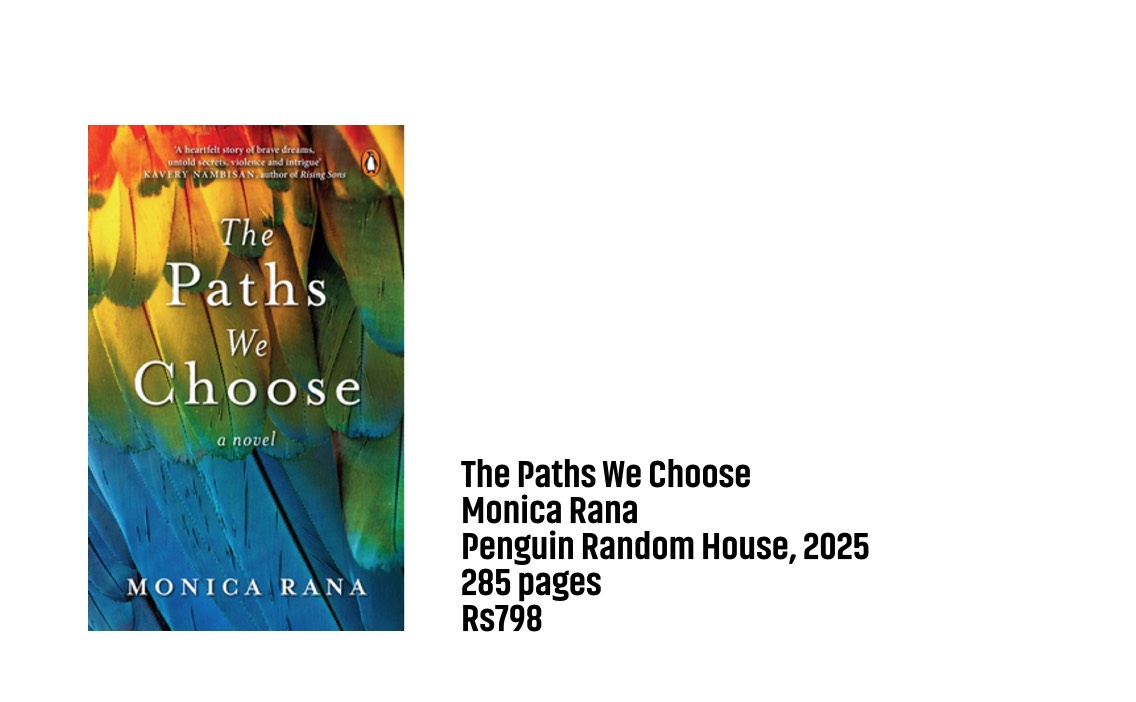
My curiosity about the war that ended 20 years ago was met with a rollercoaster of emotions with Monica Rana’s debut novel, The Paths We Choose.
The novel is not a retelling of events from the vantage of leaders, rebels. It is not about the violence, but a carefully curated perspective of ordinary people caught up in it. It is a glimpse into how the war altered or defined their paths. This is the 'People’s War' from the people’s own perspective.
Readers are immediately invested into the lives of two central characters, the sister duo, Sumnima and Rita. The elder radiating from the beginning with her brave and cunning aura, and the latter, more timid and obedient, much of her time absorbed in awe of her sister.
The writer’s language flows as effortlessly as the sisters’ strides up the hills to steal mangoes from Dhire Dai’s trees, only to race back down to Rato Mato, carrying us through their journey into adolescence. Amidst the rolling hills, mango trees, life is filled with laughter, adventures, and everyday banter, scenes so serene that they carry an unsettling calm that hints at what lies ahead.
Village life is not all painted in romantic hues. The stark reality of poverty, subsistence, and contrast with the comfort of city living are never far away. Amidst these reminders, there runs a humbling truth: happiness once rested on small things, not on the material excess that define urban life.
As the pages turn, the title begins to resonate: two sisters, once bound by the same bloodline, shared dreams, and the same roof, are caught in the crosshairs of war and forced onto separate paths. One by choice, and the other by necessity.
The story unfolds with the seasons: the relentless monsoon rains, the scorching heat of summer, and a liberating winter that carries bittersweet truths. The year is 2001, as the insurgency intensifies. Against this backdrop, the cousins’ lives diverge.
Sumnima is drawn into the rebels’ ranks to 'fight for equality and freedom', while Rita is uprooted, carried across distances, and placed in Seto Bangala as a helping hand among the higher-ups, in her family’s desperate attempt to secure her a better life after their village is reduced to a 'ghost city' by violent attacks.
There are betrayals and beginnings, high palaces and humble hills, royals and rurals, identity and ideology, loss and lament, distance and discovery. Through upheavals, tears, and struggles, one thing remains constant: both sisters wonder about the other. They care. They long to reconnect. They hold fast to the dream they once shared to open a guesthouse in their village someday. A dream to simply live with no fear. To be free. To be happy. And, to be together.
The writing illuminates vital themes: innocent people caught up in strife, the vast chasm of class from royals dining on silver plates to villagers back home hiding their last grain to save it from looters. And discrimination so stark it was as if people carried labels on their foreheads, marked by caste, skin colour, and gender.
The sisters eventually reunite, but their journey is not an easy one, and what lies ahead is far from the future either of them once imagined. One might romanticise it as fate, or might recoil at the harsh reality Monica Rana lays bare: it is often the innocent who bear the heaviest burdens of war. Civilians are trapped between warring sides, enduring hunger, displacement, and violence through no fault of their own.
Wars continue to rage across the world. Though the novel does not particularly focus on exposing the horrifying depths of war crimes, it remains a timeless reminder of what the Palestinian poet Mahmoud Darwish once said:
“The war will end, and leaders will shake hands. The old woman will keep waiting for her martyred son. And those children will keep waiting for their hero father. I don’t know who sold our homeland, but I saw who paid the price.”