
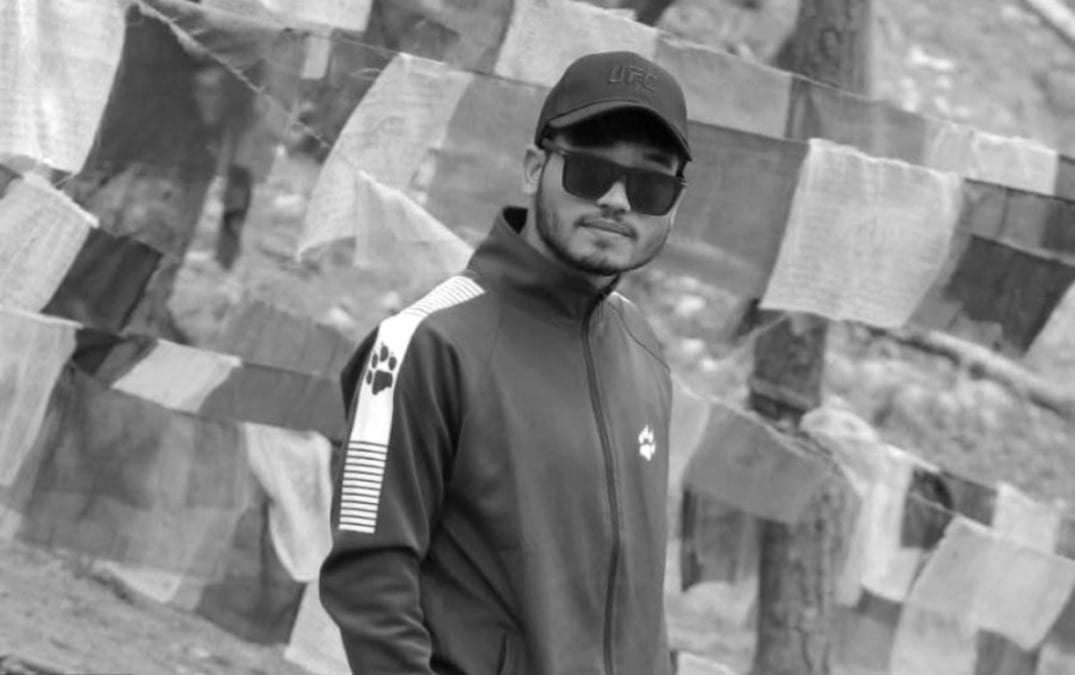
The agonising death after self-immolation of ride hailing driver Ganesh Nepali in Kathmandu last week was triggered by repeated traffic violation fines that added to his financial strain.
The tragedy once again sharpened the divide between supporters and opponents of Prime Minister Balendra Shah’s government. Critics pointed to the recent drastic hike in traffic fines, the insensitivity of the Metro Police and the lack of empathy or any messages of contrition from the government.
Instead, what we saw was an attempt to pass the blame to the previous government and insensitive comments about suicide from RSP supporters on social media. But what took the cake was the coordinated blockade of some media companies and businesses on Monday.
Government supporters posted on social media that this was just a symbolic protest against those critical of the government. Indeed, the mainstream press has been highlighting the government’s (mis)handling of Nepali’s self-immolation and the repeated evictions from shelters families already evicted from their bulldozed homes.
Whoever gave the prime minister the idea that blockading media companies was a good idea seem to have accurately predicted that there would be outrage in the press about it. And they were right. The immediate high-decibel criticism of the move was intended to deflect attention from Nepali’s death and the eviction of the unhoused.
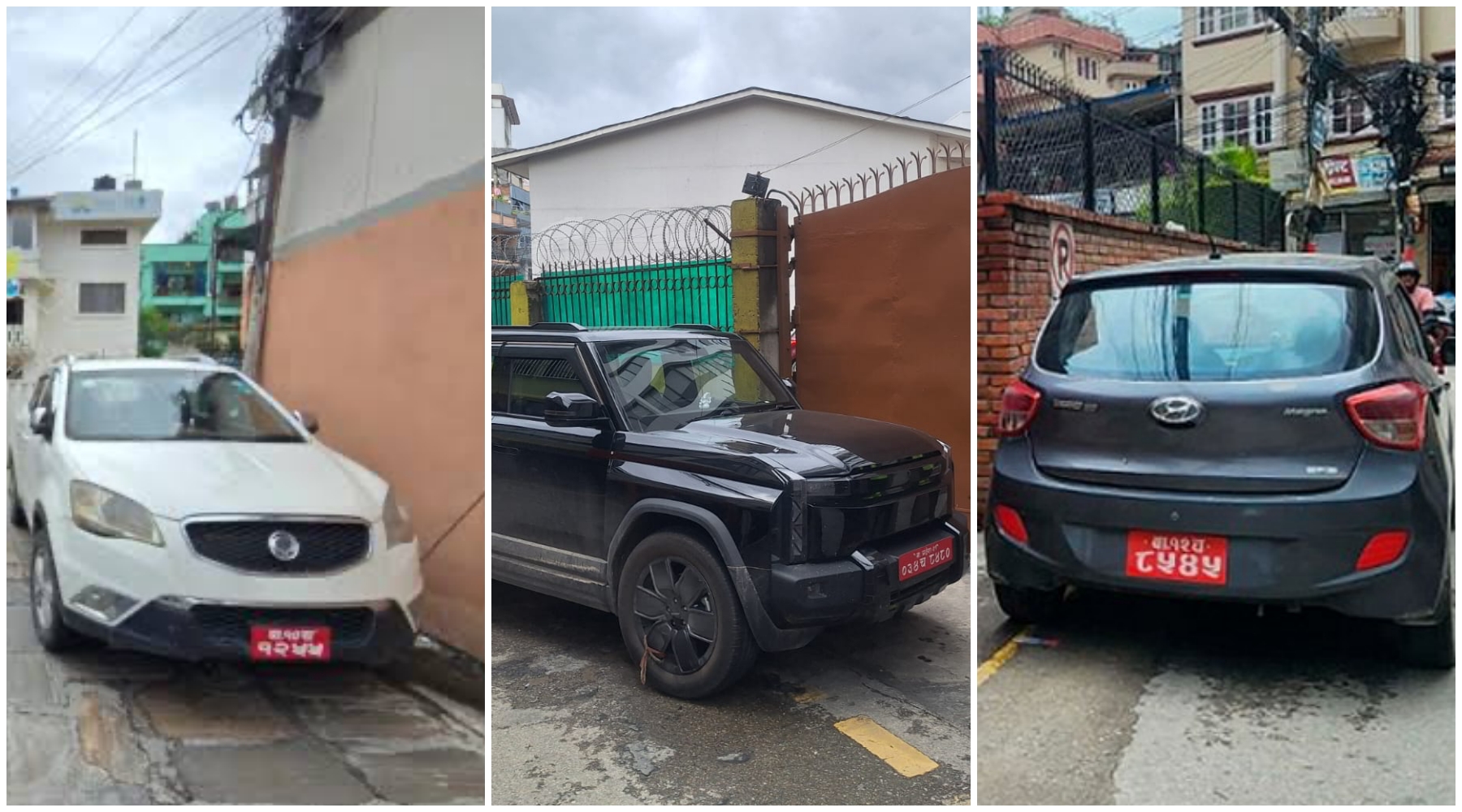
They were also trying to demonstrate to journalists critical of the government’s response to Ganesh Nepali’s death just how inconvenient illegal parking can be. But not only was this an insensitive way to show it, the logic was also too convoluted.
Enforcement of traffic laws has become stricter under the RSP government, with increased crackdowns on traffic infractions. In this space, we have argued that traffic laws cannot be legislated with penalties, but with education, discipline, and better roads.
Media started investigating whom the cars belong to. One of them belonged a member of RSP. Curiously, his RSP distanced itself from the event, condemning acts that hinder the freedom of press and calling for an investigation into the blockade.
This was taken as the latest indication of a widening rift within the RSP between Prime Minister Shah and party chair Rabi Lamichhane. There is growing disquiet among Cabinet members loyal to Lamichhane about the prime minister’s impulsive decisions and erratic behaviour.
It does not help that a social media meme account with more than 600,000 followers known to be associated with the Prime Minister's chief adviser Kumar Byanjankar threw its weight behind the intimidation tactic, posting: ‘Media houses that were crying about no parking laws being unfair are now having to issue press statements when they were inconvenienced for 5-6 hours.’
Even supporters of the prime minister and the RSP have been posting their misgivings about the government rash and spur of the moment decisions, saying this hurts credibility and could cost public support.
'We can consider the government is involved (in the media blockade),' wrote political commentator Chandrakishore on social media. 'This is a form of dictatorship where instead of tanks coming down the road, a vehicle is parked at people's doorstep in a way that leaves a silent message - We can come to your door next.'
Monday’s events also came after Kathmandu Metropolitan Police dramatically and inexplicably scaled back patrolling on New Road, allowing the reappearance of street vendors in Kathmandu’s trade hub. The visuals circulated on the social web was clear: see what happens when the authorities aren’t around to enforce rules?
Such heavy-handed, self-righteous, that’ll-show-em tactics are par for the course for Nepal’s current leadership, for whom performance on social media is all that seems to count.
Last month the Infrastructure Minister Sunil Lamsal said contractors should have their legs broken if they delay projects. Lamsal, a Shah loyalist, later clarified he meant that metaphorically. Then, the PMO reportedly called the police at 1AM ordering it to arrest Minister of Industry, Commerce and Supplies Gauri Kumari Yadav, on suspicion that she leaked information on fuel price reduction to gas stations.
These events have also highlighted how corrosive the anti-mainstream media sentiment has become in Nepal. True, Nepal’s media is not without its flaws, but intimidation and scare tactics have no place in a democracy.
But all this is just a distraction from the cascade of events that led to Ganesh Nepali pouring petrol on himself outside the passport office and setting himself on fire. The underlying causes of his frustration is the real structural crisis this government should address — unemployment, lack of social and financial protection in the gig economy, police brutality, a disproportionate justice system that lets the rich off easy while ordinary Nepalis lose their savings and livelihoods for minor infractions.
These are signs of political dysfunction and need political solutions. But in an impassioned speech in Parliament, Home Minister Sudan Gurung passed the buck to the Kathmandu Metropolitan Police — not traffic police — who had wheel-locked Ganesh’s vehicle.
This tragedy is symptomatic of sustained political, institutional and governance failures that continue to let Nepal’s young people down. And while shifting the blame is reckless, the fact that Ganesh took this tragic step after traffic penalty enforcement became more uncompromising must be taken seriously.
In 2023, after Prem Acharya also self-immolated himself outside Parliament, then mayor Balendra Shah wrote on social media: ’Every level and organ of the state has failed in every way— his business, his despair, his protection, his plea for help’.
We hope the leadership that showed such empathy to Prem will not reduce Ganesh’s tragic step to ‘He was angry, so he burnt himself’.