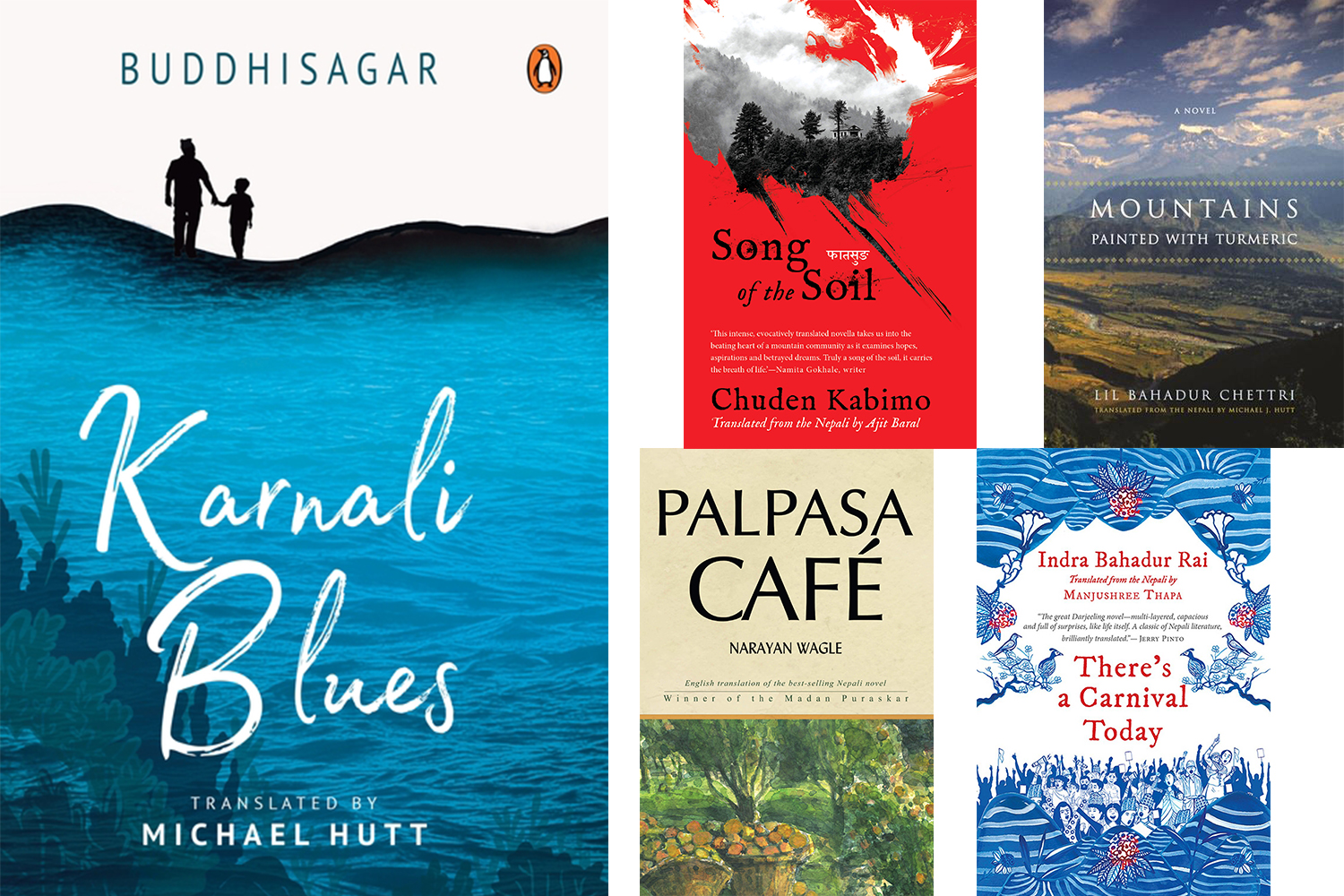
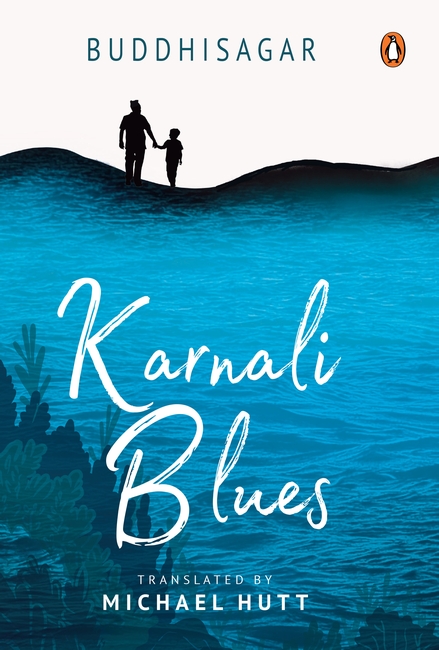
A character in Buddhisagar’s bestselling 2010 novel कर्नाली ब्लुज (Karnali Blues) has the habit of adding “हजुरको” (‘hajurko’) at the end of his sentences whenever he speaks. Eventually he runs a teashop which takes its name after the same memorable idiolect: हजुरको चियापसल (‘Hajurko Chiyapasal’).
To the reader of Nepali, the nuance clicks immediately – a phrase is used so often that it takes on a character itself. But how does one transpose the same effect into the English medium when translating?
Michael Hutt, whose translation of Karnali Blues was published in December by Penguin India to rave reviews, agonised over how to render हजुरको into Nepali, trying to find the perfect turn of phrase without misrepresenting it.
“‘For you, sir teashop’ just doesn’t work,” says Hutt, a professor of Nepali and Himalayan studies at the School of Oriental and African Studies (SOAS) in London. “At first mention, I say something like ‘for you, sir’, so that the semantics will be apparent to an English-language reader, but keep the ‘hajurko’ in the later instances.”
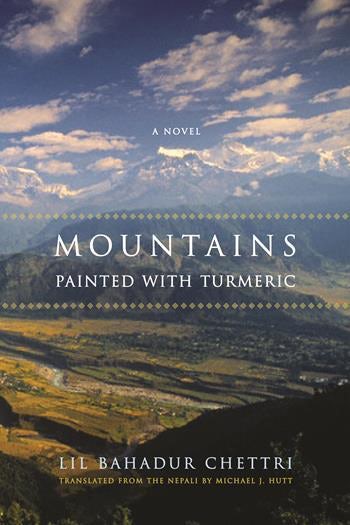
Hutt’s other translations of Nepali works include Laxmi Prasad Devkota’s मुनामदन Muna Madan in 1996 and Lil Bahadur Chhetri’s बसाईँ Basain (as Mountains Painted with Turmeric) in 2008.
Even then, Hutt adds, ‘for you, sir’ may not be the perfect choice, as another reader of Nepali literature may immediately, upon coming across the phrase in the book, quip, “I would have translated that differently.”
Nevertheless, Hutt believes that as a translator, he has a serious responsibility to the author and the original text to not distort the intended impact and meaning.
For author Buddha Sagar, translation is a joint effort. He says, “The Nepali was mine, but the translation is Michael’s too.”
There are no perfect translations of books, and Hutt believes “a sense of compromise must be reached between the original text and the translation”.
When translating from the Nepali language into English, says Hutt, there is a character embedded in the Nepali language that speaks to a Nepali speaker or reader but not to English. The levels of politeness and deference between speaker and interlocutor in conversational context, for example, is difficult to take from Nepali and replicate in English because there are not exact counterparts.
But taking excessive liberties in the name of ‘capturing the spirit of the text,’ says Hutt, is an act of violence. “If certain aspects of the original language do not come elegantly in translation, one has to accept it,” he says. “The original must not be changed beyond recognition.”
One classic challenge, he recalls, was to choose how much Nepali to put into the translation, especially in the cases of nouns for family roles such as father, mother, sister, uncle.
Set in far west Nepal, the narrative of Karnali Blues is informed by its society and dialect, and the use of ba, ama, didi and kaka or mama are ubiquitous. This is true for most Nepali writings. Characters often have different words for different family members depending on whether they are from the father’s side or the mother’s.

On top of this, these words do not automatically denote kinship. Many characters are called ama or kaka because they fall in the general category by their age. The effects of these nouns in a text are often impossible to translate into another language, and the meaning may be lost on the reader if they lack a certain familiarity with the culture and society.
Quoting Derrida, English language author from Nepal Manjushree Thapa wrote in a paper in Studies in Nepali History and Society (SINHAS) published in 1999: ‘A translation never succeeds.’
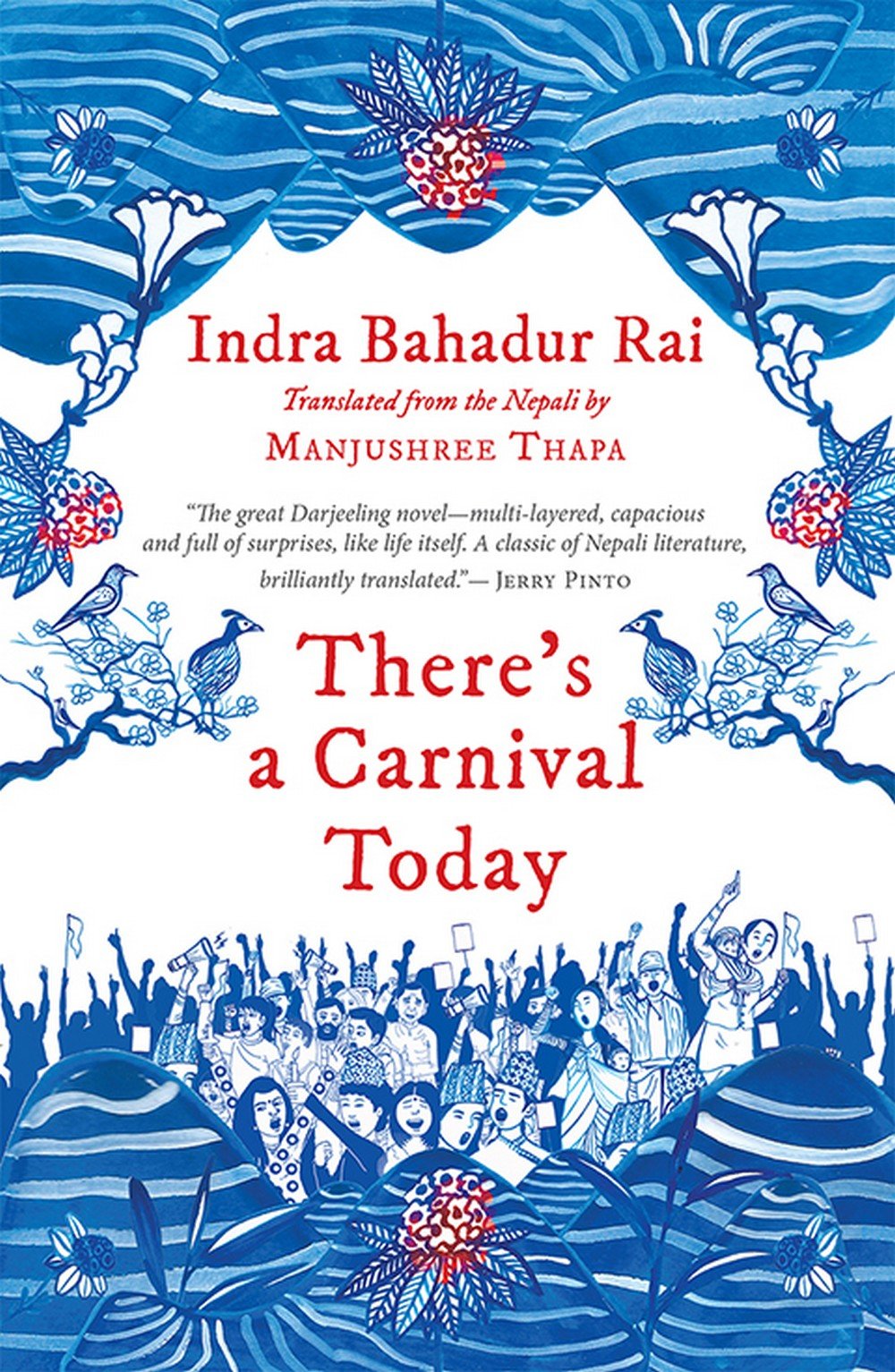
Coupled with the differences in dialects and syntax, the difficulties when translating are often posed by the intangible aspects particular to languages, such as the tone, the cadence, humour and poetic images. A slight mistranslation can unravel and flatten the entire narrative.
Thapa adds, ’[T]here is, in each translator, a persistent desire for such successes, a desire often realised, albeit erratically, unpredictably’. She says this often leads the translator to ‘achieve a certain logic and rhetoric during translation’.
In case of Hutt’s translation of Karnali Blues, this may refere, among other choices, to the use of the English ‘sister’, ‘mother’ and ‘father’ in the narration. But their Nepali equivalents are used when the characters refer to each other in quote marks.
“Sometimes you have to make these rules for yourself as you go,” he says.
Even 22 years ago, Thapa wrote that there can be ‘traces of a desire to show an English-reading audience some uniquely Nepali aspect of the original text,’ as the ‘translator acts as a guide into literary Nepal.’
Hutt’s aim is to show that there is a vast body of creative, literary voices in Nepal, beyond the exotic image of a trekking paradise. “Nepal is spoken for and about by others so much,” he says. “One thing that has always frustrated me since I started reading Nepali is that many foreigners engage with Nepal but never read Nepali or are aware that there are nuanced and complex voices here, which can enhance their understanding of the world and humanity beyond measure.”
He is curious to see what the reviewers say of his translation of Karnali Blues. Will they pick up on the universal themes of filial love in a landscape undergoing radical socio-cultural and political changes, or see it as a book translated from a foreign language as-of-yet underrepresented in the global literary scene?
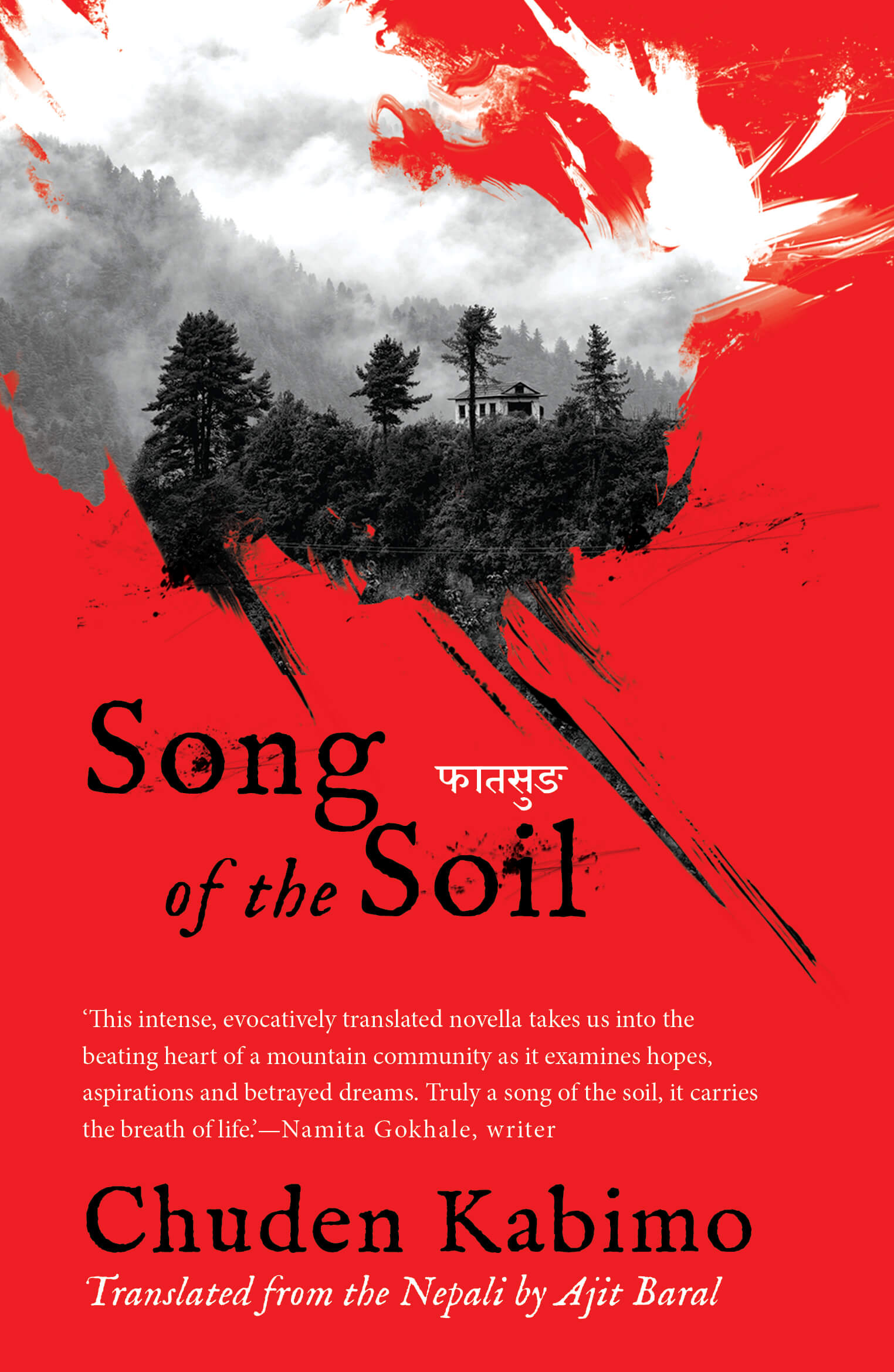
Another case in point is Ajit Baral’s English translation of फातसुङ (Faatsung) by Chuden Kabimo. Titled Song of the Soil, the translation was published in October 2021 by the UK-based Balestier Press which specialises in contemporary world literature.
“The story of Faatsung is incredibly poignant,” says Baral, who is with FinePrint publishers and brought out the Nepali original. “The novel was acclaimed and loved by readers of Nepali, and I felt that it had to be translated into English.”
The plot line of Faatsung focuses on the Gorkhaland movement in Darjeeling, which Baral felt resonates with Nepal’s armed struggle. In addition, Baral’s idea was not to translate and publish the book in Nepal only.