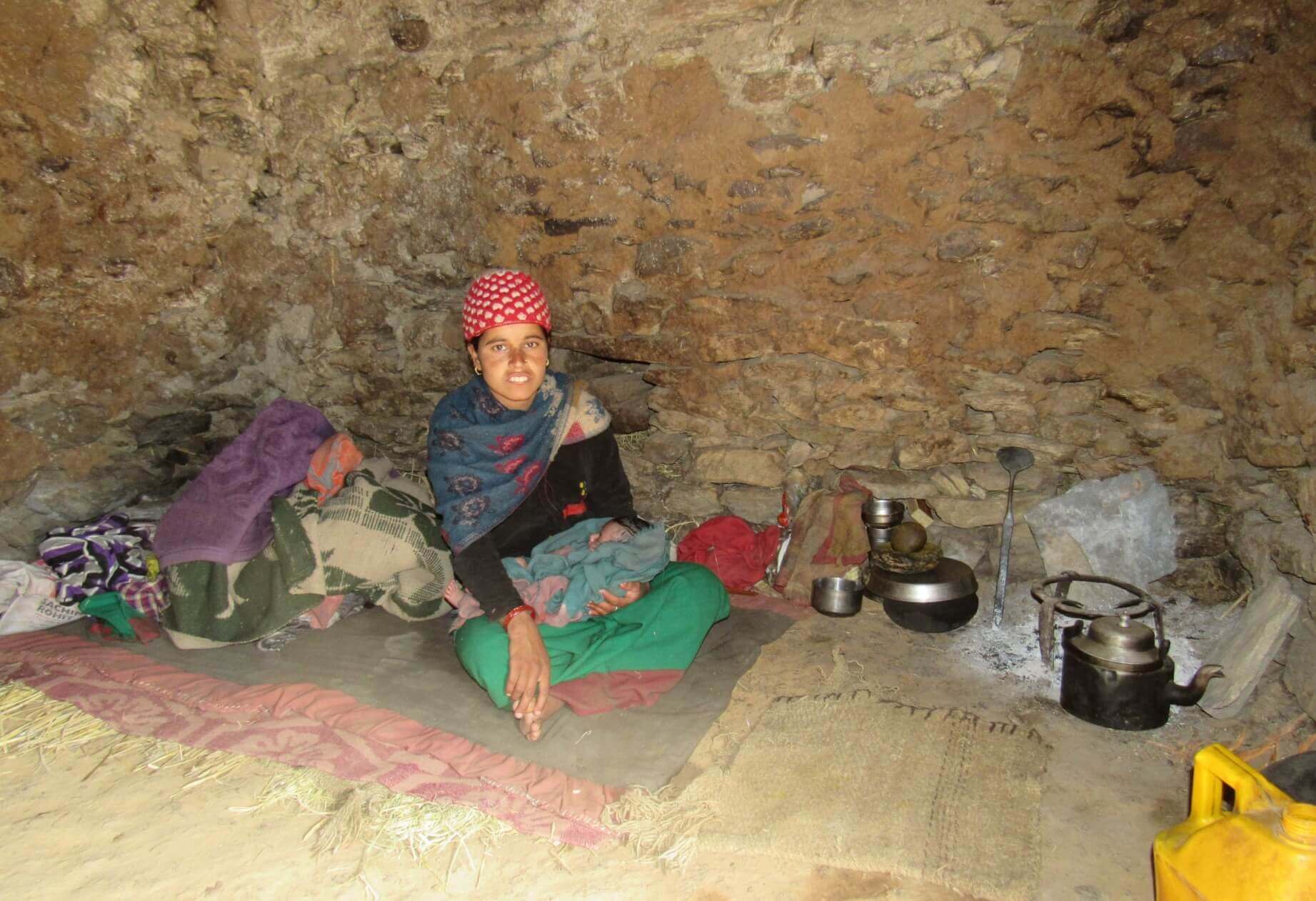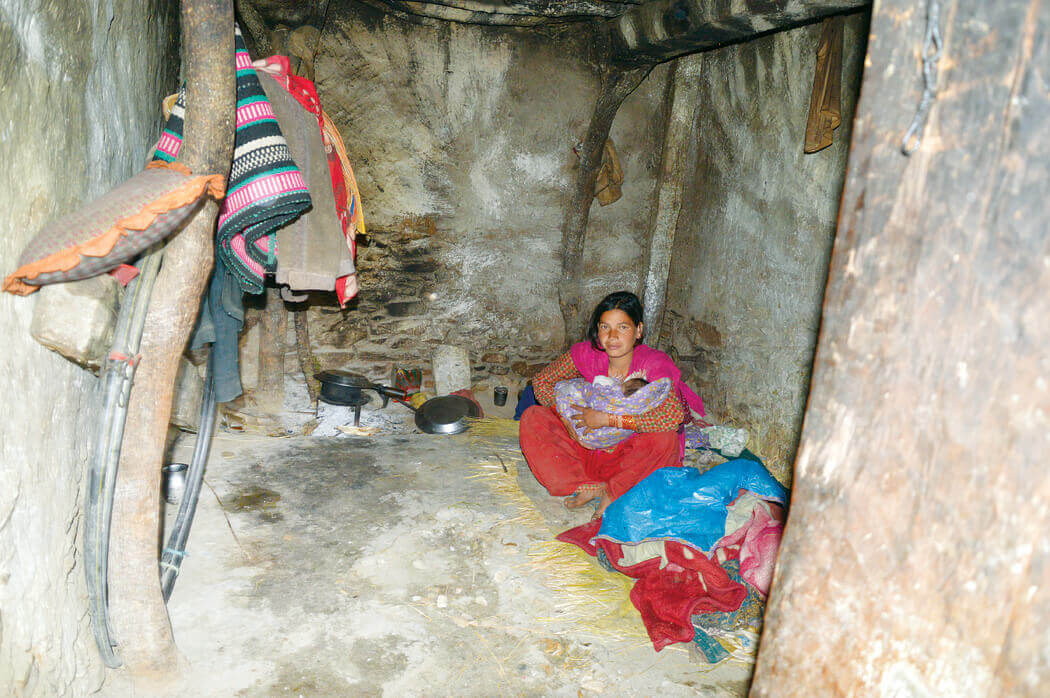
Dharma Budha of Wai village of Bajura district gave birth to a baby three weeks ago inside a cowshed. She will stay in the dark, windowless outhouse with the cattle for another week.
Her neighbour Surindra Kathayat was taken to a health post when she went into labour, but after she gave birth was banished to a cowshed with her baby.
"There are 300 families living in Wai. Five women gave birth this month, and all five are living in cowsheds with their cattle," says village leader Jandevi Budha, without much indication that she thinks this is unsafe for mothers and newborns.
Read also: The gods will be angry, Mina Sharma and Prakash Singh
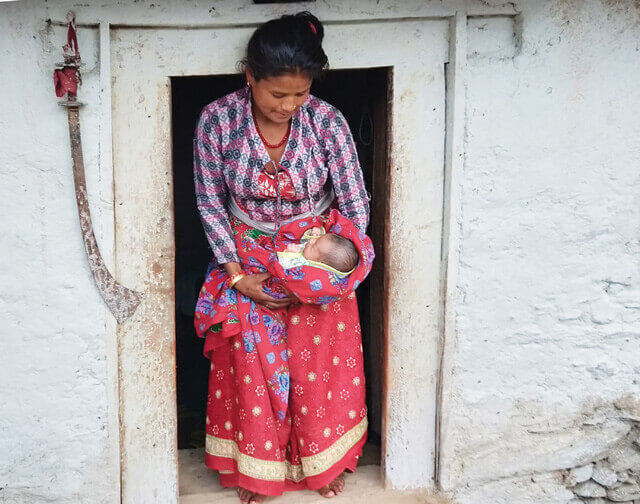
Nandasara Sarki of nearby Bandhu village gave birth to her fifth child, and like all the other babies this one was also delivered in an outhouse. Two of her earlier babies died due to the cold and damp within a week of being born.
Sarki's husband thinks the gods will be angry if a mother is allowed into the house with her newborn baby – a superstition that is entrenched throughout conservative northeastern Bajura, where female literacy is low and there are few health facilities.
Female Community Health Volunteer (FCHV) Chandrakala Budha says such banishment is the cause of most postnatal and even maternal mortality death, with babies dying of exposure and infections. Staff nurse Mandevi Jaisi at Bajura District Hospital says most mothers end up with health problems like uterus issues, anaemia, night blindness and infections in the mouth and tongue.
Read also: Nepal's superwomen beat superstition, Aruna Uprety
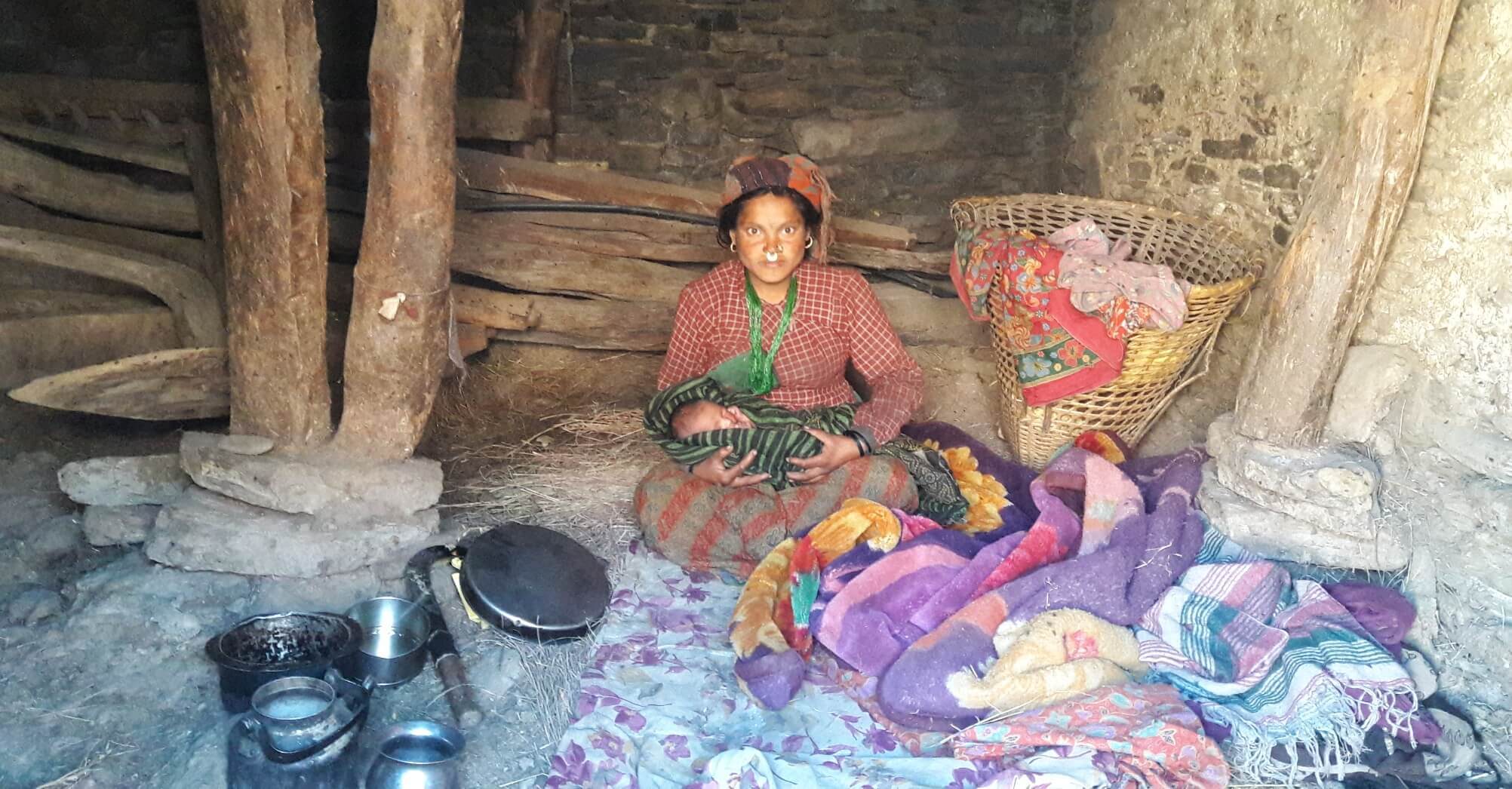
Dhan Bahadur Fadera, the health assistant at Rugin Health Post, says that the plight of women in Humla, Mugu, Jumla, Kalikot and Dolpa districts of northwestern Nepal is the same. "I estimate that 80% of the women here deliver their babies in cowsheds, which is why the infant and maternal mortality rates have not gone down like in the rest of the country,” says Fadera, who has worked all over Karnali Province.