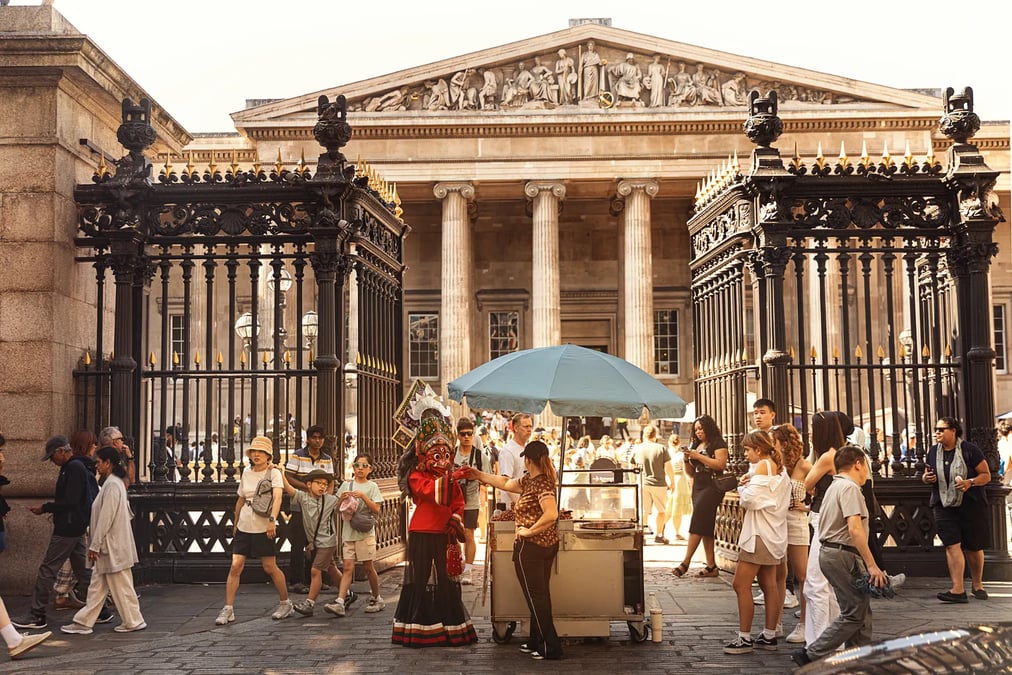
A masked figure stands outside the British Museum, one of the largest repositories of sacred and ancient objects collected from all over the world.
Around it tourists, students, office workers stream out of the gate, none of them looking twice at the man in the mask. This is the image that photographer Aayush Shrestha keeps returning to (right). Not because it is the most striking in his new picture book, but because it represents what he set out to say: a god can stand in the middle of a big city and go entirely unnoticed.
Tittled The Unwilling Travellers, the book imagines sacred sculptures taken out of the Kathmandu Valley over the past century and now sitting in museums and private collections across the West as reluctant migrants, still adjusting, decades on, to lives in exhibit stands or in underground storage.
“When I first went to the British Museum and the Victoria and Albert I was upset to see the Nepali gods inside glass boxes,” Shrestha says. “As humans we migrate with purpose, but the gods were forced away from their places. They are still waiting to go home.”
Shrestha, 27, works mainly as a fashion photographer. He studied fine arts at Kathmandu University before moving to London for a master’s in digital photography at Ravensbourne University, but he has kept a personal practice going alongside the commercial work built around Nepali myth, ritual and memory.
TRAVELLER GODS
Shrestha’s book does not try to settle the history that Nepal’s living gods were stolen and turned into ‘art’ pieces. Instead he works on an imagined premise that the gods after years away, became travellers themselves.
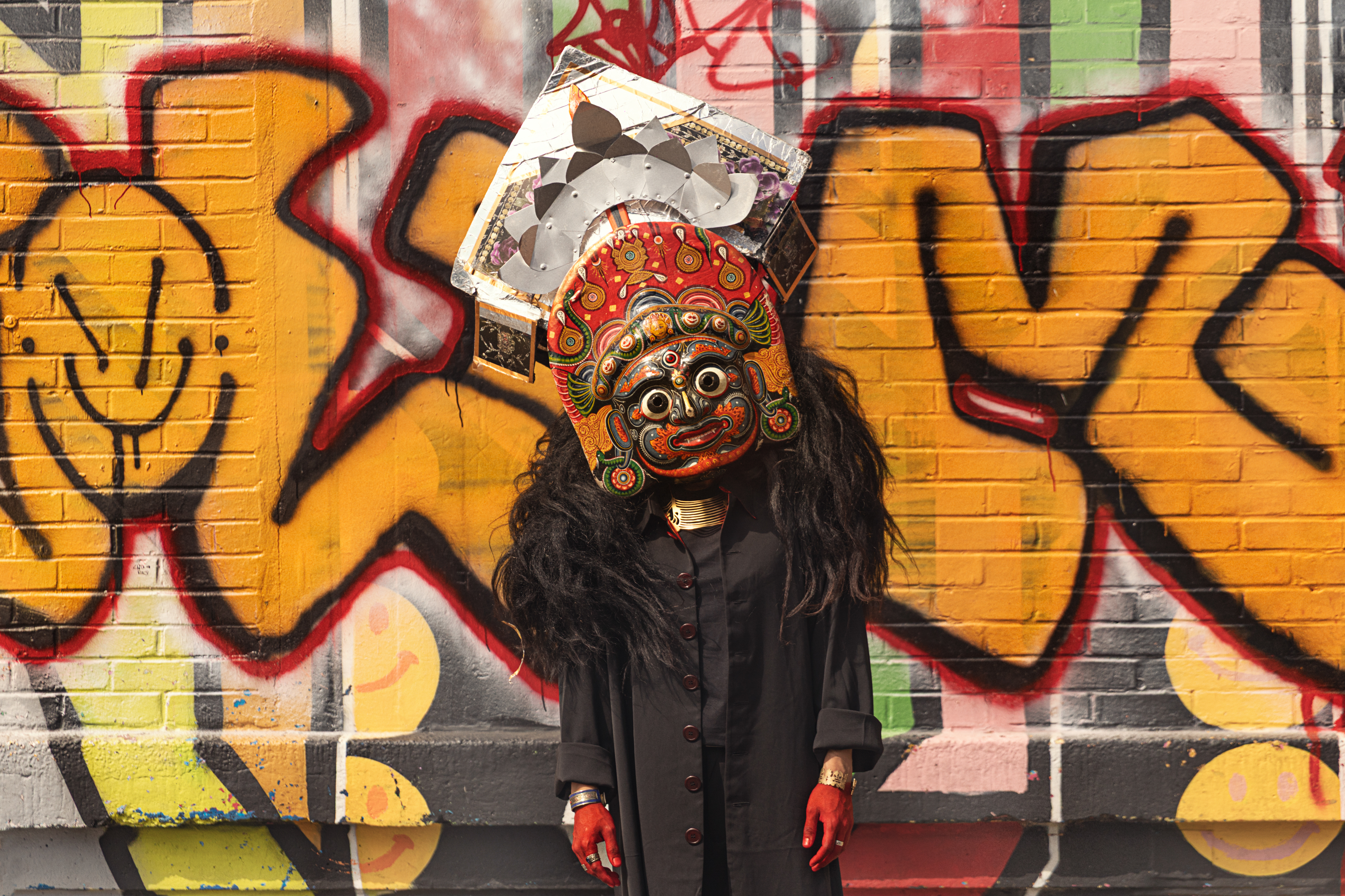
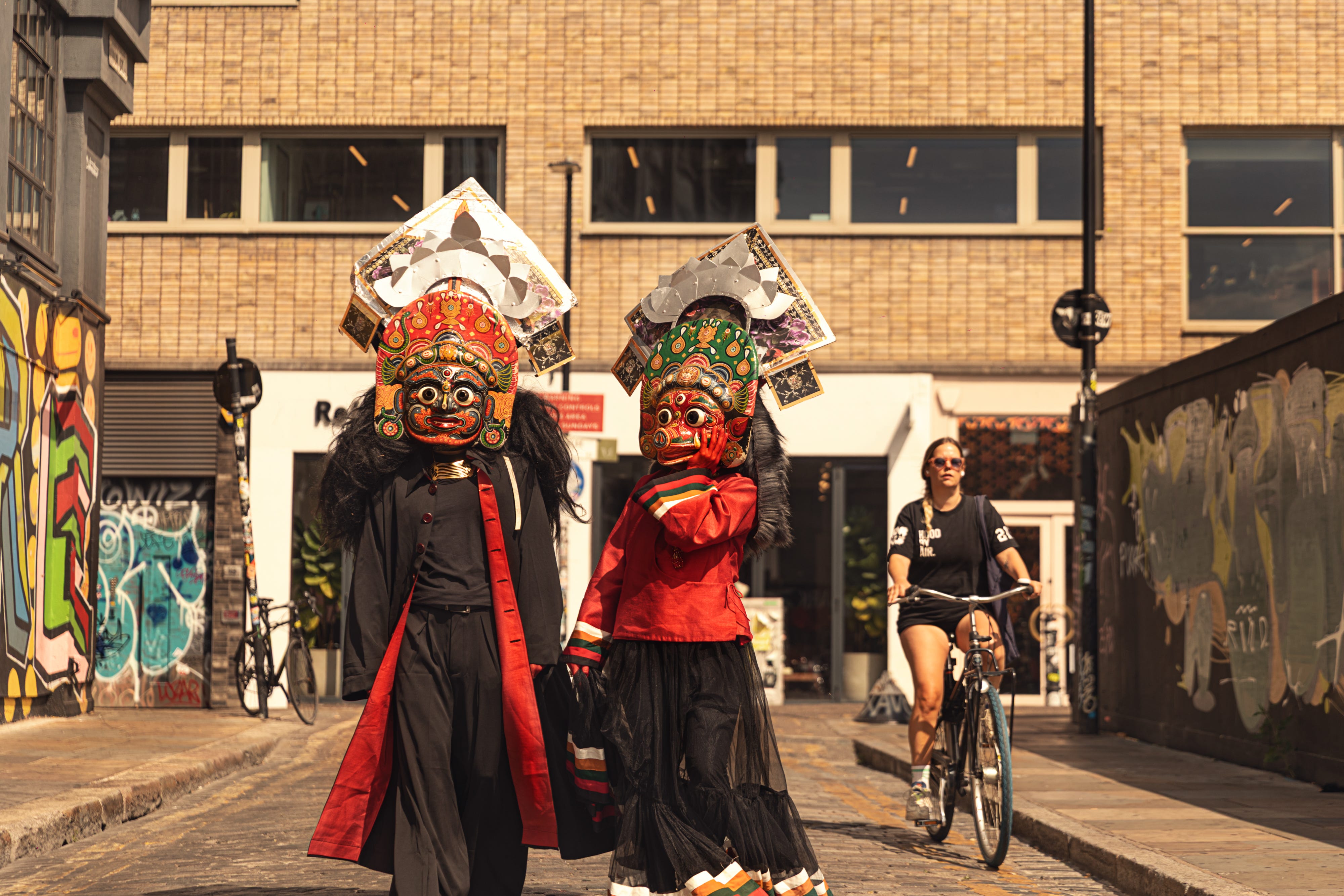
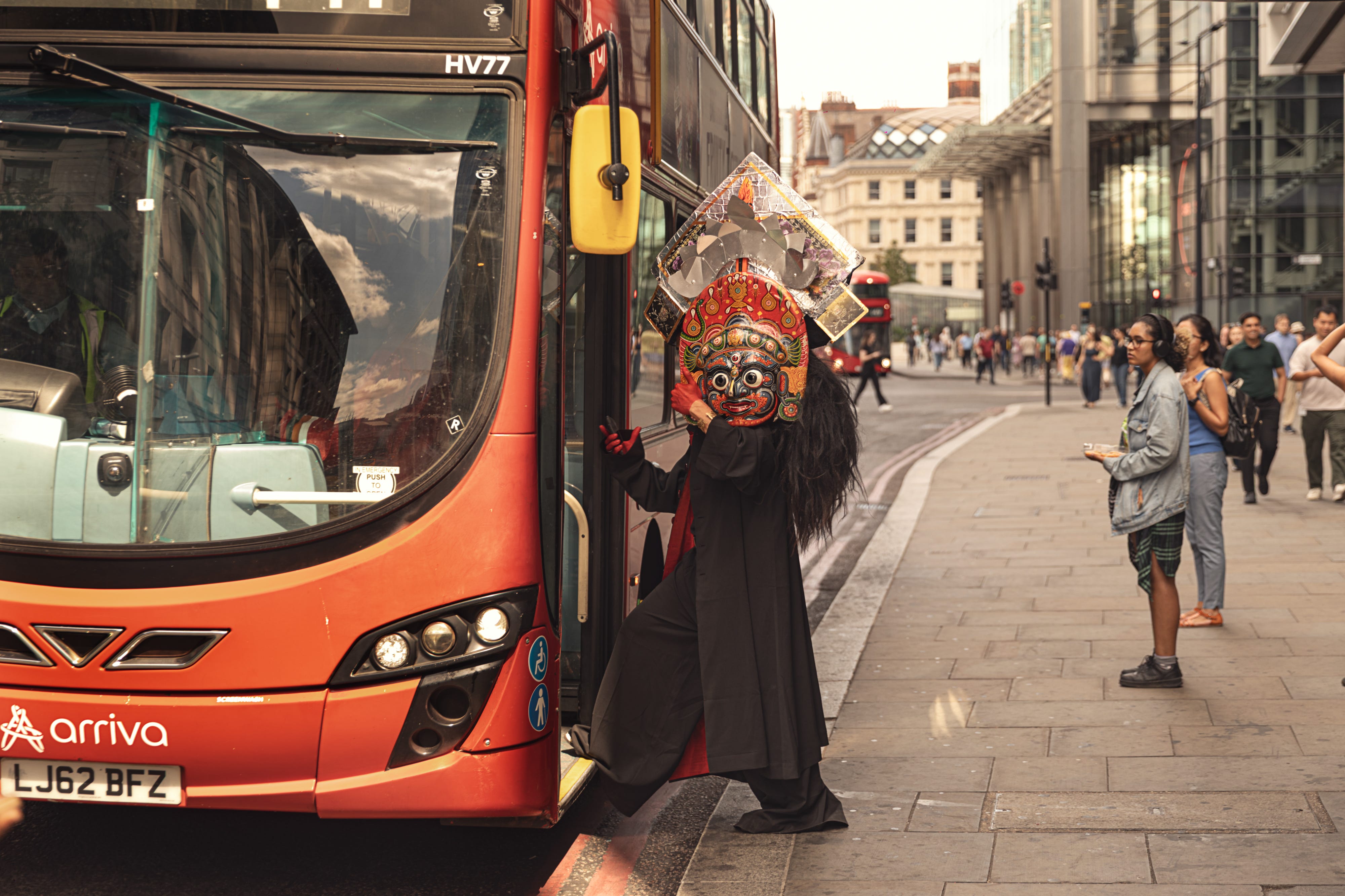
In the photographs, masked and ornamented figures move through ordinary London life – waiting at bus stops, cycling down streets, sitting alone in parks. “I explored the cityscapes of London to use it as a space opposite to where the gods should belong,” Shrestha says. “I wanted the gods to look a bit lost, yet trying to cope.”
In Nepali ritual tradition, a mask made and consecrated for performance is understood to hold divine presence, not simply represent it. That belief runs underneath the whole project, and it is also why museum display troubled Shrestha.
“Once it’s inside a museum, it’s given an inventory number,” he said. “A museum might keep the item carefully, but does not preserve its original meaning and purpose.”
Shrestha stops short of calling his project activism, though he does not rule it out completely: “The exhibition begins as an artistic investigation, but it inevitably enters the political conversation surrounding restitution and repatriation.”
Aayush Shrestha’s Master’s graduation exhibition was on at Photobook Cafe in the UK from 11-13 September. He plans to publish the book in Nepal soon.