Historians have pointed out that the reason for Nepal’s political dysfunction is that although it is South Asia’s oldest nation state, it is also the newest to open up to the world.
Another upheaval of similar magnitude is now buffeting Nepal with the rapid spread of information technology. This revolution is happening at lightning speed, much faster than changes since 1950.
And once again, Nepalis are having to adapt to a hyper-real world of social media platforms, viral videos, disinformation and an alternate universe of premeditated fakery.
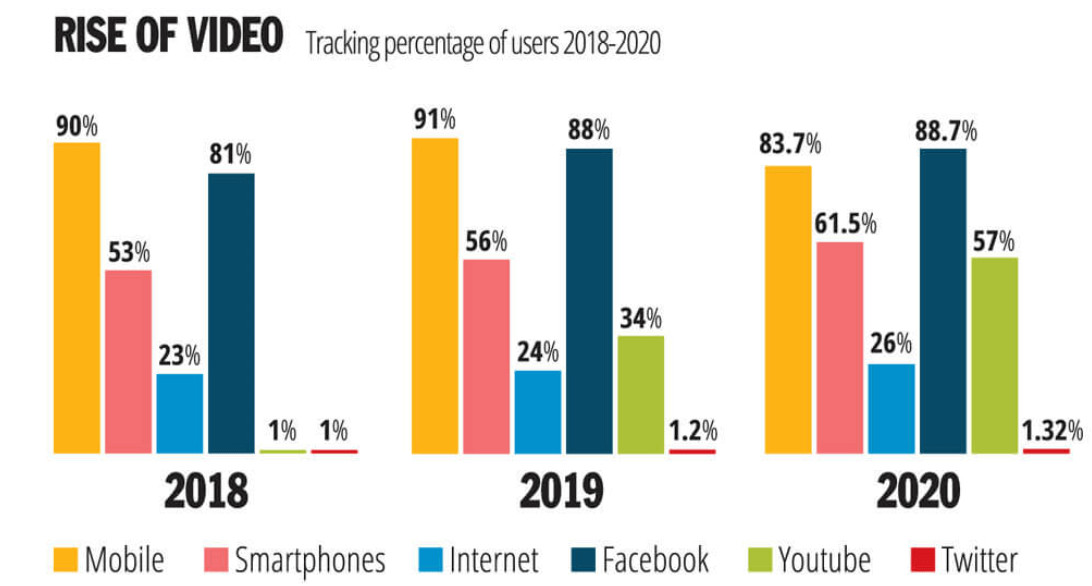
At the beginning of the pandemic, there were about 8 million Nepalis with Facebook accounts. Today, the figure is said to be close to 12 million. There are millions more posting videos on TikTok. Thousands of YouTube channels with sensational graphics vie for audience and Adsense revenue. Twitter trails, but has a following among opinion-makers and shakers. It is the preferred medium for political influencers and the media, and this amplifies its impact.
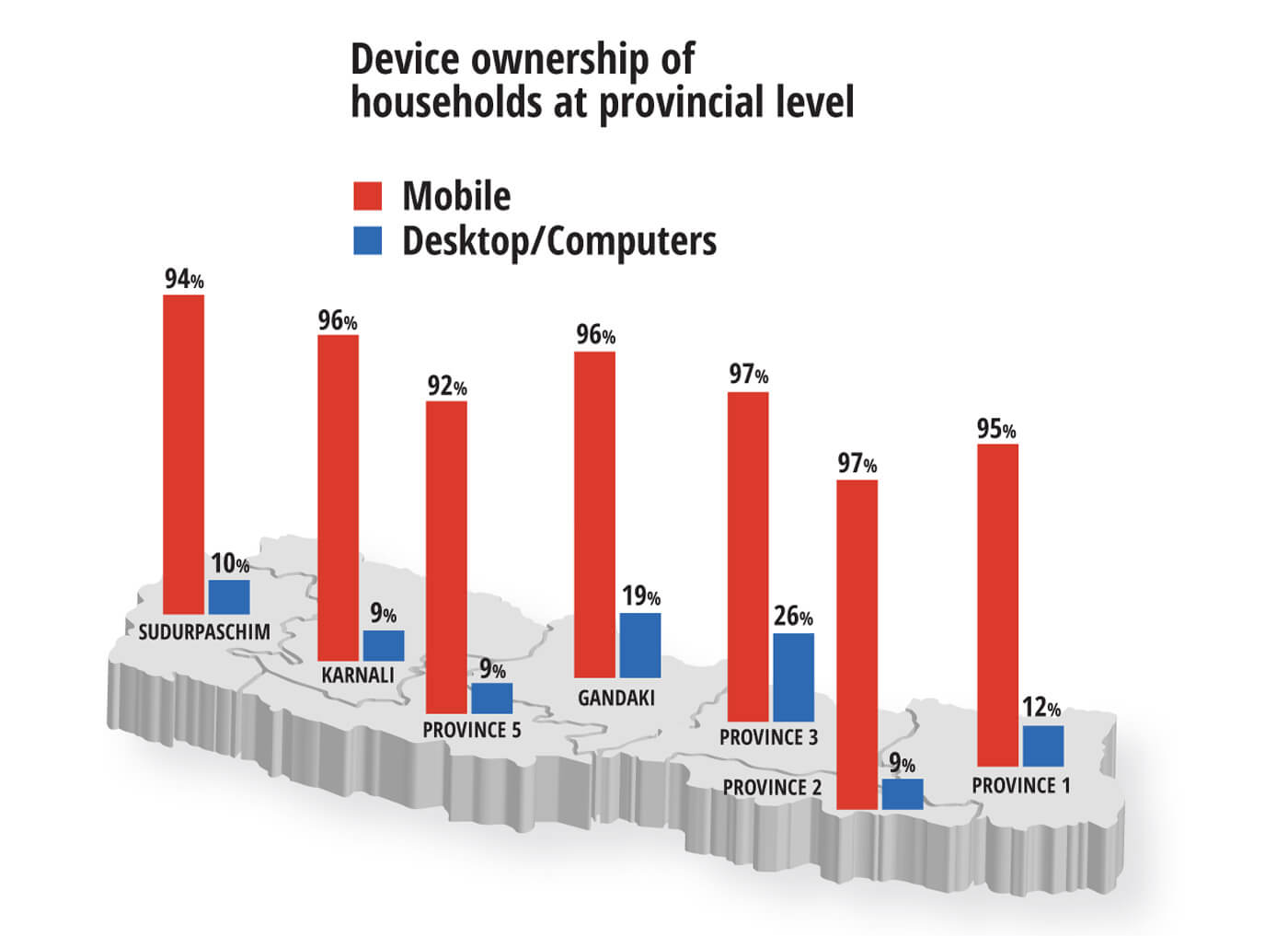
The content on these platforms rides the spread of mobile telephony. Nearly all Nepali households now own at least one handheld device, and 60% of them now are smart-phones. The number of mobile cellular subscribers is now 43 million – more than the country’s total population.
As Internet speed increases and cellular towers bring more parts of the country under at least 3G coverage, we can expect to see an even greater consumption of social media platforms – especially video-based content like YouTube and TikTok.
The fact that 15% of Nepalis work, study or live abroad means that connectivity has allowed them to stay in close touch – a fact that was of vital importance during the pandemic.
Most online content can be classified as ‘entertainment’, but it is also ‘politics as entertainment’ with Nepal’s parties jostle for power.
This migration of eyeballs from the 'mainstream' to digital media is having a profound impact on how Nepalis connect with each other. The influence of the legacy media in agenda-setting is now replaced by non-journalistic content providers.
This has transformed how Nepalis access information, in how they communicate with each other, how society functions, and ultimately in how Nepal is governed.
These media trends are not unique to Nepal. The reach of Big Tech globally has transformed the relationship between rulers and the ruled. Journalism has gone from vertical to horizontal.