
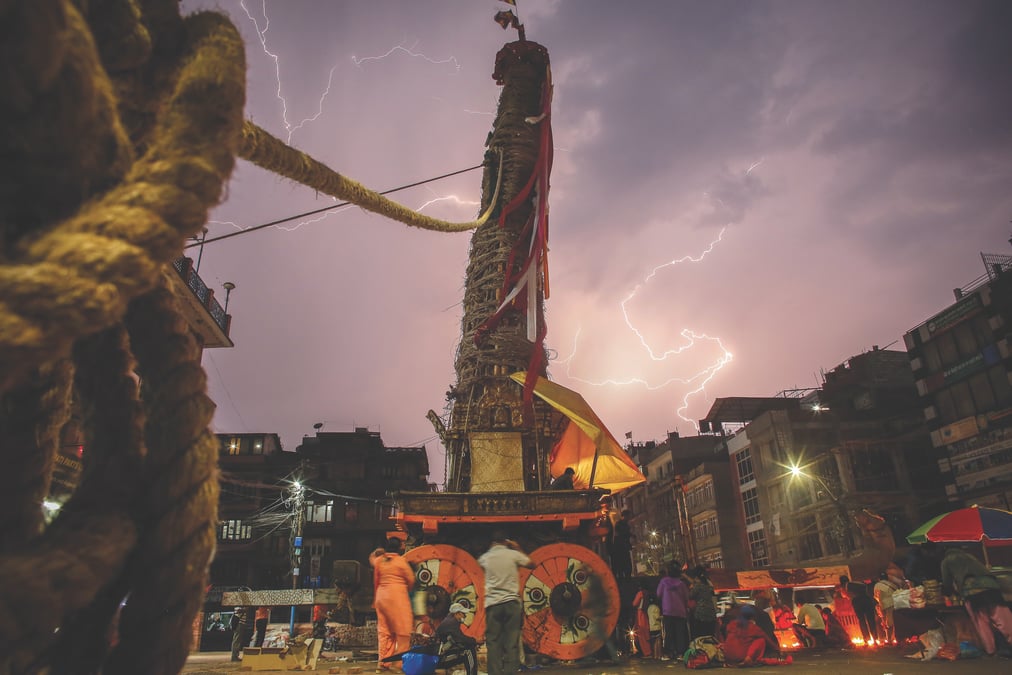
When the chariot of Machindranath, the rain god, got stuck at Na Tole in Patan this week, it became symbolic of Nepal’s shambolic politics.
But there was hope from Tanahu and Chitwan, where citizens disenchanted with the corrupt gerontocracy voted for change. RSP Chair Rabi Lamichhane was re-elected by an even bigger margin than November despite scandals. Swarnim Wagle, who defected from the Nepali Congress (NC) to contest as RSP in Tanahu won in the Congress stronghold.
In Bara-2, JSP Chair Upendra Yadav was the only coalition candidate to win, after having lost from Saptari last November.
While the RSP and the JSP were able to retain seats they won in federal polls, the NC lost one seat to the RSP, which is the fourth-largest party in Parliament.
And while a single House seat may not matter in the grand scheme of politics, the by-elections were a barometer of the public mood, and could alter the dynamics in the coalition led by Prime Minister Pushpa Kamal Dahal.
Read also: In with the new, out with the old, Shristi Karki
“Two out of three coalition candidates lost seats despite the prime minister himself campaigning on their behalf. This sends a clear message that this coalition does not have the mandate to rule,” states political analyst and former Nepali ambassador to India, Nilamber Acharya. “These results will likely affect the arithmetics of the House and government.”
Lamichhane has said it was “no longer reasonable” for the RSP to support the government, which means it could quit the 10-party coalition. “It is now pointless for us to remain in the alliance and the consensus within the party is that we should stay in the opposition,” RSP spokesperson Mukul Dhakal told Nepali Times.