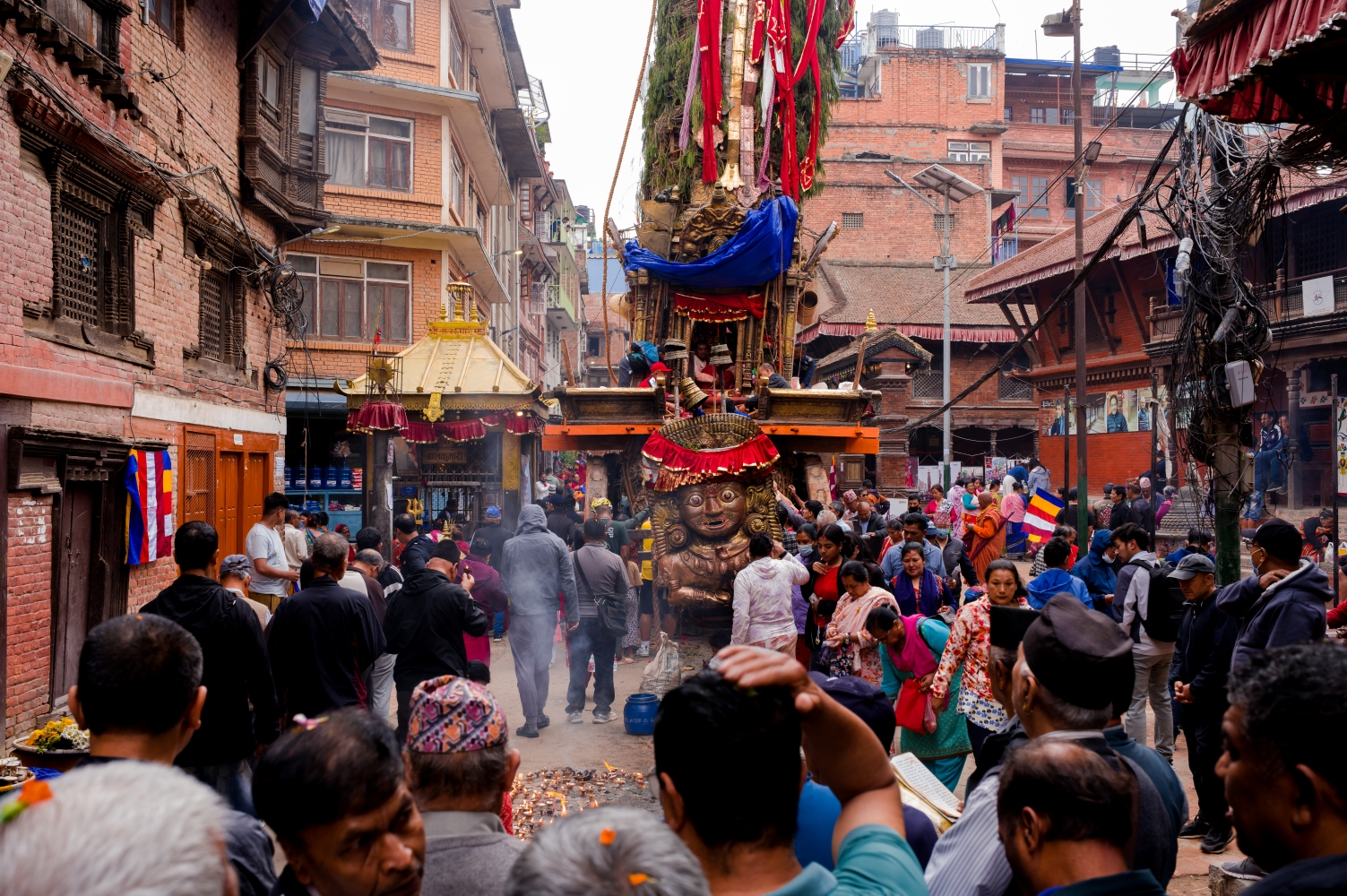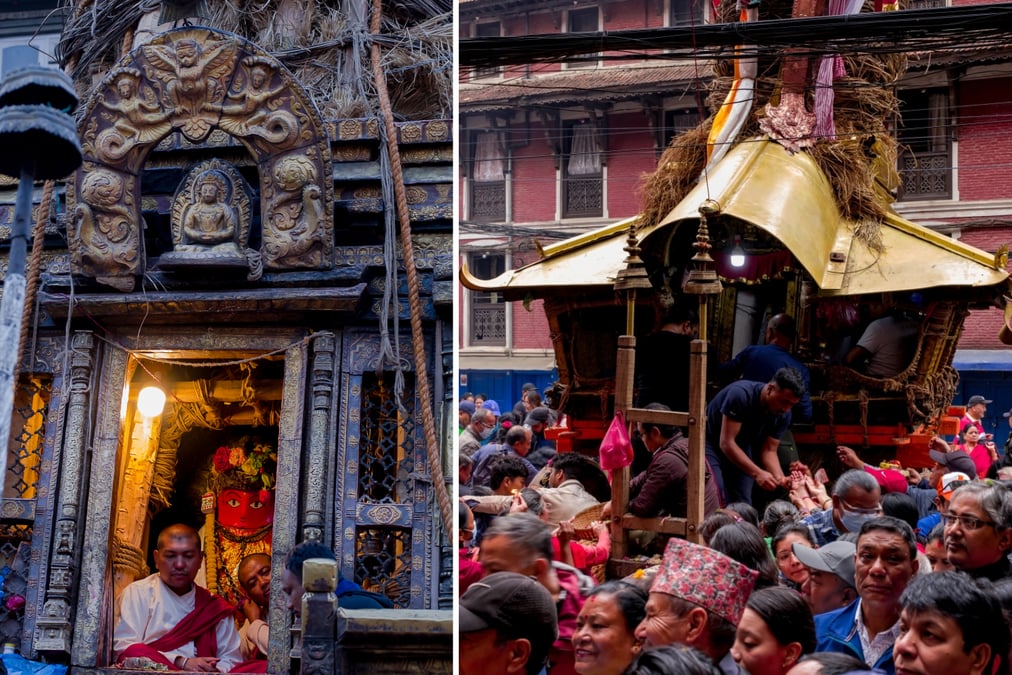
The Rato Matsyendranath Chariot Festival started in Patan this week, one of the longest such carnivals in the world.
Matsyendranath is a festival that spans South Asia and is revered as a rain-giver god by both Hindus and Buddhists. It has close historical links to the Indian state of Assam.
Legend has it that 1,500 years ago, a 12-year drought threatened famine in Kathmandu Valley because the sage Gorakhnath was sitting on a bed of serpents preventing rain from falling. In despair, the Lichhavi King Narendra Dev travelled to Guwahati to bring Guru Matsyendranath to the town of Bungamati.
Gorakhnath was a disciple of Matsyendranath, and upon seeing his guru, promptly stood up, thus setting the serpents free. The heavens then opened up with life-giving rain. Ever since, the Rato Matsyendra idol is brought from Bungamati and taken around Patan in a month-long chariot festival.
Matsyendranath is also known as Bungadyo in Kathmandu Valley and revered as the Buddhist divinity Karunamaya, his teachings influenced Hatha Yoga and Tantric practices. It is believed that Matsyendranath was an actual sage, and while it is not clear when exactly he lived, it is thought that he was incarnated from a fish and became a great yogi, carrying divine wisdom from his early spiritual experiences.
Matsyendranath started being worshipped as the god of rain and fertility around the 7th century CE during the reign of King Narendra Dev in Kathmandu Valley. Researchers have been unable to agree on the exact dates and the actual historical details of his life are connected to Nepal and Bengal, Assam, and Karnataka in India.
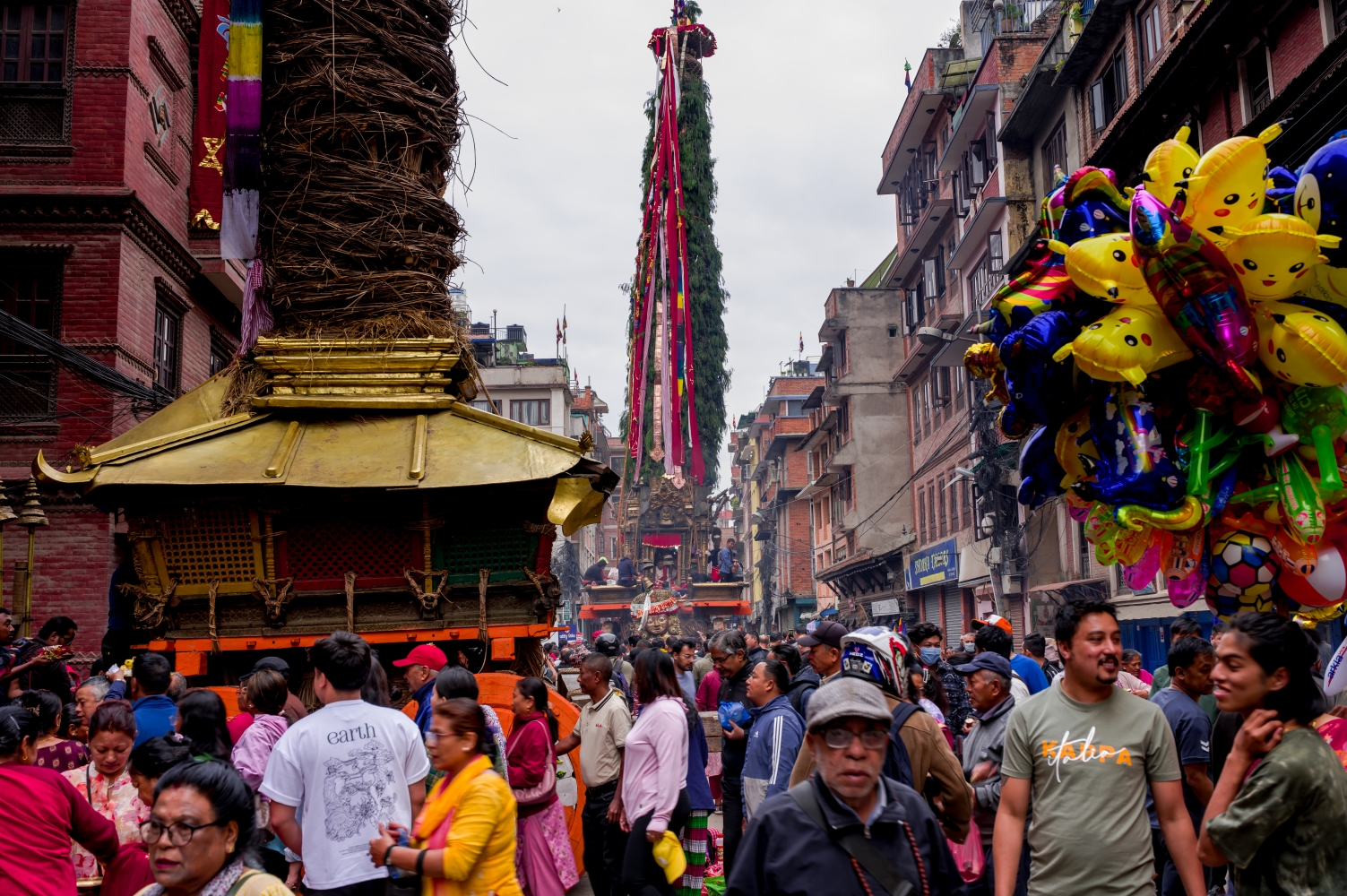
This festival is celebrated according to the lunar calendar and it holds great significance for the people of Kathmandu Valley. Millions of devotees travel to the chariot during its month-long journey through the streets of Patan.
Once every 12 years, the procession travels from Bungamati to Jawalakhel and it becomes a grand religious and cultural event, with tens of thousands thronging the route to offer respects. Local communities from 21 neighbourhoods along the way take turns pulling the chariot, providing drinking water, sanitation, and health services.
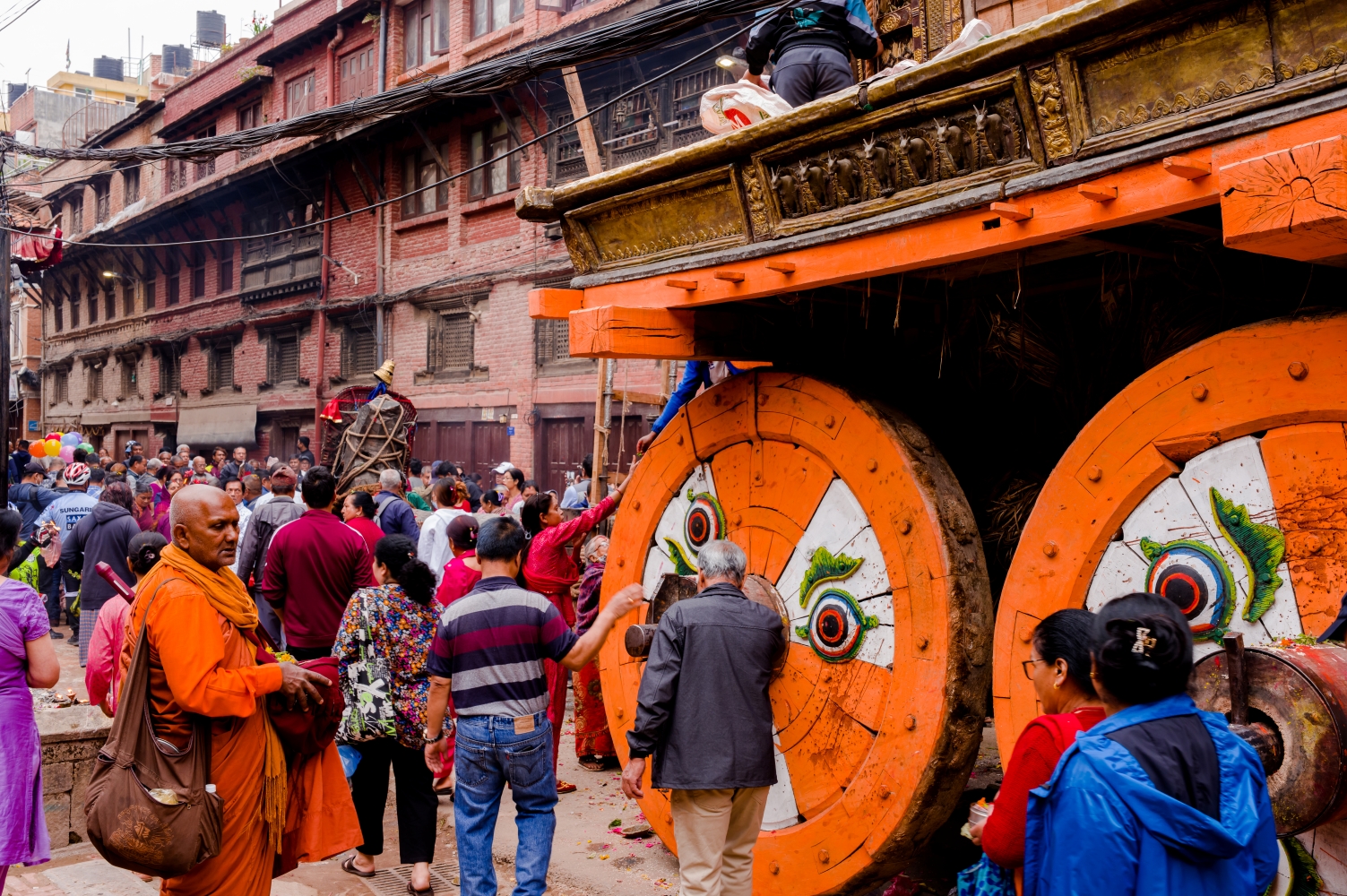
The 30m high wooden chariot is built and dismantled every year, without the use of any nails. The timber beams are strung together with vines especially imported from Assam. The chariot is pulled by various guthi communities along the route, and there are strict procedures that have to be adhered to in the construction and the locomotion of the four-wheeled chariot.
The climax of the festival is the viewing of a jewel-encrusted vest (bhoto) in the presence of the king of Nepal when the country was still a monarchy and now before the President. The bhoto is not only a piece of jewelry but also a physical manifestation of the god’s blessings.
The festival fosters religious devotion and cultural identity not just among Kathmandu Valley’s Newar population, but it also connects Nepalis emotionally and spiritually.
In the coming weeks, the chariot procession of Matsyendranath and the smaller accompanying Minnath chariot will pass through Patan Darbar Square, on to Lagankhel and then Jawalakhel. The streets are cleaned and cleared as though it is a divine path, transforming the physical world into something celestial.
The chariot itself is the result of a collective effort. Designated teams take one month to construct a new chariot every year, the act of assembling the chariot itself is a devotional act, with the technique passed down from one generation to the next. The artisans believe they are receiving blessings from Rato Matsyendranath through their work.