
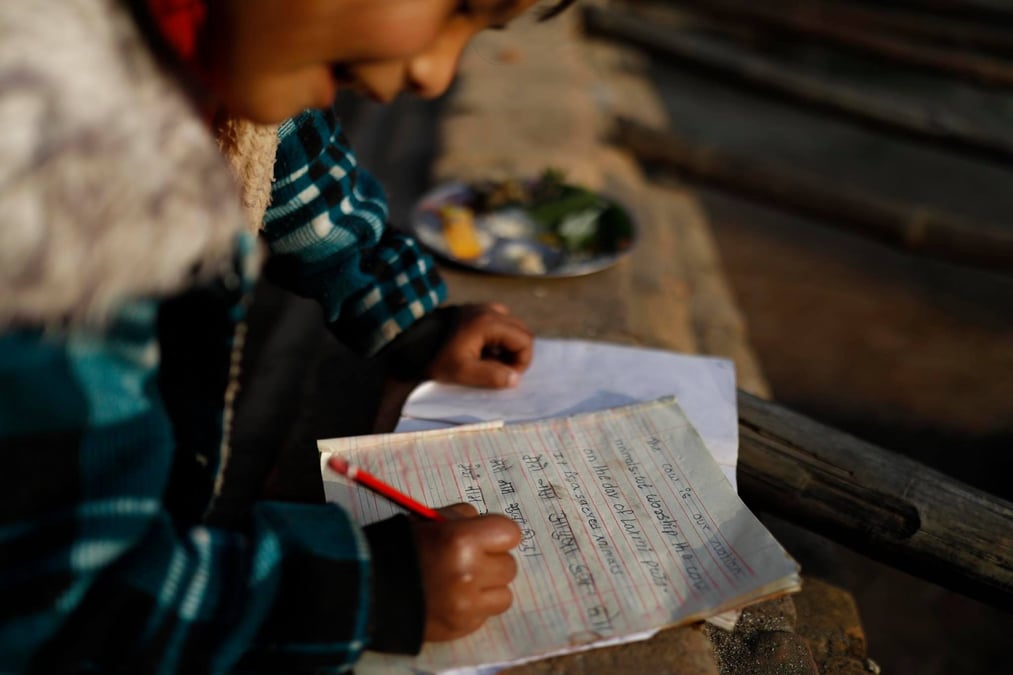
This piece is not about Tapasi Pannu’s Bollywood movie, Thappad. But the echo of that slap from childhood still echoes in my ear.
It was the first and only time my father ever laid a hand on me. It could happen again, since Nepali parents have a tendency to believe that no matter how old you are, you are always a child. They can hit you even in your 30s.
My father, a retired high school principal, seldom raised his voice at us while we were growing up. His silence and stern gaze were nevertheless frightening to us youngsters, and struck fear in our hearts.
As children, we never dared speak to him directly. Our mother acted as an intermediary, even in trivial matters like buying a ball-point pen for Rs4.
Read also: Why do so many Nepali students underperform?, Anita Shrestha
This was the 1990s, and we all excelled in studies. We were disciplined children who never uttered a curse word. We respect our elders. We were the epitome of well-behaved children.
So imagine our shock when I was subjected to physical punishment from my father for the first time. And it all had to do with my use, or misuse, of the English language.
We started learning English in Grade 4. I had topped not only my class, but the entire school. I could recite what was on any page in my text book. I had a photographic memory.
I excelled not only in academics, but also in General Knowledge. I could rattle off all the countries of South Asia and their capitals and heads of state.
My sister and I were the only two students in our class who had mastered the multiplication table up to 20. One day, our primary school principal announced that only students who knew the table up to 20 could go home, while the rest had to stay back and keep learning until they did. My sister and I found ourselves waiting until evening for our classmates to catch up.
Read also: After quantity, Nepal's education need quality, Prakriti Kandel
I was 9, and also starting to learn to spell simple English words. I took immense pride in my progress because my grandfather did as well. However, it wasn't enough for my father.
That day, I was doing my English homework, while my father and his colleagues were engrossed in a political conversation. One of his colleagues suddenly asked, "Which grade are you in?"
"Fourth," I replied proudly.
He continued, "What is your roll number?" (Ah, the roll number, a prestigious measure of talent in those times.)
"One," I answered confidently.