
In 2017, Nepal held its first local election after two decades. A generation of Nepalis had grown up without any experience of electing mayors or ward chairs. Bureaucrats were appointed to municipalities.
Those were not just any local elections, they were the first under a federal structure. Hopes were high, and expectations higher. But how to make fiscal federalism work, and particularly municipal financing? What has been the experience of the past two years?
There are two schools of thought about how municipalities should fund themselves. The first is that they have limited resources to invest in socio-economic development, and even added fiscal transfers from the federal and provincial governments on top of local revenues, are not enough for infrastructure and service delivery.
The second is that local governments are unable to use available resources due to lack of technical and financial capacity, and that financial deficit is irrelevant when local governments are not even able to spend their allotted budget.
Nationally local, Editorial
While both these narratives ring true, the challenges are not faced in isolation and are cyclical in nature -- they feed into each other. The lack of capacity of local governments has led to underutilisation of funds available through the market and the federal government. Administrative and policy restraints set by the federal government also limits local governments’ access to finance.
However, lack of spending capacity or lack of financing is not a challenge unique to local governments. It is in fact part and parcel, a hereditary defect passed on from Kathmandu to rest of the country.
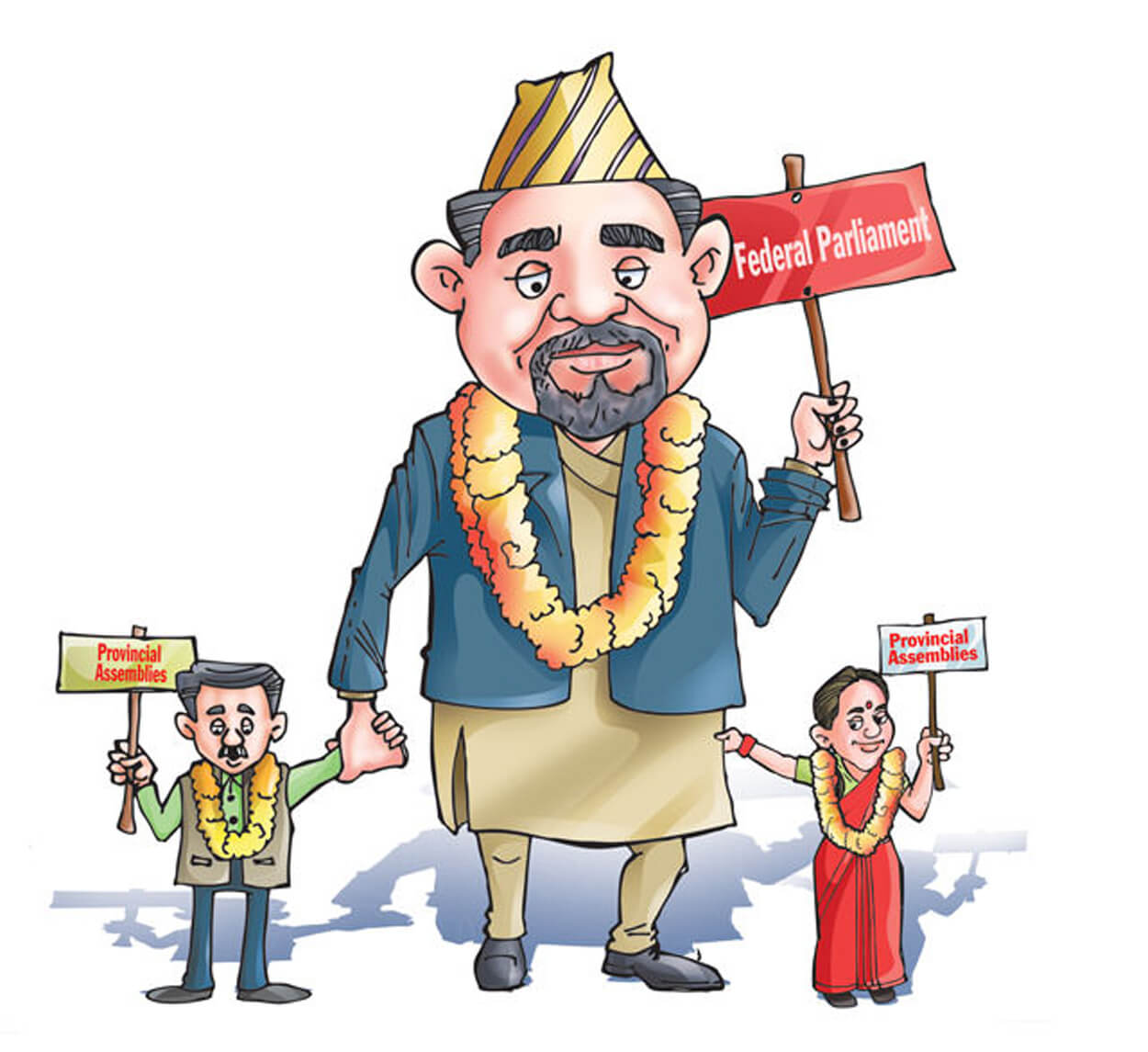
Under the federal structure, significant power has been devolved to local governments than previously imagined. However, the expenditure responsibilities of local governments do not match their ability to generate revenues -- their power to govern through constitutional mandate has been restricted by their financial ability to govern.
The revenue municipalities raise from taxes and levies is insufficient to cover operational expenses, let alone finance infrastructure or service delivery. Local governments are criticised for bloated operational expenses, but while this may be justified, municipalities will still not be able to finance big ticket infrastructure and service delivery projects with merely internally generated revenues.
Local governments therefore have fewer avenues to raise funds. To decrease their finance deficit, they can either steal, beg, or borrow to meet their requirements. In the crudest sense, local governments can either raise taxes, or utilise federal government transfers, or borrow from banks.
How decentralised is federalism?, Kiran Nepal
An obvious mechanism to increase the funding base of municipalities is to increase their own source revenue generated through property taxes and business registrations, among others. However, municipalities already have a smaller tax base which restricts their revenue-generation capacity. They also cannot increase tax rates twice within their 5-year term limit, as it would be politically unpopular. The other mechanisms to access finance are largely dependent on local governments’ ability to raise revenue locally.
Another option is to use the four intergovernmental transfers (grants)
provided by the federal government. Fiscal equalisation grants disbursed to local governments is generally inadequate to cover municipal expenses which drives local governments turn to conditional grants.
However, this reliance on conditional grants can only support piecemeal projects that do not always meet local needs and priorities. With Covid-19, the ability of the federal government to generate revenue have been hit, and subsequently, transfers to local governments.
Local governments lack resources to tackle Covid-19, Nepali Times
Local governments can also take internal loans through Nepal’s banks
and financial institutions to cover their deficit. As of this fiscal year, municipalities can borrow up to 12% (a two-percentage point increase from last fiscal) of its revenue and revenue distribution from the federal and provincial governments.

 Anna S Gautam and Nishu Baral are analysts with Infrastructure Development and Financial Sustainability project supported by The Asia Foundation at VRock and Company.