

Although smallpox is now ‘unfamiliar to the world today’ historian Elizabeth Fenn has written that it was ‘a misery commonplace in years gone by.’
For centuries, the smallpox virus and the gruesome death and destruction it caused upended people's lives around the world and in Nepal. In this History of Disease series in Nepali Times in the past month I have recounted how smallpox traveled and killed in Europe and America, became a terrible test for survival for children in South Asia, and struck down both royals and regular citizens in Nepal in the 19th century.
We have seen how people devised inoculation and vaccination to fight the disease, and how vaccines and strong surveillance helped eradicate the disease around the world and in Nepal in the 1970s, but only 'by the slimmest of margins'.
Several things about the history of the disease deserve special emphasis. As much as any influential king or prime minister, we sometimes forget that smallpox and other diseases shaped the course of human events.
Part I: Big story of smallpox in Nepal
Part II: The smallpox virus in British India
Part III: Smallpox, politics and power in Kathmandu
Part IV: How Nepal eradicated the smallpox virus
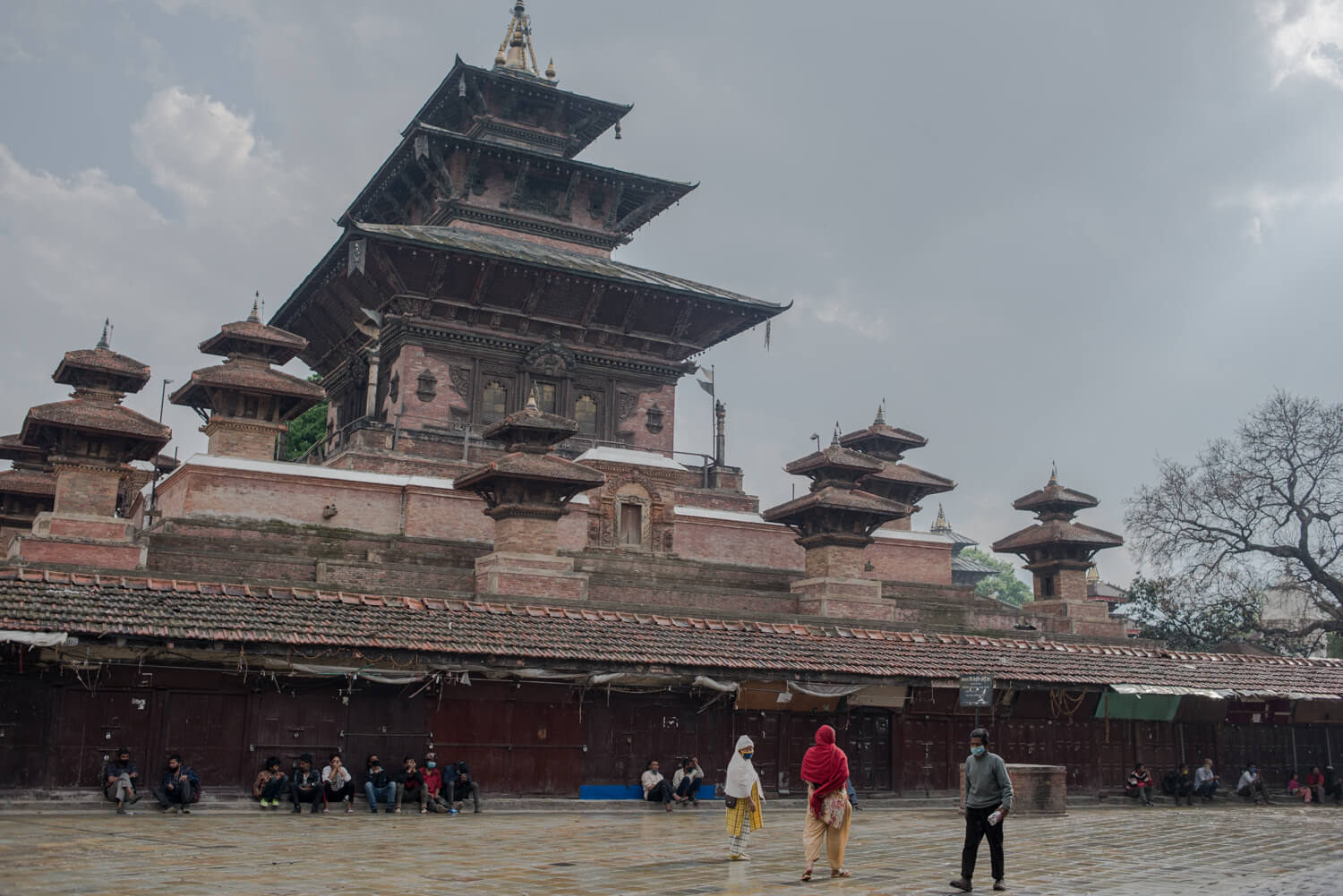
Viruses such as measles, influenza, hepatitis, polio, rabies, and HIV – as well as non-viral diseases such as cholera, TB, syphilis, and malaria – remade not just individual lives, but also physical, economic, and political landscapes.
The fury of smallpox reminds us of the inescapable power of nature. Despite all our efforts, humans are part of nature, and life is fragile.We are living beings made up of cells and nutrients, subject to the rules of geography and biology, death and disease. This reality held true in the past, and holds true today, as much as we hope otherwise. Smallpox may have been chased away, but COVID-19 stands at the doorstep.
Each disease has its own characteristics, its own biological personality, its own way of spreading through society and attacking human bodies. Malaria moved via mosquitoes which liked warm weather, cholera through germs in water, and syphilis through sex. Due to these differences, each disease left its own unique imprint on history.
Big story of small pox in Nepal, Tom Robertson
Smallpox spread through the air, moved easily from person to person, caused searing pain, and, if it did not kill, left behind disfigured, broken human bodies. In Nepal, if it had struck older people, not children, or if it had not left its victim's faces scarred and their eyes damaged, it might have brought less terror.
On the other hand, if it had had a reservoir in animals (as many viruses do) it would have been much harder to eliminate, and we might still be facing its burning fevers and excruciating rashes today. Small pox’s particular biology shaped history in a particular way.
Nature is not just a passive stage on which we humans act out our dramas as we wish. Instead, it is an actor in every drama, sometimes in the background, sometimes centerstage, but often coming and going at its own will, not ours.
The smallpox virus in Nepal, Tom Robertson
Looking back, if we recount the stories just of kings and queens and their political chess matches, we overlook some of history's main drivers and its most important stories. In fact, if we overlook disease history we will not understand the stories of kings and queens as well as we think. Can we really tell the history of Rana Bahadur, Girvana, Bimsen Thapa, and Bir Shumshere -- much less the stories of ordinary people around the country -- without understanding the central role of disease?
Looking forward, we would do well not to forget nature's power to completely take over the course of events. Smallpox also reminds us that, even though humans share the same biology, diseases often affect some subsets of society more than others, particularly those with less money and power. In other words, biological forces may be universal but they play out in social landscapes as complex and uneven as Nepal's dadakada.