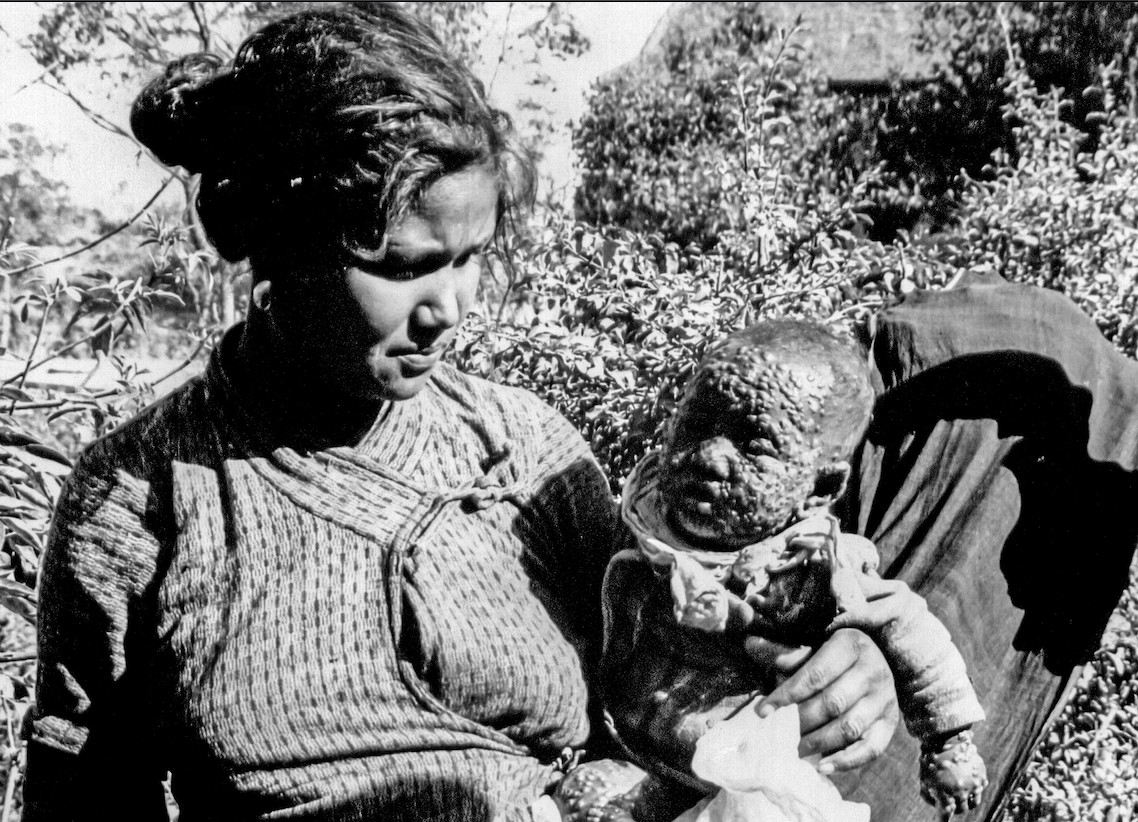
The smallpox virus plagued Nepali communities throughout the 19th and early 20th centuries. As historian Susan Heydon has written about in a recent essay called ‘Death of the King’, smallpox destroyed families rich and poor alike, with tremendous personal and political consequences.
In the late 1790s, smallpox erupted in Kathmandu Valley. Little is known about the outbreak, but at the time the Valley's cities were still recovering from Prithvi Narayan Shah's conquest three decades earlier. Kathmandu's population lived and worked on streets that one British visitor described as ‘excessively narrow, and nearly as filthy as those of Benares'.
In 1799, King Rana Bahadur's favorite wife, Kantivati, came down with smallpox, igniting a series of events that reshaped court politics. Seeing his wife gravely ill, Rana Bahadur dedicated himself to prayers for her, and even abdicated the throne in favour of his two-year old son, Girvana. His efforts were to no avail: Kantivati succumbed to the disease. Rana Bahadur, distraught and furious, desecrates and destroys the temple of Hariti Ma (known to Hindus as Sitala) at Swayambhu.
Rana Bahadur also orders children with the disease removed outside the Valley, all the way across the Tama Kosi in the East or the Marsyandi in the West. Because of the Valley's demographics, these were Newar children. A traditional Newar song recounts what happens. Called 'Sitalamaaju Mye', the song is addressed to 'Mother Sitala,' the smallpox goddess.
Part I: Big story of smallpox in Nepal
Part II: The smallpox virus in British India
Part IV: How Nepal eradicated the smallpox virus
Part V: Viruses past, present and future
'Oh Mother Sitala,' the first line goes, 'behold the piteous state of your people! The children were driven out of the country, surrounded by soldiers.'
The song describes the stages of the disease, which touched most Nepali families at one point or another, through its appeal to three different deities. ‘We pray to Mother Kachala, who brings forth the smallpox blisters, to Mother Sitala, who fills them with water, and to Mother Bachala, who carries off the afflicted.’
Parents faced heartbreaking difficulties. 'They led them away, carrying one child on the back, one child under the arm and dragging along a third child.' After a week, the families reach the Tama Kosi. There, a child dies. Unable to say goodbye the proper way, the devastated parents throw the body into the river.
One of the legacies of these distant events, the 'Sitalamaaju Mye' song appears to use the tragic expulsion of families to symbolise the mistreatment and dukha Newars faced since the takeover of the Valley by the Shah regime in the 1770s. Observers this month have noted that the song speaks to the hardships faced by many Nepali migrant laborers, displaced from their worksites by Covid-19, trying to return to village homes.
Rana Bahadur ends up in exile in India, and takes along with him a young Bhimsen Thapa. He returns to power in 1804, but is killed in 1806, opening the door for Thapa to seize power and go on to become one of the most important rulers in Nepal's early history.
Smallpox struck again in 1816, and again shapes the power struggles in Nepal's tumultuous Darbar. Bhimsen Thapa still held power, but King Girvana, now 21, was a clear threat.
The disease appeared first in the west of the country but found its way to Kathmandu by July. As historian Vikram Hasrat has documented, ‘Smallpox became so virulent in the country that hundreds and thousands of men, women and children, old and young, were swept away. The rivers, tanks, and canals were crowded with dead and dying; and in the streets a man had scarcely room to walk and the dogs dragged away the neglected and putrefied corpses and vultures died with surfeit of human flesh.’
Fear gripped the palace. King Girvana had not contracted the disease as a child. He also had young children. Officials requested vaccinations from the British, who had been trying to spread the new practice in India for over a decade.
As historian Heydon has documented, the British sensed possible political advantage: ‘It would not only be an act of humanity to introduce the Vaccination,’ the British resident Edward Gardner wrote his superiors in India on July 17, ‘but be a desirable object, perhaps to have the Raja and the Officers of the Court inoculated by us.’
The British organised vaccinations around the Valley, beginning in Banepa. It is hard to say how many people actually got vaccinated. But one thing we do know: the king was not among them.