As the monsoon rains again cruelly reveal the fragility and errors of ‘development’ in Nepal, there is a sense that the country should expect less support from an international community preoccupied with its own COVID-19 pandemic response.
Yet humanitarian aid has perhaps never delivered as much as we are led to believe. Accustomed to seeing slick press releases and articles promoting multimillion-dollar aid response of donor agencies, many assume they are leading rescue and recovery efforts. Research from 2019 suggests otherwise.
The Overseas Development Institute research suggests that international humanitarian assistance could account for as little as 1% of aid flowing during disasters and crises. Other sources provide the rest, including:
- monetary and in-kind help raised by crisis-affected individuals and communities
- remittances from family members abroad
- local and national governments
- informal aid, including volunteering, philanthropy and faith-based giving.
Just don't blame God for floods and landslides, Diya Rijal
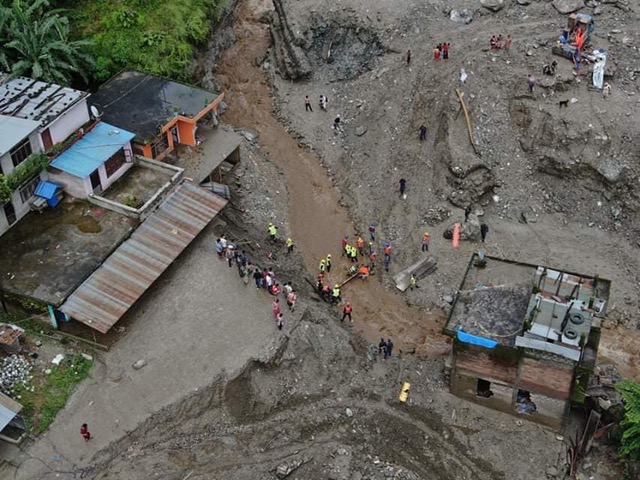
Drone footage of VCN rescuers in action in Jhambhu last week after landslides devastated the community.
A related ODI article that focused on aid in Nepal’s Saptari district following the 2017 floods concluded that ‘the response of the western international system (the UN and INGOs) played only a minor role, accounting for around a sixth of the resources that affected households said they received’.
‘A third came from family, neighbours and landlords, the government, the diaspora or community-based organisations, including in-kind items such as shelter, food, cooking stoves and fuels. Another quarter was from other countries, with China reported as the main source, and Nepali NGOs, particularly the Nepali Red Cross, accounted for a fifth.’
Volunteer Corps Nepal (VCN) currently has 500 volunteers on standby in Saptari to respond to flooding. “Our concern is to prevent deaths, so we have alerted our volunteers to immediately evacuate people to safe areas,” says its president Deepak Chapagain.
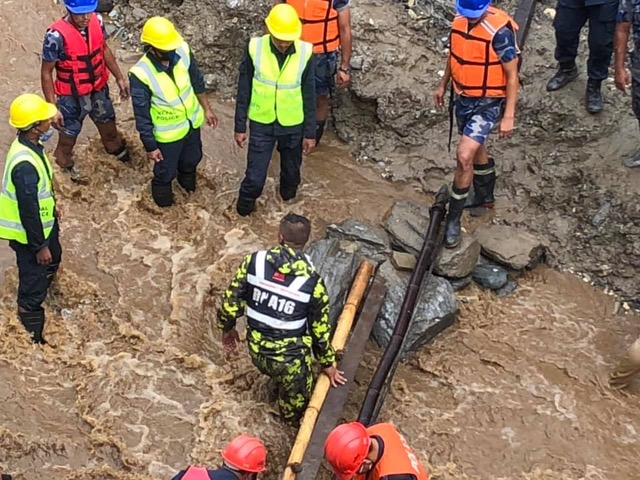
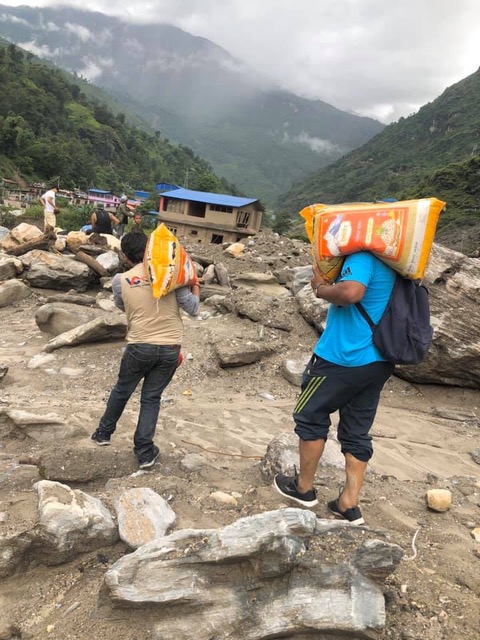
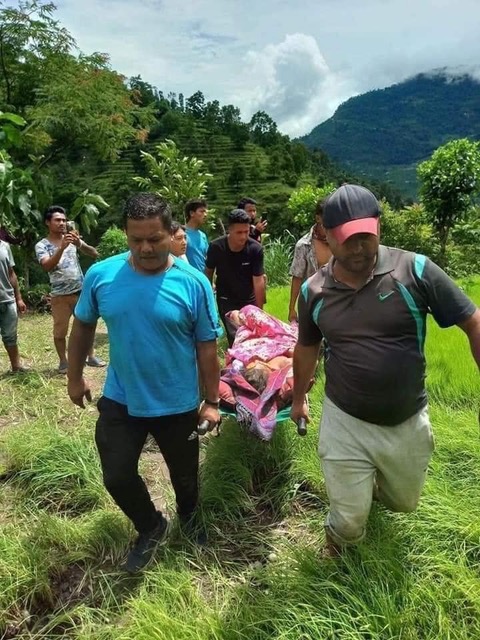
VCN was the first organisation to arrive in Jhambhu of Sindhupalchok after the deadly landslides last week devastated the community. It helped organise the helicopter rescue of seven injured locals, and VCN’s attempt to locate bodies using a drone was thwarted by the piles of rubble created by the disaster, but the video footage it captured shows the massive destruction.
Preparing for floods during a lockdown, Diya Rijal