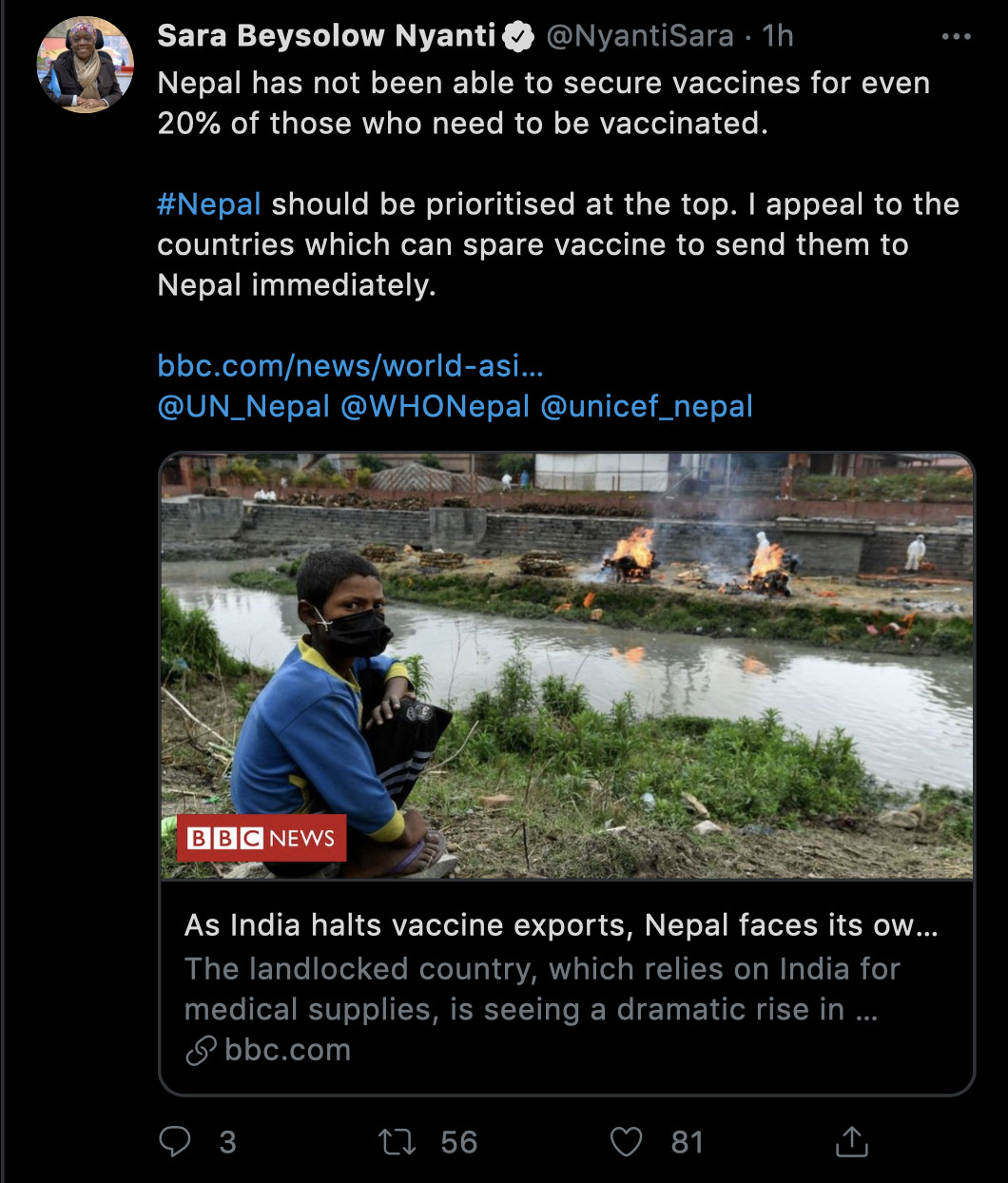
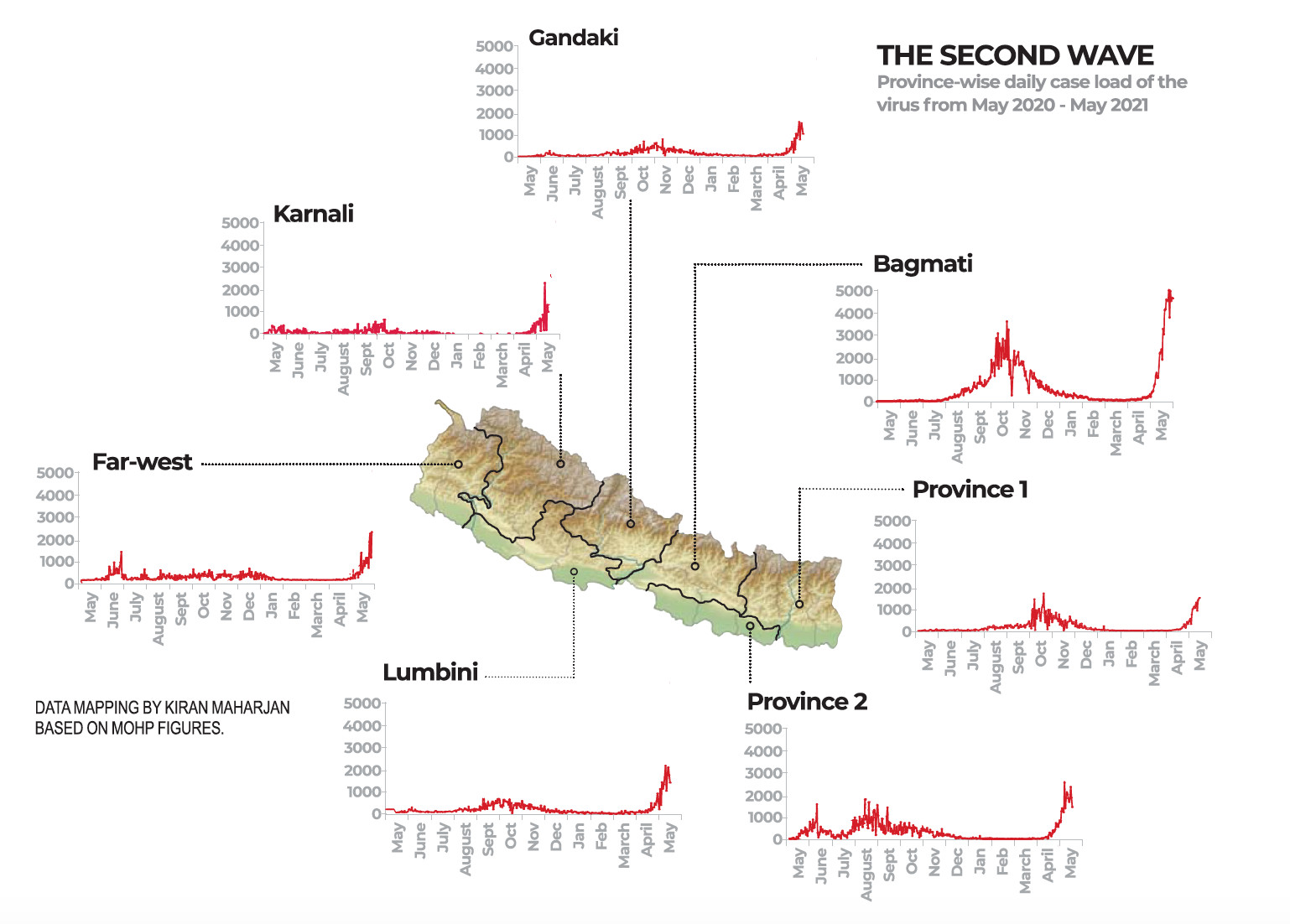
A month ago, Nepal was reporting an average of only 300 Covid-19 cases daily, and the number of deaths was zero for several days in a row. The people, and the government, thought the worst was over and in any case, a vaccine was arriving.
This week, the total number of active cases exceeded 100,000 with daily infections staying above 9,000 for a week. Daily fatalities are now above 150 every day. The nationwide test positivity rate is as high as 50%.
For a country of 30 million, Nepal’s figures are higher than that of India and the rest of the world. As such experts have warned of a health catastrophe as bad if not worse than of the southern neighbour. And our curve has not even started to flatten yet, we are nowhere near the peak.
Nepalganj and Kathmandu have already turned into ‘mini India’ with the coronavirus spreading like a wildfire, and infected doctors and nurses having to treat patients with the same disease. Nepal’s health care system has already exceeded the breaking point.
“It has become a challenge to treat all patients. People are taking longer to recover, plasma therapy and remdesivir aren’t effective and 90% of those admitted need oxygen,” says Sagar Kumar Rajbhandari, director of Teku Hospital in Kathmandu. “Unlike during the first wave when we could maintain a patient with 1-2 litres of oxygen per day, we now need more than 15 litres per individual.”
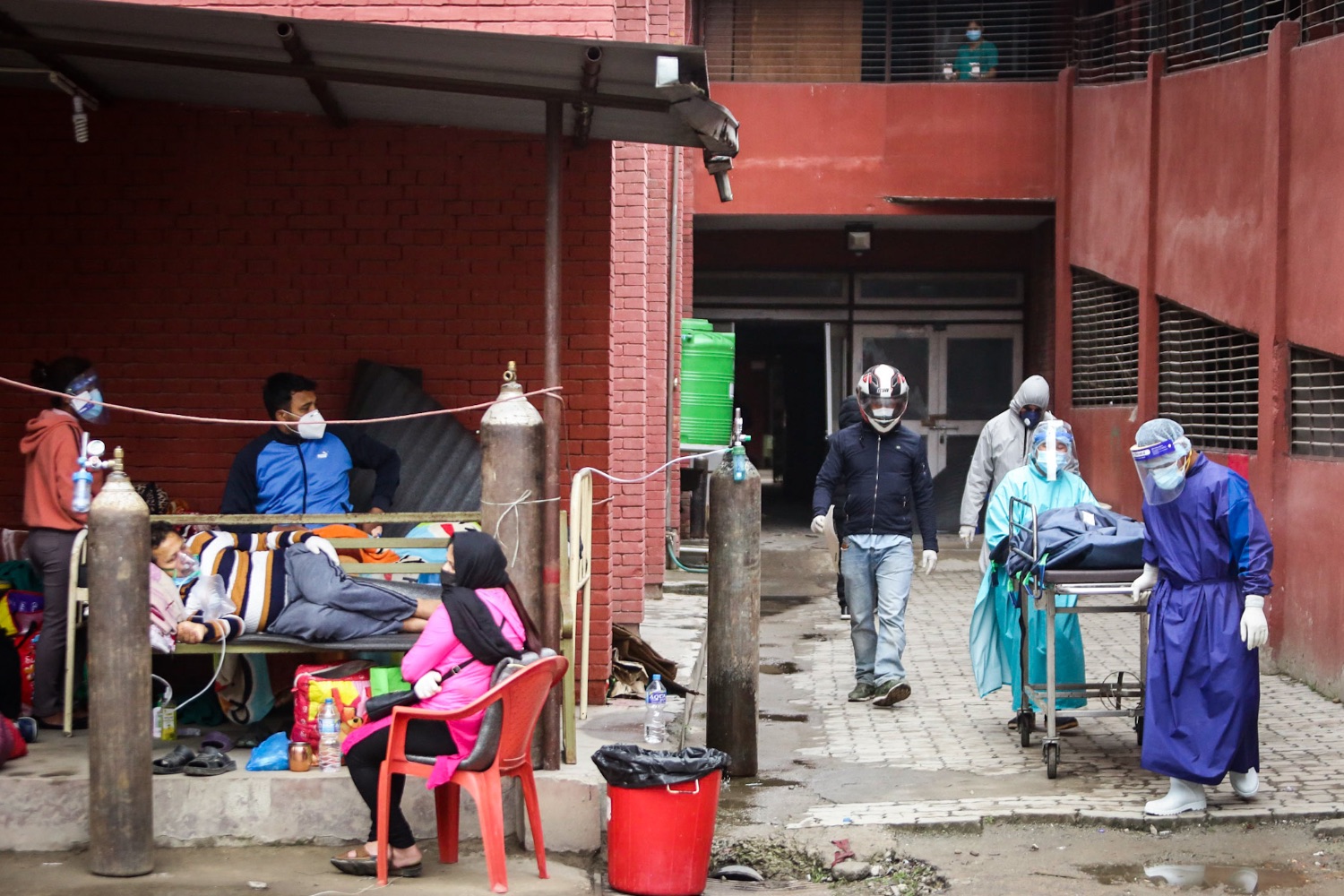
Doctors are having to select which patients have a better chance of survival on scarce ventilators. Patients are dying in the corridors because they cannot breathe.
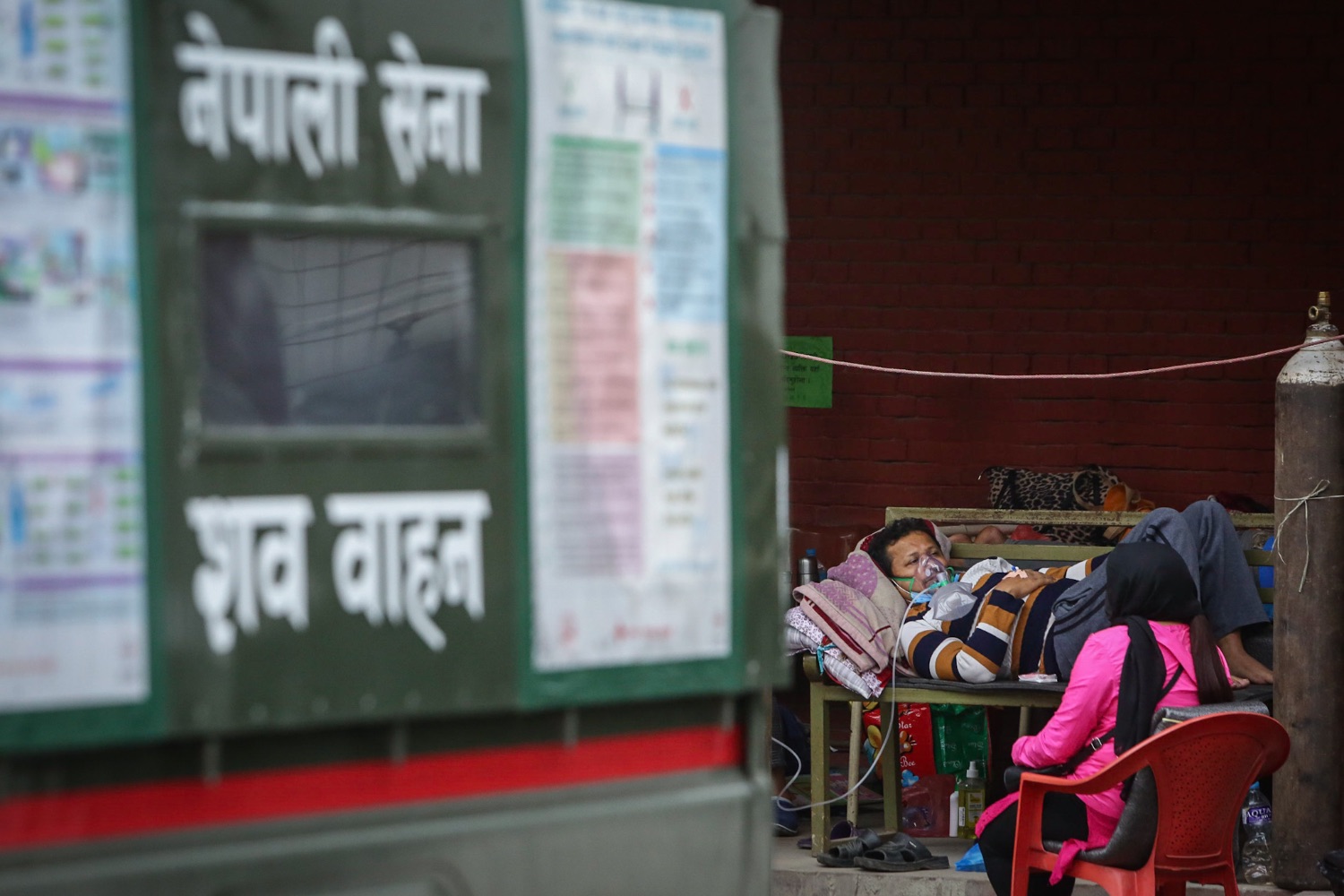
Hospitals across the country are now stopping admits because of serious shortages of beds with oxygen, and patients are sleeping on parking lots and verandahs. They are now reporting shortages of masks, PPE and essential medicines as well.
The Covid-19 Crisis Management Centre’s latest decision to limit oxygen supply per hospital at 100 litres a day has added to the challenge. Patients under treatment in hospitals including Bhaktapur and Grande face critical oxygen shortages and can’t take on any more people. The quota system has made the situation even more dire.
The first consignment of 400 oxygen cylinders out of the 20,000 promised by China was flown in from Beijing on Tuesday by a Nepal Airlines jet, which also brought ventilators, oxygen concentrators and other equipment.
As of 12 May, 71 out of 77 districts in Nepal are under prohibitory orders. The lockdown in Kathmandu, Lalitpur and Bhaktapur has been extended by another two weeks with further restrictions.
International and domestic flights have been grounded until 31 May except for two Kathmandu-Delhi flights a week under the Nepal-India air bubble agreement. Only some cargo charters and rescue flights are permitted.
During a virtual meeting on Tuesday health minister Hridayesh Tripathi hinted that the government might have to declare a “health emergency” since the steps it had taken so far were not adequate in addressing the extent of the crisis.
But long before prime minister K P Oli lost a confidence vote in the parliament and plunged the country into further uncertainty, the government’s response to the pandemic was dismal at best.
Leaders were busy organising political rallies with thousands in attendance in a show of force after Oli dissolved the parliament in December. Then there were religious gatherings, lavish inaugurations and indoor political meetings.
Similarly, Holi and Biska celebrations went ahead because of protests against government efforts to restrict it. Bars, malls, cinema halls, concerts all continued as if there was no pandemic. Border checkpoints in the Tarai were understaffed.
“If we talk in numbers I’d say 70% of the blame for the new surge goes to the public and 30% to the government,” says Sameer Mani Dixit of the Centre for Molecular Dynamic Nepal. “The government could have done more to procure vaccines through diplomacy, enforce safety measures and expand contact tracing. But it was the people who were crowding public spaces without masks or physical distancing, we wouldn’t have required lockdowns otherwise.”