Edmund Hillary once said that the Sherpa were the most researched, dissected and blood-taken ethnic group in the world.
Living below the highest mountains in the world, the trans-Himalayan traders were genetically adapted to high altitude, their culture spanning both sides of the border, and with average per capita income of the Khumbu five times that of the rest of Nepal.
But there are other less-known Sherpas in Nepal’s periphery: in the Langtang, Barun and Rolwaling valleys.
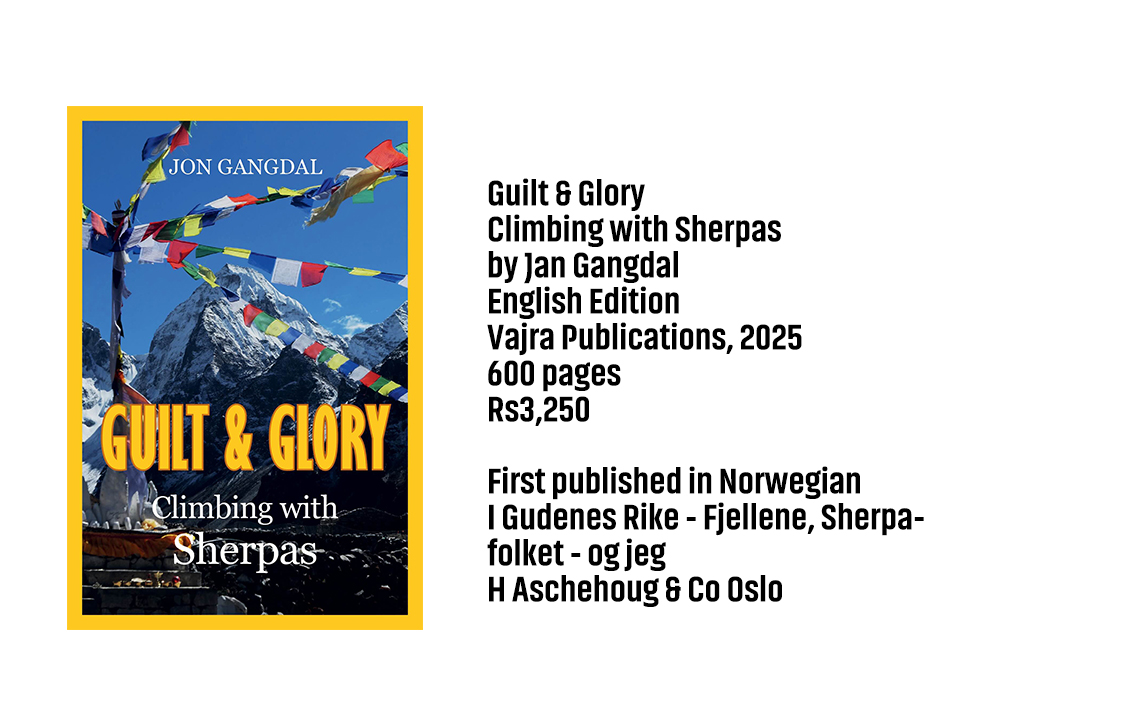
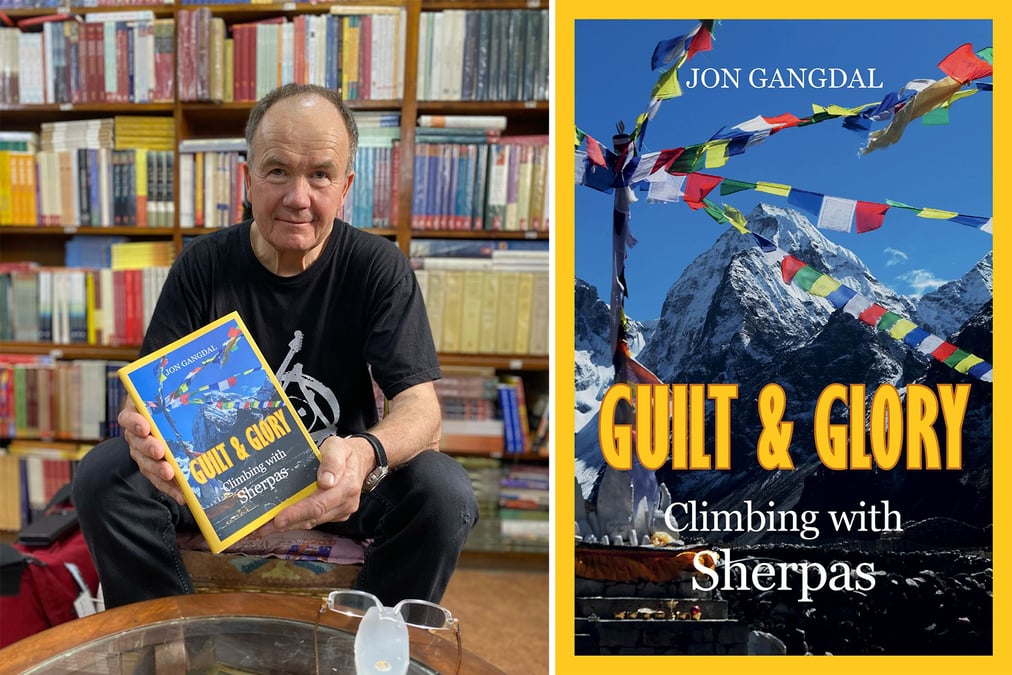
Norwegian mountaineer Jon Gangdal’s latest book, Guilt & Glory: Climbing with Sherpas is about his deep personal and four-decade long association with his climbing partners from Rolwaling.
Guilt & Glory reads more like Gangdal’s memoir and the mountains he has climbed, but it is also a tribute to the selfless friendship with fellow climbers from Nepal. It also exposes the inherently asymmetric relationship between expeditions and their employees in the Himalaya.
Earlier mountaineering narratives overlooked the role of Nepal’s climbing guides in putting their clients on summits. But in recent years there has been increasing recognition that most expeditions would just not be possible without them.
SUMMIT SUPPORT
And that is where Gangdal’s book fits in: between the glory of a successful summit and guilt about not giving due credit to the sacrifice and professionalism of a people whose surname and ethnicity is now a synonym for support staff of G-7 Summits.
After failure and tragedy on a 1994 expedition on Everest West Ridge in which his climbing partner Mingma Norbu was killed in an avalanche, Gangdal is tormented by guilt and supports his widow Ang Sona and her family.
‘The Art of Succeeding When You Have Failed’ was the title of his lecture series in which Gangdal became an outspoken critic of military-style assaults on Himalayan peaks, and self-seeking climbers on them.
In a comment he wrote for Nepali Times in #704 in 2014 after an avalanche killed 16 Nepali guides on the Khumbu Icefall, he argued that equality and safety of climbing Sherpas could only happen ‘if we turn the whole Everest pyramid upside down’.
He wrote: ‘We can feel nothing but grief and pain with the families of the brave boys who gave their lives for … for what? For the glory of their nation, like at war? For the glory of their attention-seeking sahibs who have had the highest mountains in the world as their playground for more than a century? Or for what we all have to do: our daily duty to feed ourselves and our families.’
Guilt & Glory expands on that theme, weaving in his climbing adventures. He realises that the egalitarian Norwegian approach in decision-making does not work in the East’ where the prevalent notion is that a leader should lead. Gangdal notes that with a few tweaks, the twain of East and West can indeed meet.