

If you were raised in Nepal, you must have picked up its unique set of vocabulary: आन्दोलन, चक्का जाम, बन्द, राँके जुलुस, आफ्नो मान्छे, हाम्रो दल, कर्फु and many more words connoting political protest.
We became familiar with the acrid smell of burning tyres, and eyes smarting from tear gas. And yet, everyone speaks of another revolution in the making. Not by desire, but by suffocation.
We heard speeches about नयाँ नेपाल, but the New Nepal never arrived. The governance system changed, but it did not reflect on people’s lives — except for those close to centres of power. The state is still unreachable and is not bothered about victims of loan sharks, cooperative scams and other injustices.
Politicians continue to speak in sound bites, but fail to deliver. They have mastered the game of pointing fingers towards an external enemy and convincing people that they are never at fault. The political narrative is so disconnected from the actual analysis of the problem that suffocation doesn’t go away after every revolution.
No genuine effort has been made to deliver at all, which is why there is a palpable sense of disillusionment in the air forcing us to seek another revolution, even if Nepal may not be able to afford it.
How has the current system successfully held power, even if the public is deeply frustrated? How is it that for three decades we continue to be led by the same faces, who have time and again, proved to us that they may be great politicians but not national leaders?
My experience at the epicentre of politics has led me to identify three cultures that have enabled political parties to keep a tight hold on power: acceptance, silence and dependency.
We accept things the way they are. We use fatalistic phrases like “नेपालमा यस्तै हो” or “नेपालको कानुन दैब जानुन”. While this resilience enables us to rise back up from devastating calamities, it is also a reason for our compliance with the status quo.
Despite so many ‘revolutions’ that have led to significant reforms, these phrases keep getting reinforced, to the point that the upcoming generations have made it their lingo.
This acceptance is not a symbol of law-abiding citizens, but citizens living in fear of those in power, unable to ask the whys and why-nots.
Innovation suffocates in this culture of acceptance of the status quo. This is manifested in remarks like “but we don’t have any laws for this,” or “we don’t have the capacity to implement this”. An innovator or entrepreneur therefore has to spend that energy to become a political lobbyist, often educating and convincing the bureaucracy.
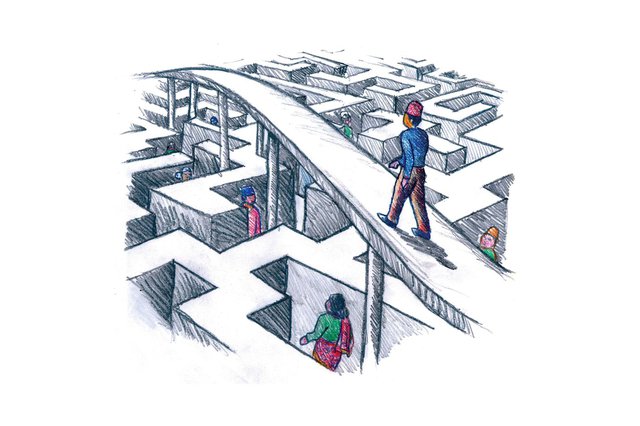
Remember when locally assembled Yatri motorbikes, despite having willing customers, had to suffer to secure license numbers because of a lack of regulations? Instead of creating new laws, the government kept chanting the “We will promote Nepal-made goods” mantra, leaving entrepreneurs in a labyrinth of bureaucracy. The weight of acceptance of the law lies heavily on innovators. Fatalism is a tactic used by those in power to generate mass fear in society.