All of us witness examples of Nepal’s corruption pandemic every day in every sphere of life: from slipping a few to get a driving license to setting land transactions. Roads that are dug up and not finished for years and bridges that collapse as soon as they are built are our monuments to malfeasance. Clever civil servants now deploy ‘brokers’ outside their offices to ‘facilitate’ state services that should be free, so they do not have to directly get hands dirty.
Read also: No shame
But these are cases of petty theft by small fry. At higher levels of government, corruption is so huge and widespread, so accepted as SOP, that the word ‘corruption’ does not do justice anymore to this contagion of loot and plunder.
One egregious example of the rot was the ugly scene in the Parliamentary Accounts Committee (PAC) on Tuesday when Nepal Communist Party MP Aman Lal Modi accused Kul Man Ghising of the Nepal Electricity Authority (NEA) of corruption. Ghising, many readers will remember, is the man who ended the practice of his corrupt predecessors of providing 24-hour power to industries in return for bribes. Nepalis did not suffer from load-shedding just because of undersupply but because of structural corruption — top NEA executives were selling electricity to industrialists, leaving household consumers in the dark for 10 years.
Ghising recently asked those industries to pay a backlog of dues for dedicated feeders, prompting Nepal’s so-called captains of industry to gang up on him. It does not take a Sherlock Holmes to figure out why MP Modi is using PAC to go after Ghising.
Then there was the sordid affair of the Melamchi contract. The much-delayed $500 million project to bring water supply to Kathmandu Valley was nearing completion in December. A Dispute Resolution Board awarded the contractor Rs350 million for delays caused by the earthquake and Blockade in 2015, but a secretary in the Water Supply Ministry refused to sanction payment unless he got Rs50 million in kickbacks. The Italians abandoned the project, Melamchi is in limbo.
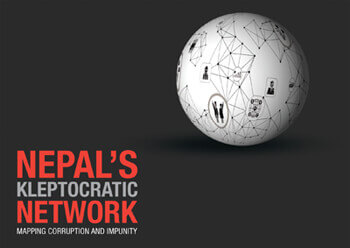
To understand just how deep-rooted corruption in Nepal is today, a report issued this week by the Niti Foundation, Nepal’s Kleptocratic Network: Mapping Corruption and Impunity, is an eye-opener. To be sure, none of what it contains should surprise us. We always knew rent-seeking was the modus operandi of the state, and politicians and bureaucrats were up to their necks in extraction and extortion. Such is the impunity, the big fish never get caught.
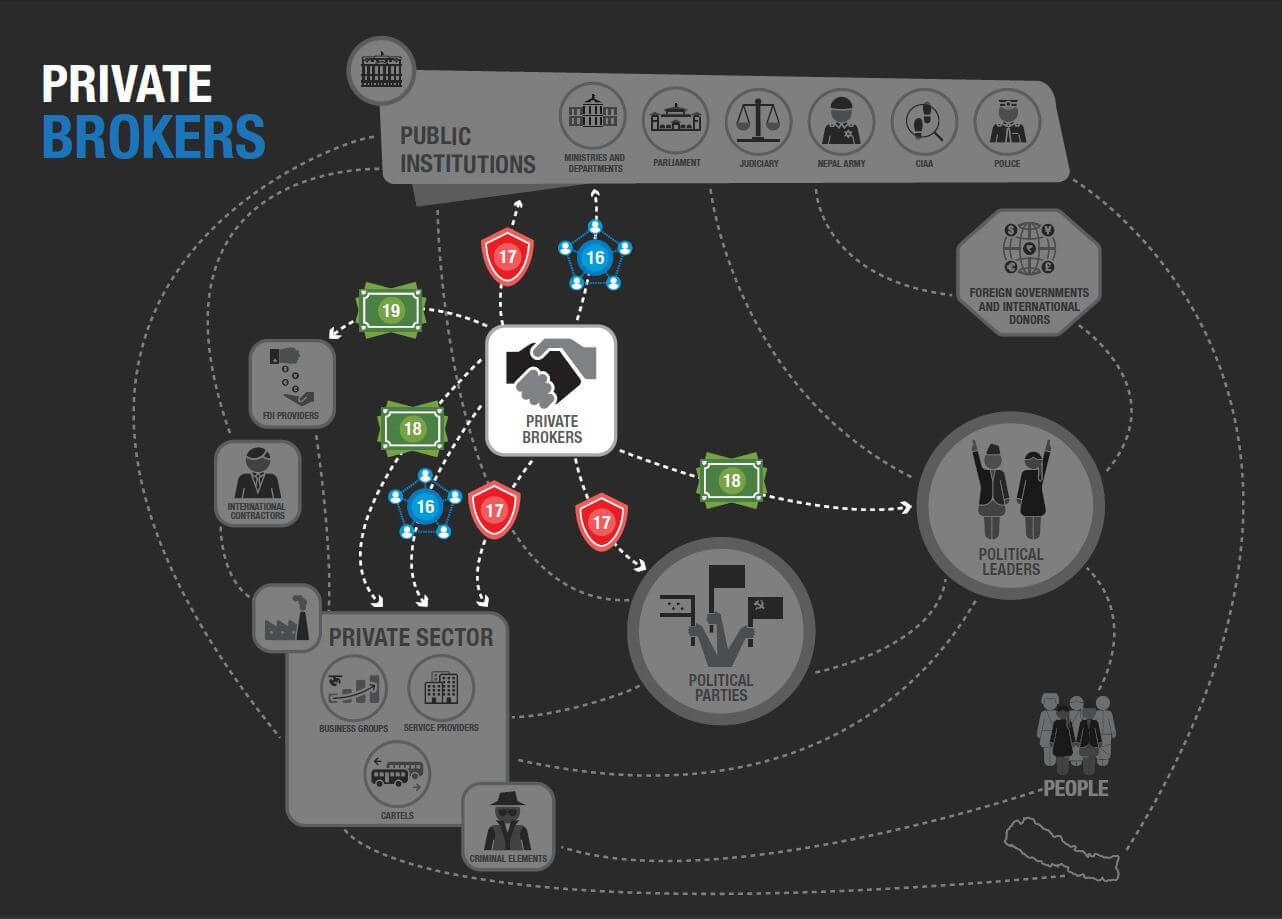
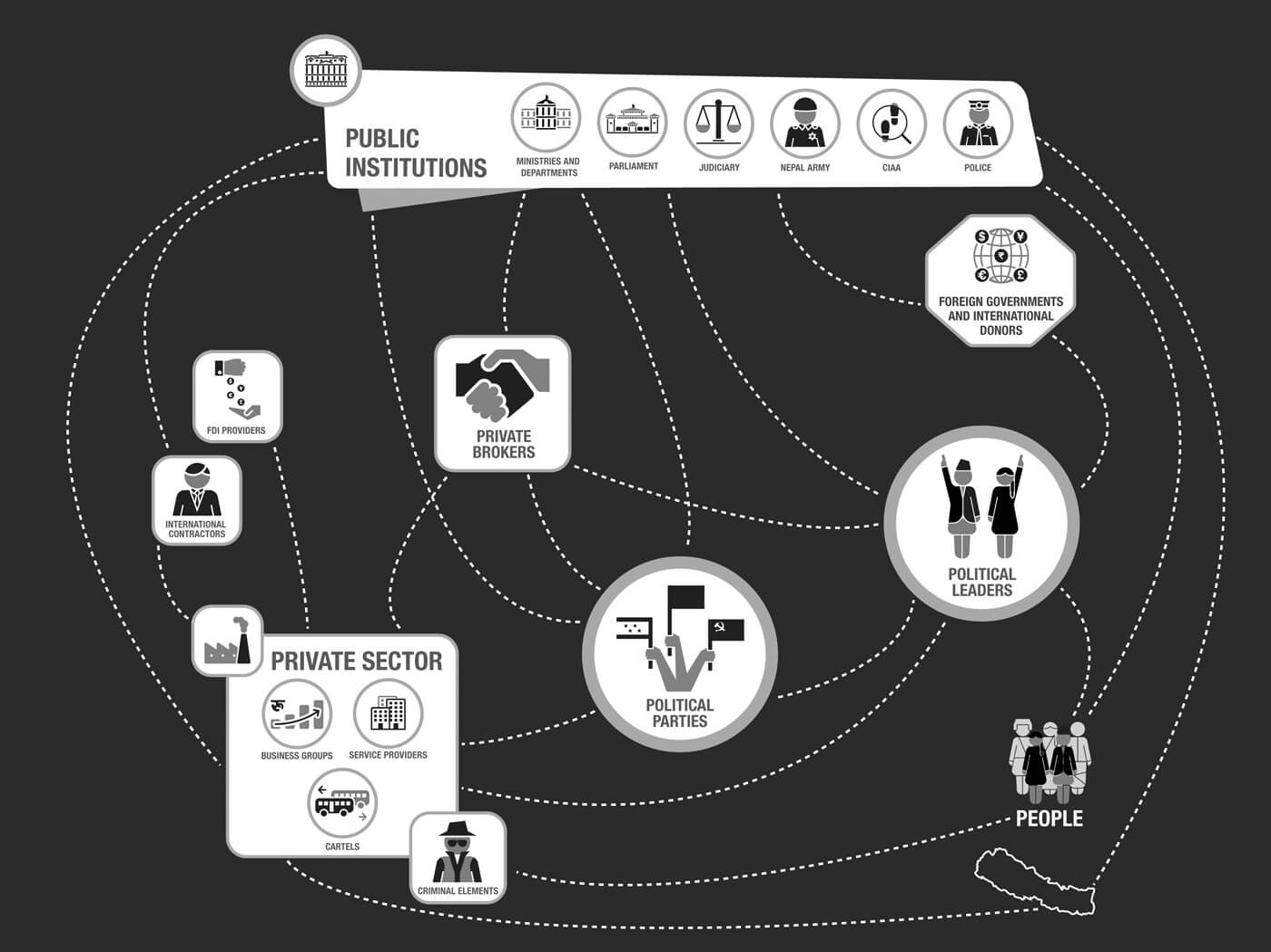
The report tries to show, not tell, just how nefarious, deep-rooted and interlocked rent-seeking is in Nepal. Illustrating graft with graphics, we are given flowcharts to explain why plunder and impunity is so systemic.
‘Core state entities responsible for regulation and upholding rule of law have been weaponised or hollowed out by the kleptocratic network to extract resources and guarantee impunity,’ says the report. ‘The impunity network comprises those that declare law, enforce law and apply law.’