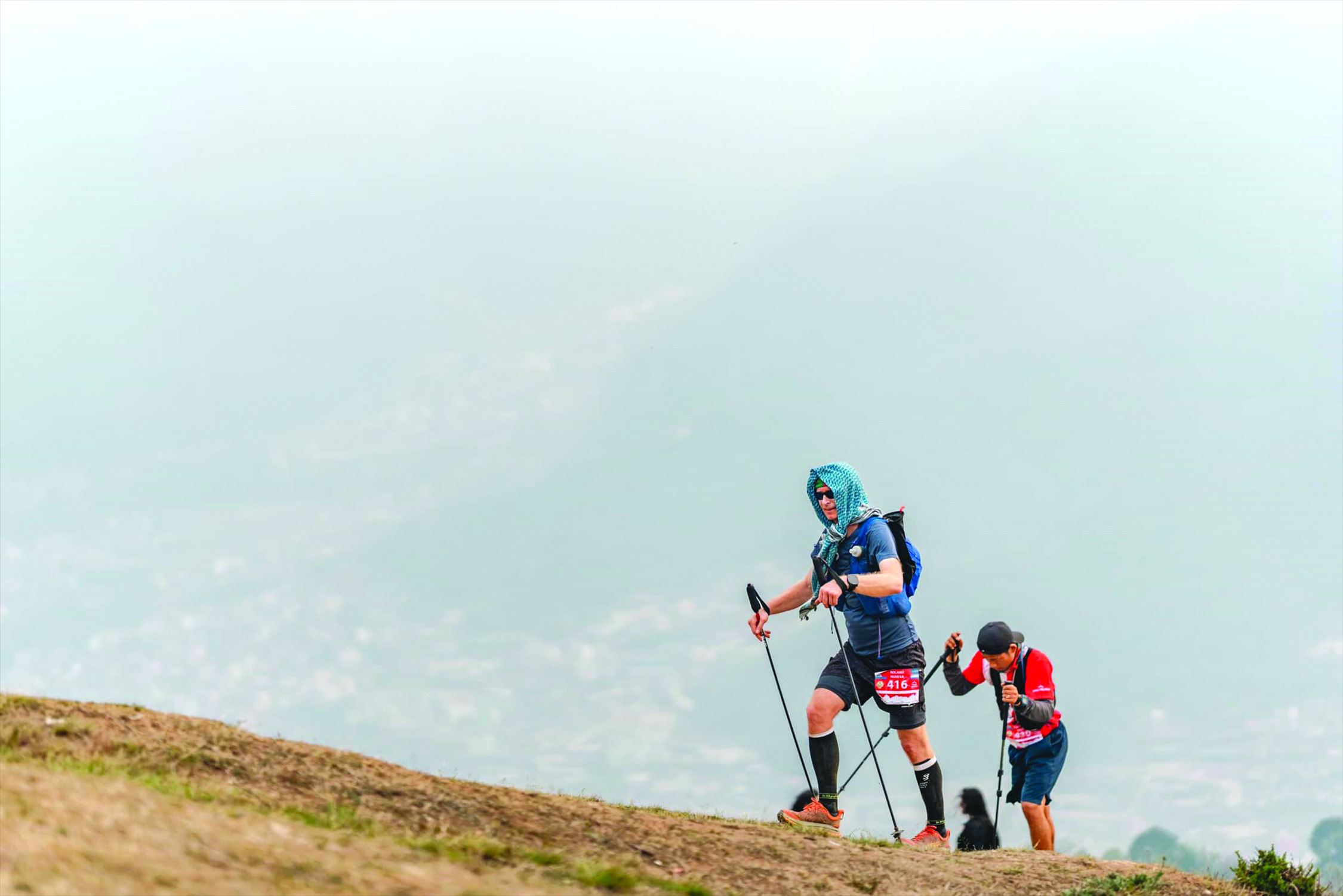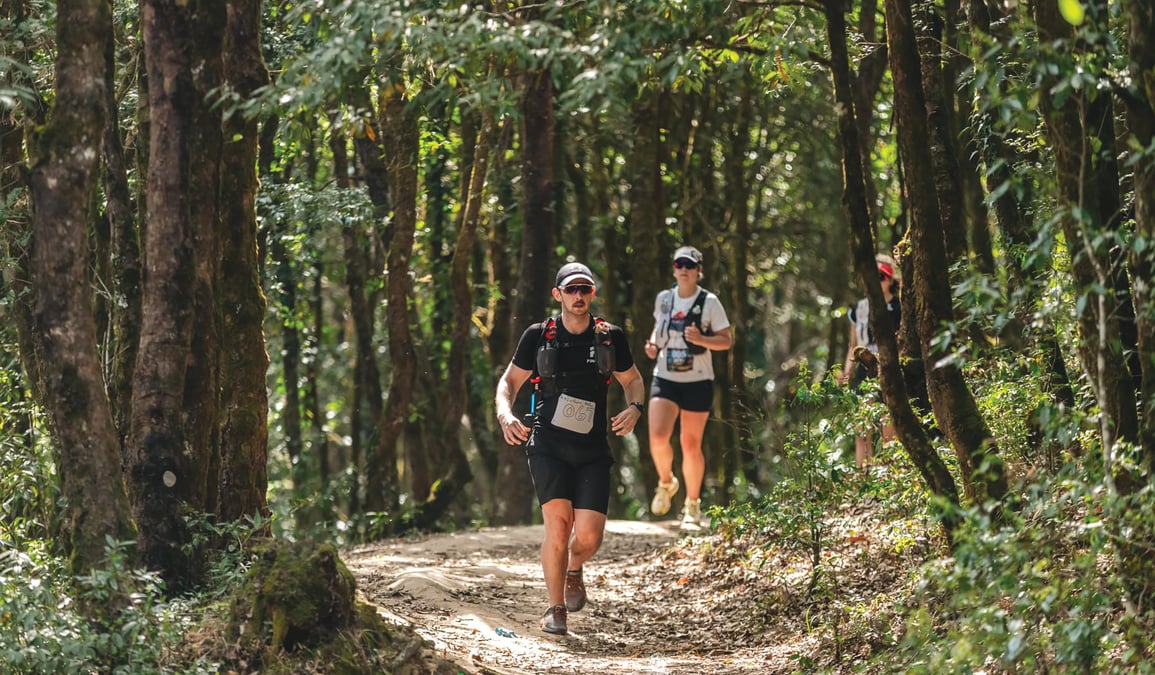
Kathmandu was once a lake inhabited by serpents, until Manjushree visiting from present-day China saw a fluorescent lotus in the water. To reach it, the sage used his flaming sword to cut a gorge at Chobhar, draining the lake and turning it into a fertile valley.
The Manjushree Trail Race (MTR) is inspired by this legend. There are five categories along a near-circular route around the rim of Kathmandu Valley: 10k, 30k, 50k, 100k, and one that is 100 miles that is 157.7km (map, right).
The 100 miles category starts at 8AM on 14 March, and runners have 52 hours until noon on 16 March to complete it. Arjun Kulung Rai’s 26:52:56 is the current record, set in 2024.
“The Manjushree legend and the perfect loop make the race very meaningful, and I wanted to do it,” says participant Dong Sheng from the northern Chinese city of Harbin who started running in 2016 with 5k until he accomplished a 100 miler in 2022. “Running is spiritual, as you are always trying to overcome what you could previously do.”
Sheng is one of 131 international runners who have signed up for the Manjushree race, where there are a total of 502 participants this year, 94 of them women. The first edition of the race only had 7 runners total.
Read also: Nepali trail running champions, Preeti Khattri
“A reason this race is popular is because it is a good mix of rural and accessible,” says Jimmy Oostrom, a Dutch runner. “Often, 100-milers are way out of the way. Here, the start is only a short drive after landing in Kathmandu.”
The 100 mile and 50km are now qualifier races for the Asia Trail Masters, an international series of trail races based in Hong Kong. Last year, a Nepali team competed and won in the Asia Trail Master Championship series in Borneo. The 100-mile category starts and finishes at Single Tree on Nagarjun, other distances have different start and end points.
On the winning team was Rashila Tamang, who is part of Trailmandu that implements logistics for the race, such as recruiting and training volunteers, and marking the route. “Nepal has great geography for trail running, but it is still very hard to make it your career,” says Tamang.
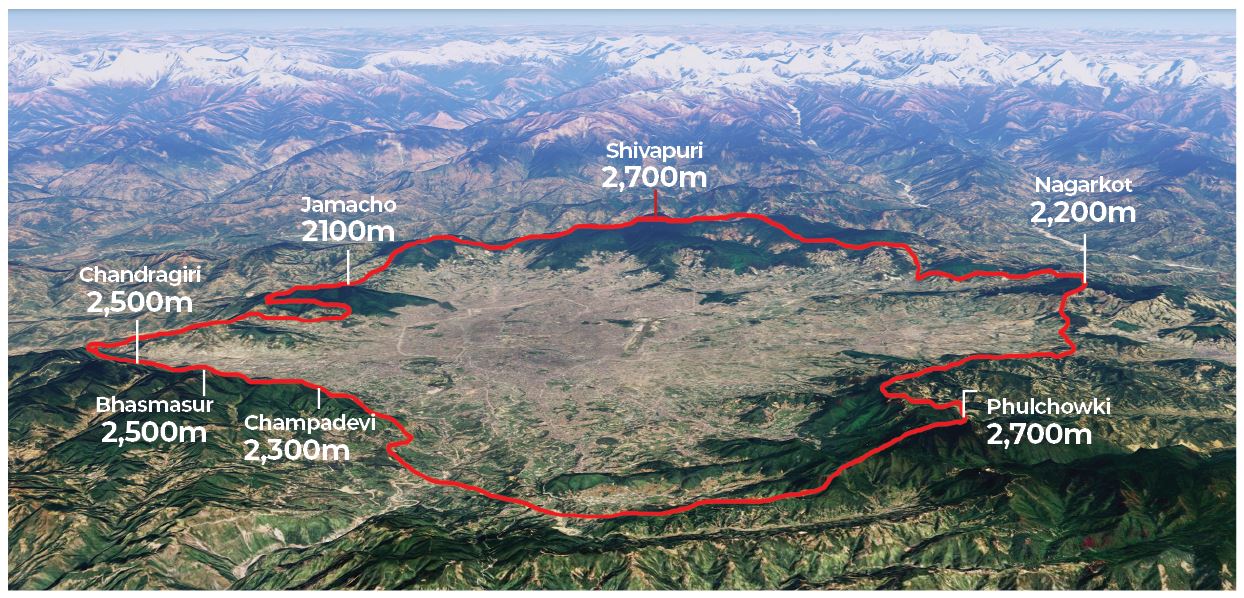
The MTR has a guidebook detailing the categories, route, checkpoints, rules and what is available at each stop.
“If we say we’re going to start at 8, we’re going to start at 8,” says Narayan Acharya, the man behind naming the race ‘Manjushree’. “People tried to sign up after the deadline, we had to tell them no.”
Acharya who builds traditional rammed earth houses through his company Sustainable Future Nepal, has been long involved with promoting trail running in Nepal, and hailing from Jumla himself, mentored Sunmaya Budha also from Jumla, now a trail running star in and outside Nepal.