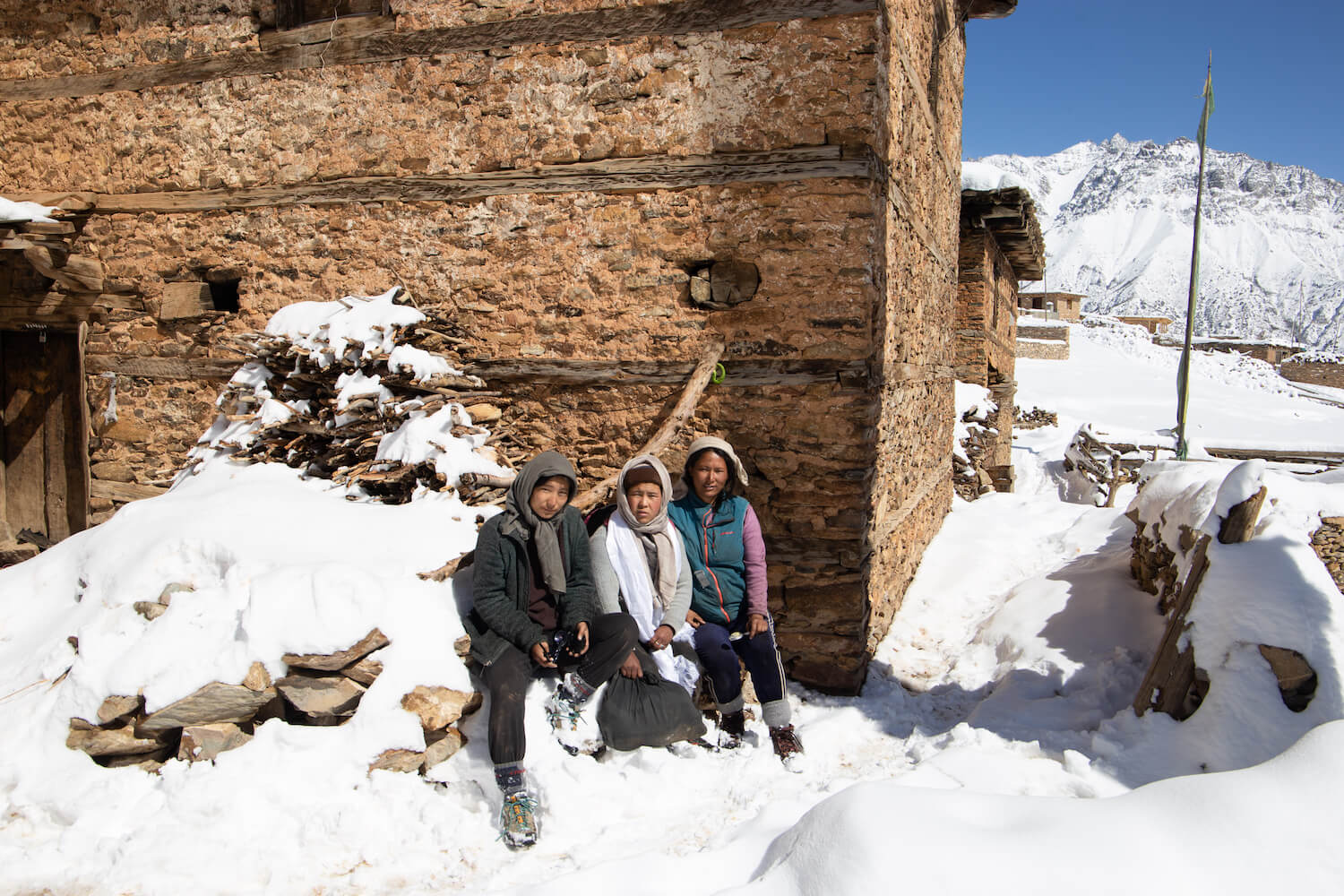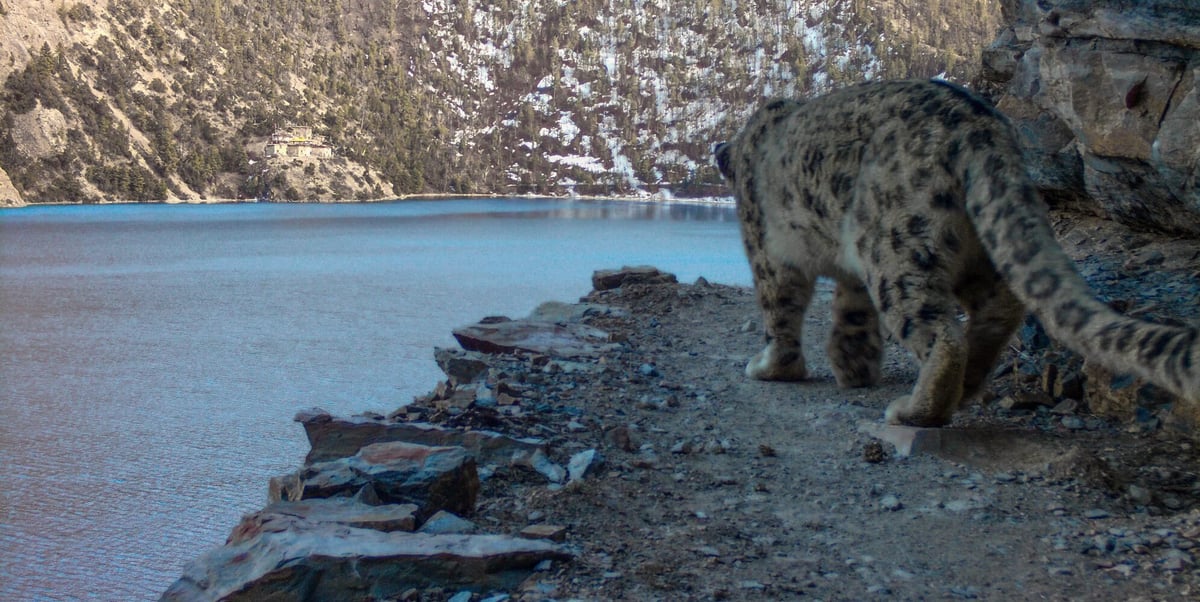
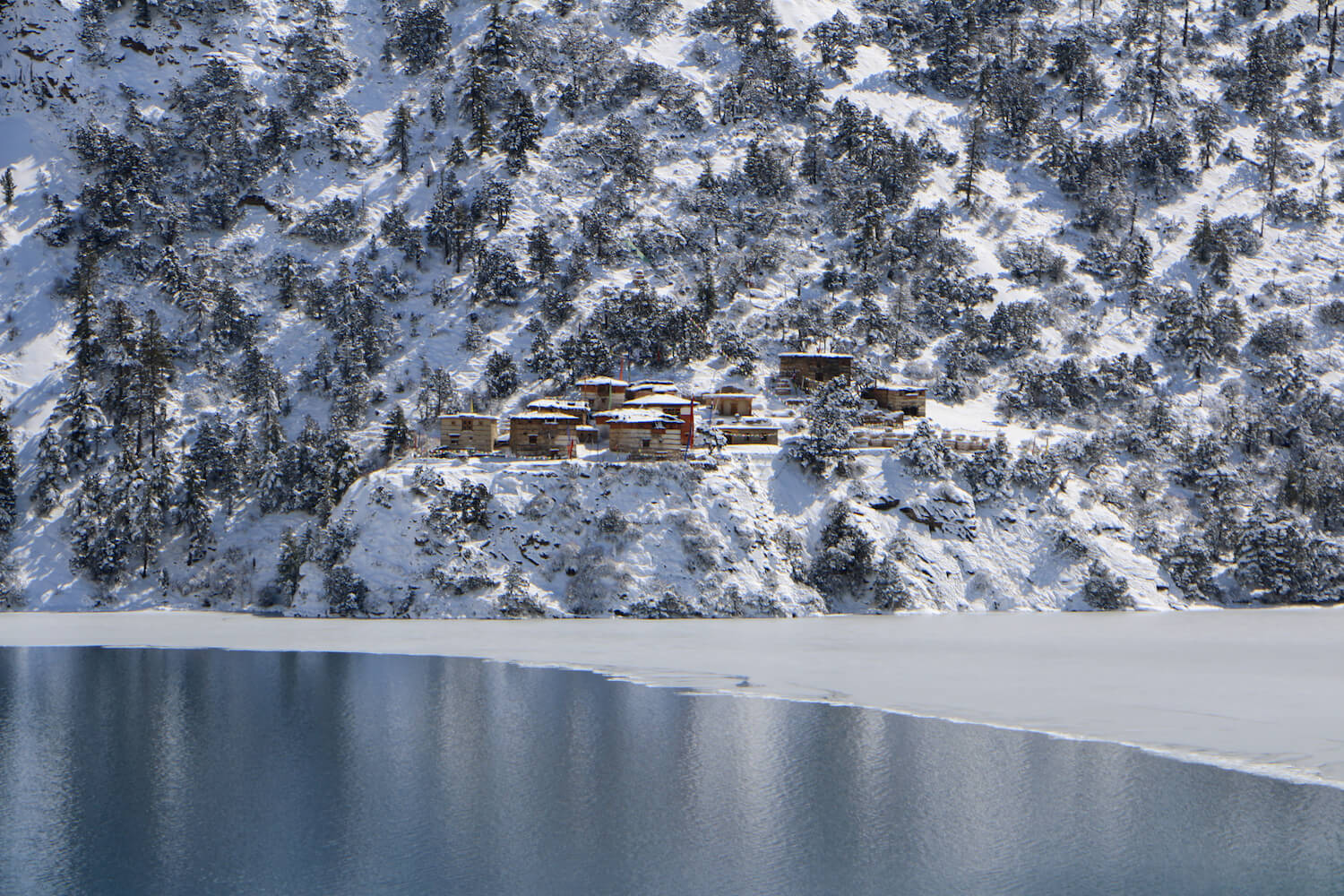
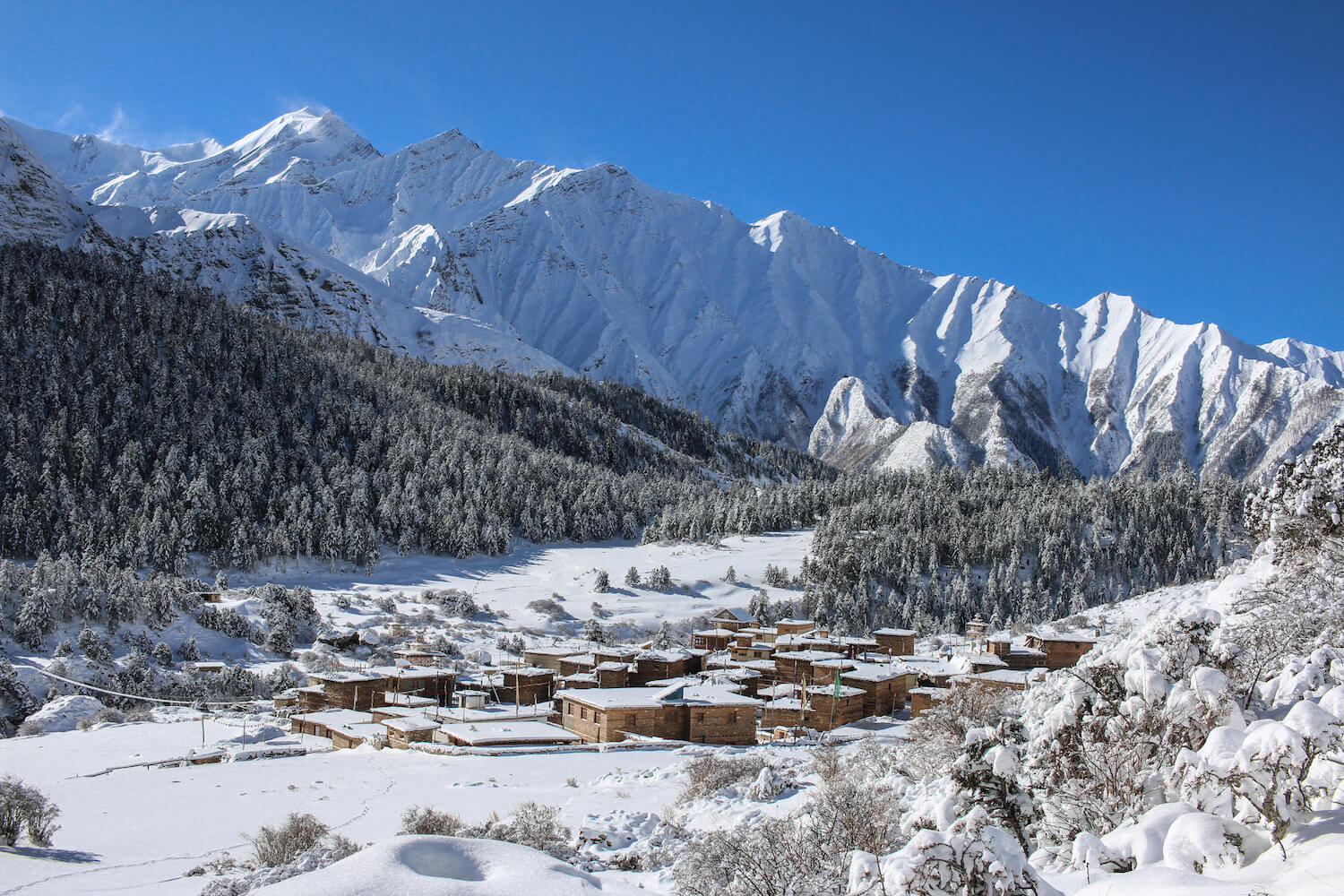
It is morning here at 4,000m, and an overnight blizzard has left everything white. All around us, the outlines of the mountains of Dolpo have been softened by new snow. Below, Phoksundo Lake is partly ice-covered.
The snow has made it easier for us to look for snow leopard tracks. These cats are elusive enough, but their fluffy camouflage makes them hard to see even if they are nearby.
‘That the Snow Leopard is, that it is here, that its frosty eyes watch us from the mountain -- that is enough. And in the not-seeing, I am content.’ These lines from Peter Matthiessen’s classic The Snow Leopard echo in my mind, and make me curious: what does this creature that is so hard to see look like?
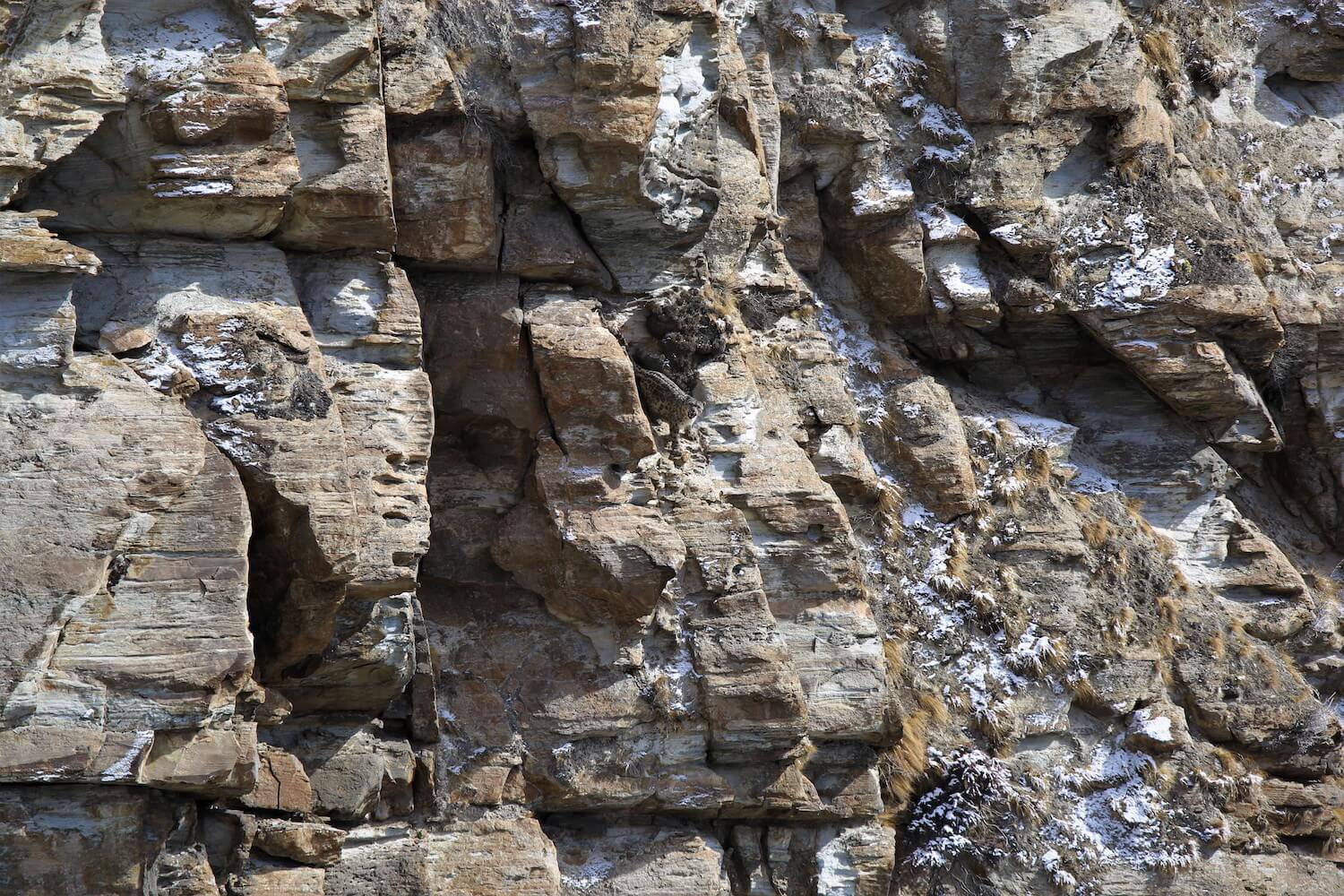

It is the philosophical Zen-like idea of the ‘not-seeing’ that holds such symbolism in Matthiessen’s book. Its powerful description of the animal that is there but not there, that you look for but cannot see. It reminds us of our own ephemeral presence in the eternity of nature, of being here today, gone tomorrow.
Like the tracks on the snow that indicate that the being is nearby, its proof will be erased soon enough with the warmth of the sun. All that will remain is the memory of our presence, and the flash of fur on an icy crag.
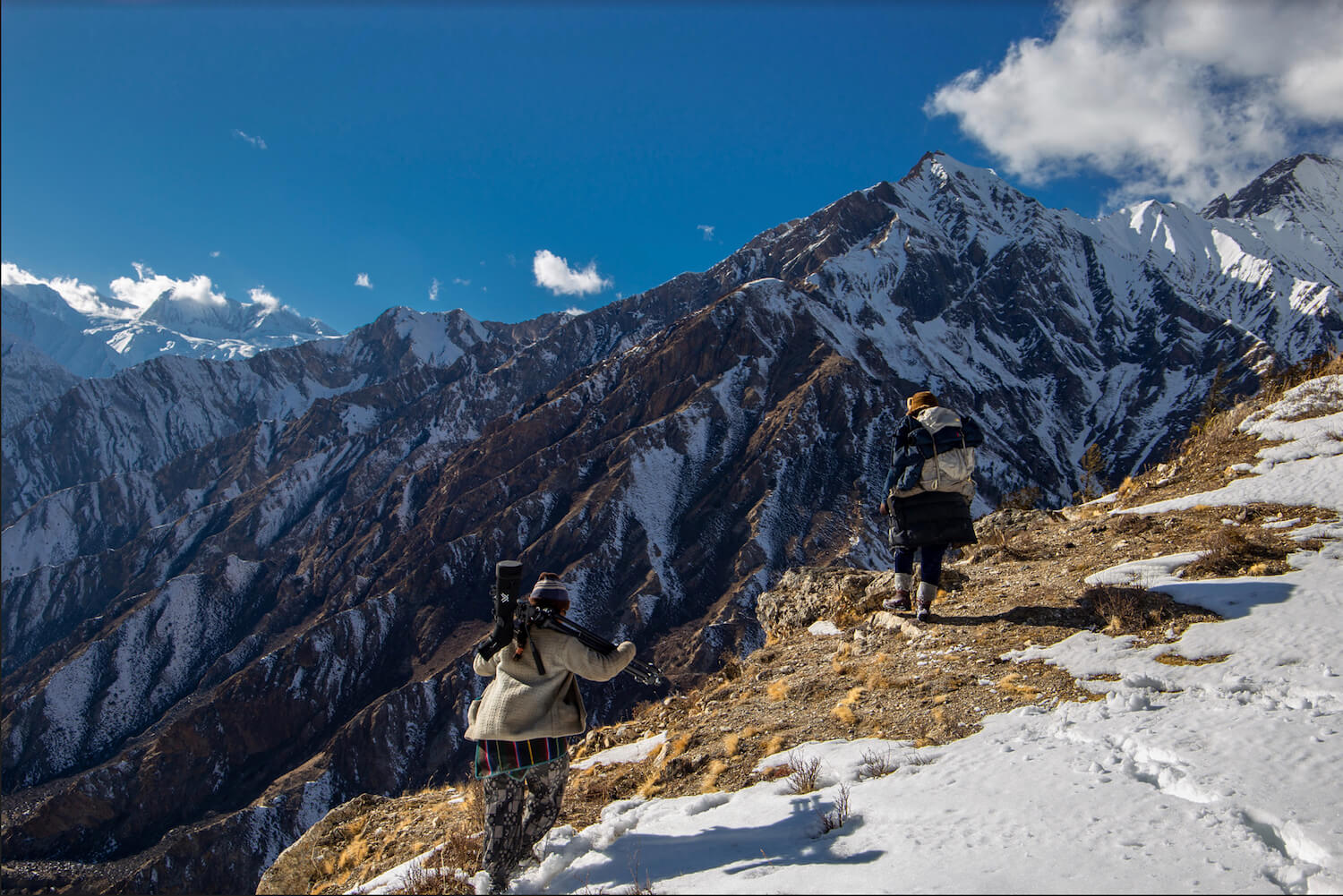
The snow leopard is one of the world’s most elusive and rare cats. It is sparsely distributed across 12 countries in Central Asia and the Himalaya, admirably adapted to its high and rugged range at elevations of 3,000-4,500m.
The snow leopard has become not just a professional quest for my sister Tshiring Lhamu Lama, but also a personal journey. She is a Snow leopard researcher and conservationist, and founder of Snow Leopard Journeys. As luck would have it, she invited me to join her to spend three winter months earlier this year in our birthplace of Phoksundo to document her research, and to plan for a Snow Leopard Conservation Trek next year.
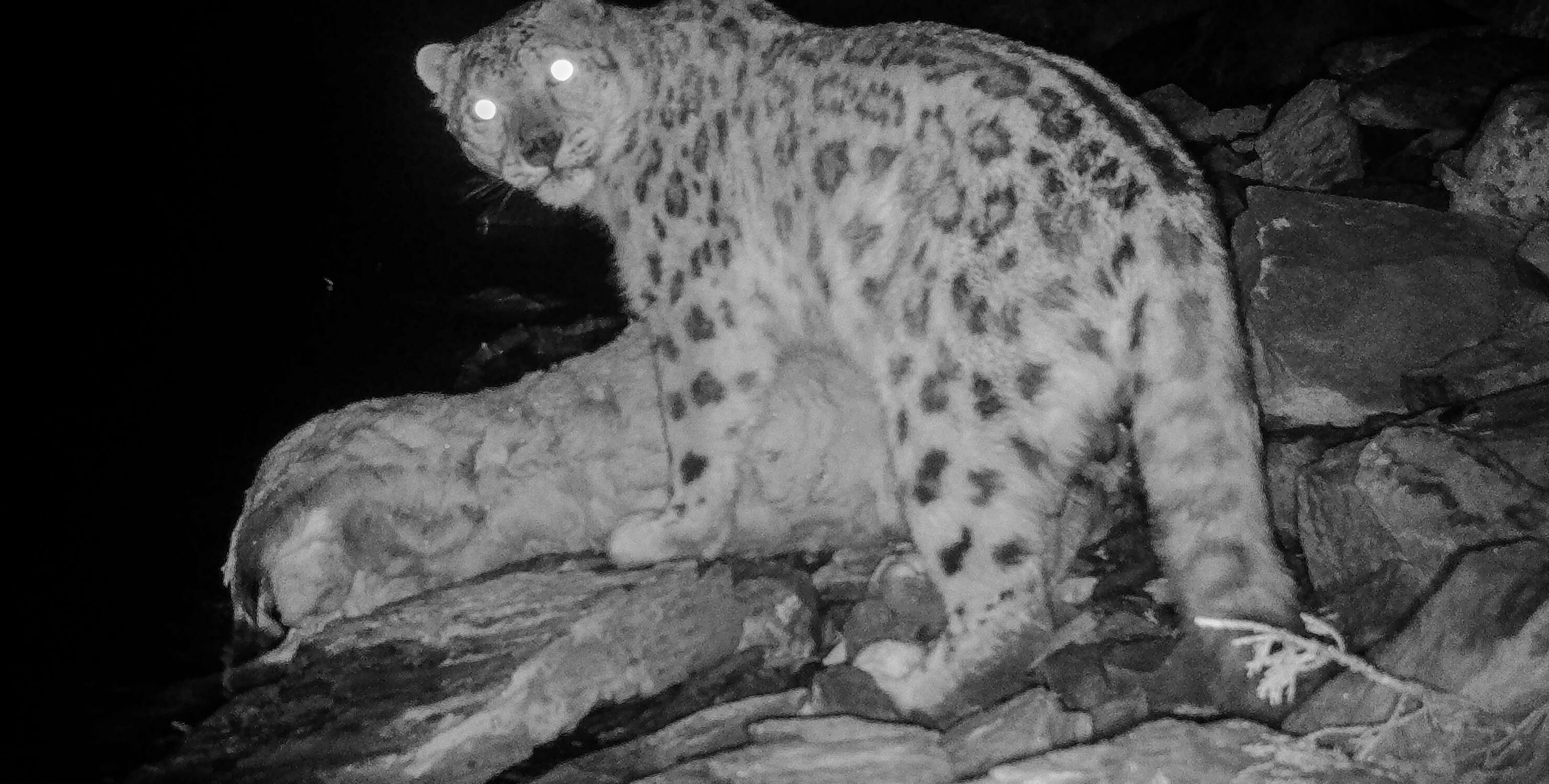
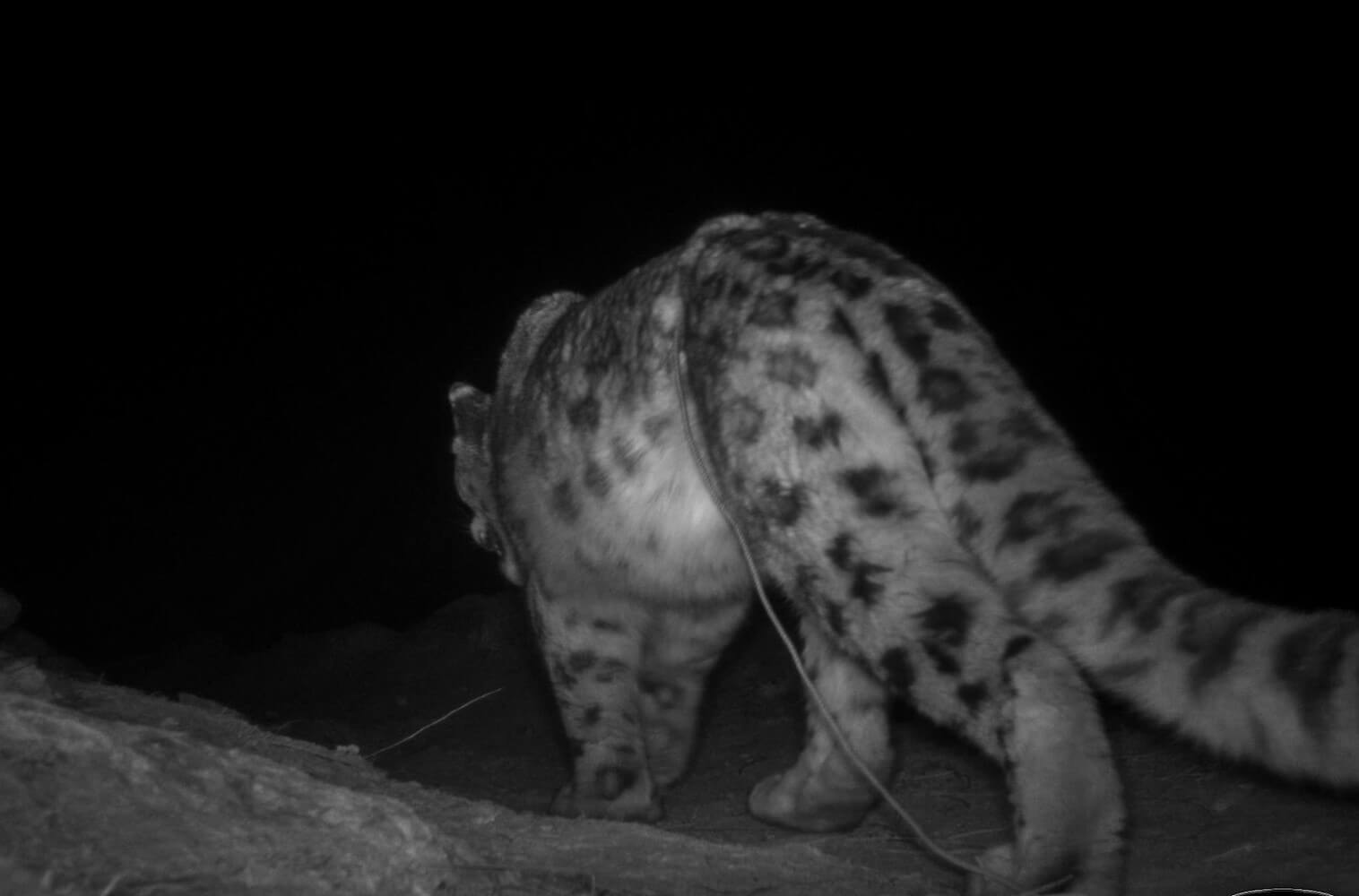
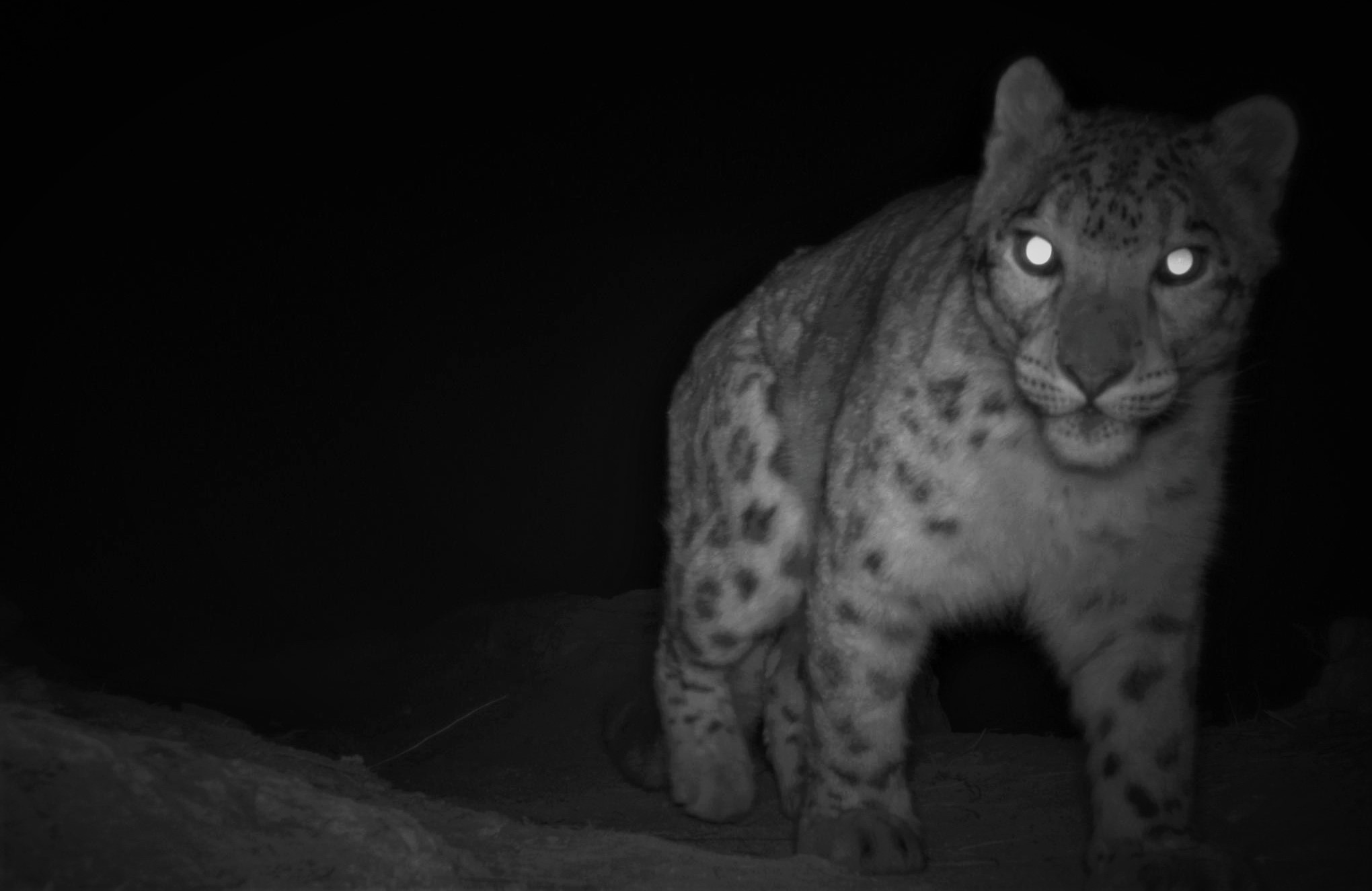
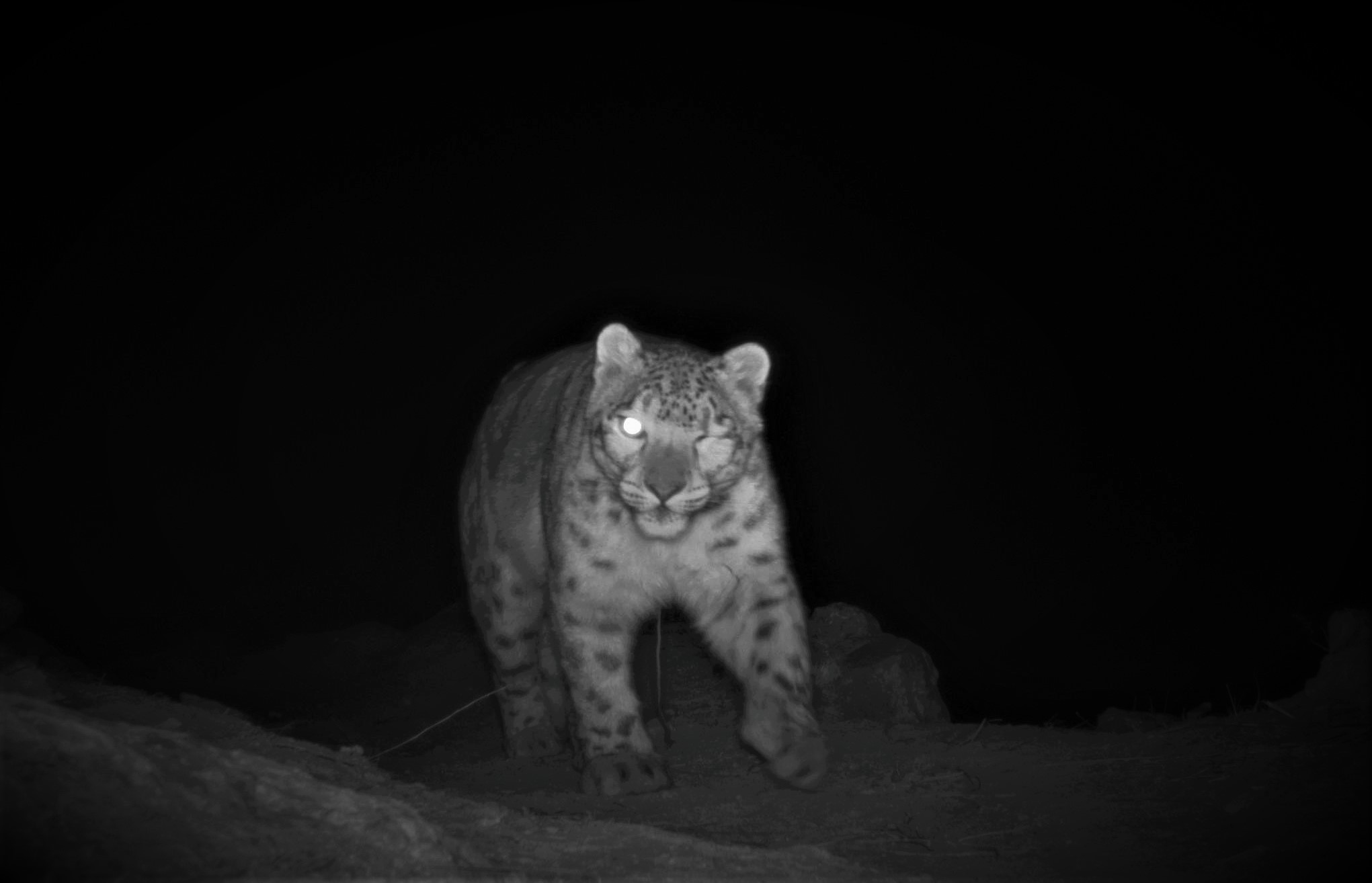
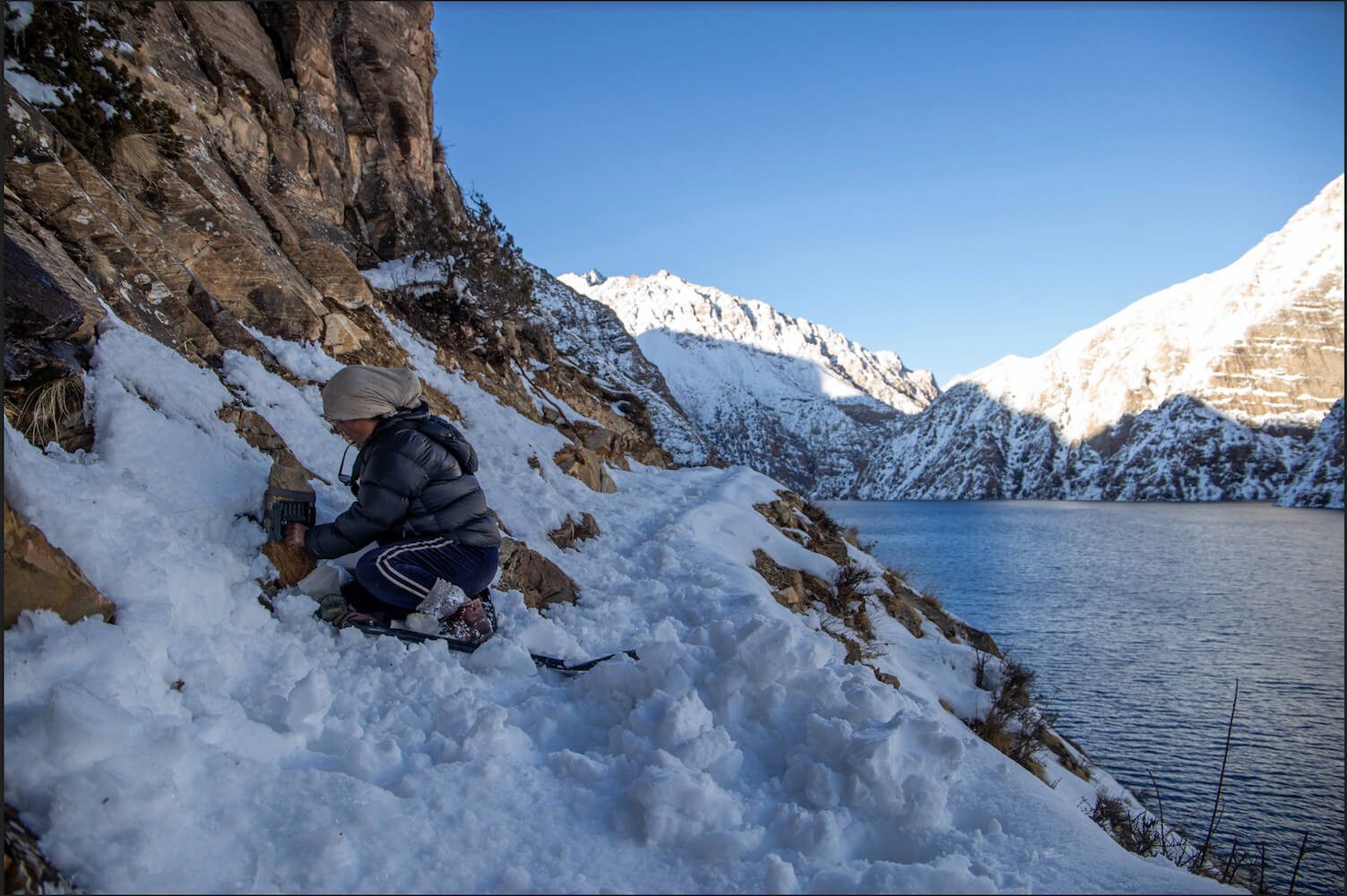
There is an easier way to see a snow leopard: through camera traps that we installed. But there is nothing to beat the sight of a snow leopard in the flesh. It was after a month of stalking and tracking that I had my first encounter on 28 February.
The coronavirus pandemic had spread from China to Europe by then, but up here in remote Dolpo, we had no idea. I was alone, scanning the ridges and checking up on the motion-detection camera inside a small cave.
It was 6pm and already getting dark when, right at the entrance to the cave, was a large cat that looked like a furry cloud trailing a long curly tail. We were face-to-face. The leopard was as surprised to see me as I was. My happiness at seeing this apparition overcame my fear. Was it real? Was it an illusion? Did I really see it?
In slow motion, I stretched my hand to grab my camera. The leopard noticed my movement, and leapt away noiselessly, disappearing up into the cliffs above. I did manage a grainy photo as it bolted off – visual proof to myself that I had actually seen what I had just seen.