
In 1763, Scottish inventor James Watt was given a steam engine to repair. Developed by Thomas Newcomen, it would turn water into steam to run a water pump. The Newcomen pump used the same chamber for heating and cooling steam, and was slow and consumed lots of coal. It was expensive.
Dagogo Altraid in his book New Thinking: From Einstein to Artificial Intelligence, the Science and Technology That Transformed Our World tells us that Mr Watt conceptualised an improvement during a Sunday afternoon walk in Glasgow. He proposed a separate chamber that would condense the steam. It would improve efficiency and reduce cost.
Subsequently his steam-run piston connected to levers and cogs would move wheels in locomotives, ships and textile factories. James Watt took a walk, and the world changed forever -- the first industrial revolution was set in motion.
About eighty years later the mass extraction, processing and commercial use of petroleum to fuel these engines began in the United States. The second industrial revolution was on its way. The availability of petroleum products helped develop the internal combustion engine, improving mobility on a far greater scale than steam power – later revolutionising the use of automobiles, ships and aircraft.
Energy generated from coal, petroleum, diesel and gas thus industrialised the West, and became the prime mover of its socio-economic system, and subsequently spread to every country in the world which followed the same development path.
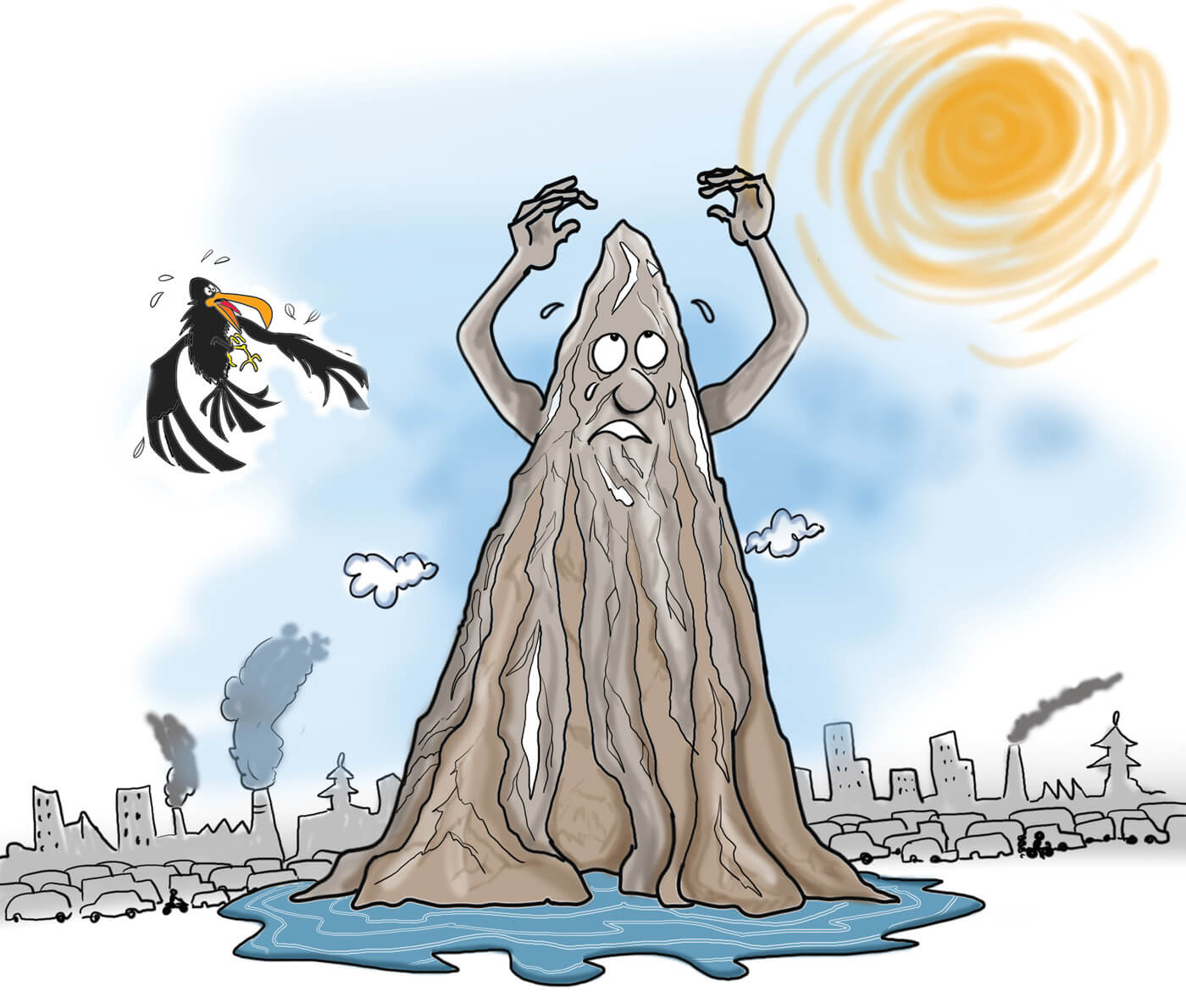
Human beings had unprecedented mobility, the world achieved progress, but use of fossil fuels over the next two centuries and half accumulated carbon dioxide in the atmosphere increasing its concentration from less than 300 parts per million (ppm) in the pre-industrial era to 418 ppm today. This and other greenhouse gases trapped more heat and amplified anthropogenic climate change.
In the early 19th century scientists were already examining the relation between the sun, earth and atmosphere. French physicist Joseph Fournier in the 1820s postulated that the Earth's atmosphere might face a ‘greenhouse effect’. British physicist John Tyndal later explored this idea further, and in 1859 demonstrated that a greenhouse effect would trap the sun’s reflected radiation in the earth’s atmosphere – increasing the average surface temperature of the planet.
The First World Climate Conference organised by the World Meteorological Organisation in 1979 had formally identified increased atmospheric concentrations of greenhouse gases as the leading cause of global warming. The Intergovernmental Panel on Climate Change (IPCC) established in 1988 to study climate change and its impact has been warning for the past three decades that a hotter planet posed a threat to humans and other life forms.