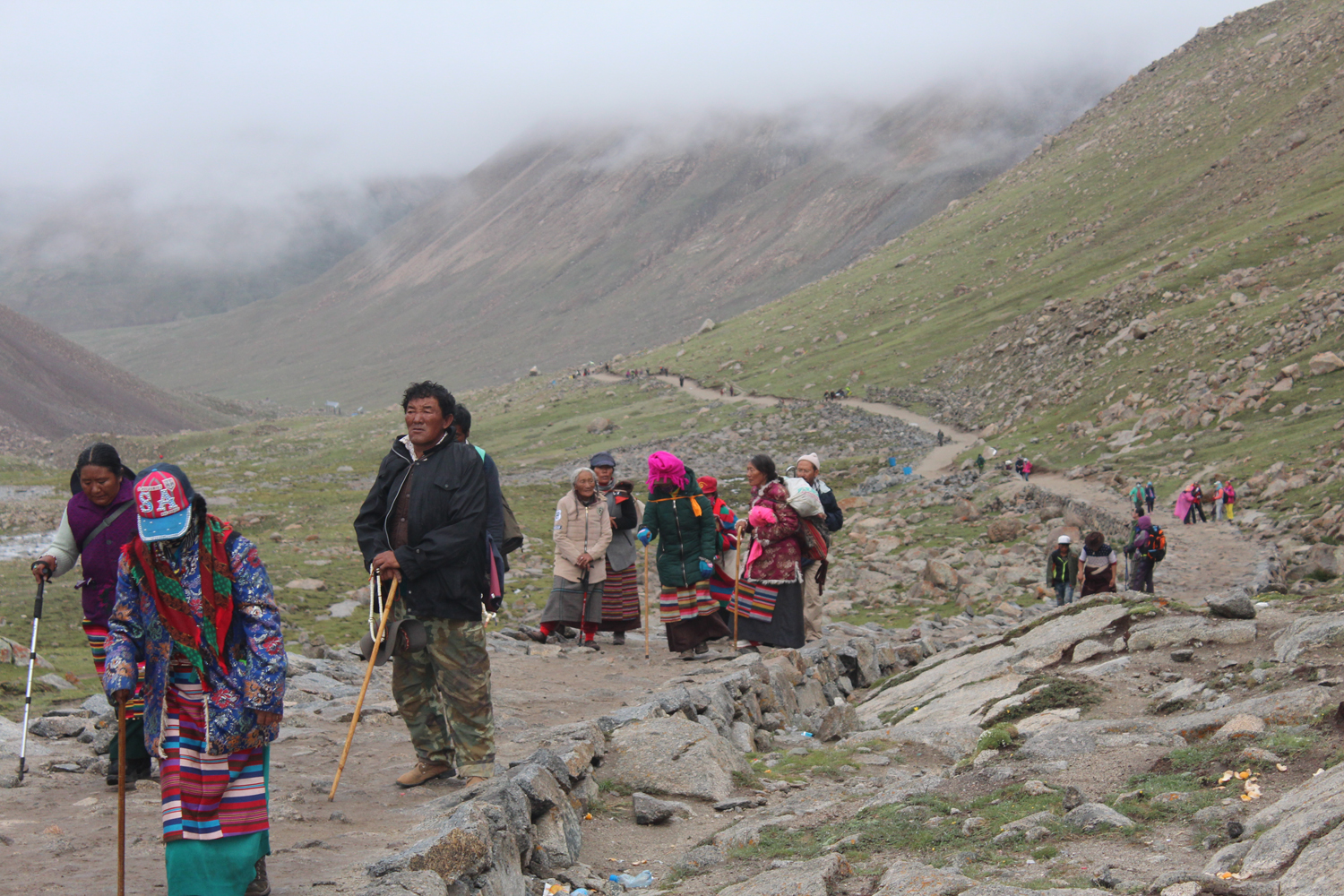
It has been three years since Hindus have been unable to make a once-in-a-lifetime pilgrimage to the holiest places in their religion: Mt Kailas and Lake Mansarovar. This is because of the pandemic, and the fact that the sacred sites are in China.
But China is gradually re-opening and has indicated that pilgrims will be allowed to visit Kailas-Mansarovar again — but at the moment only for Nepalis.
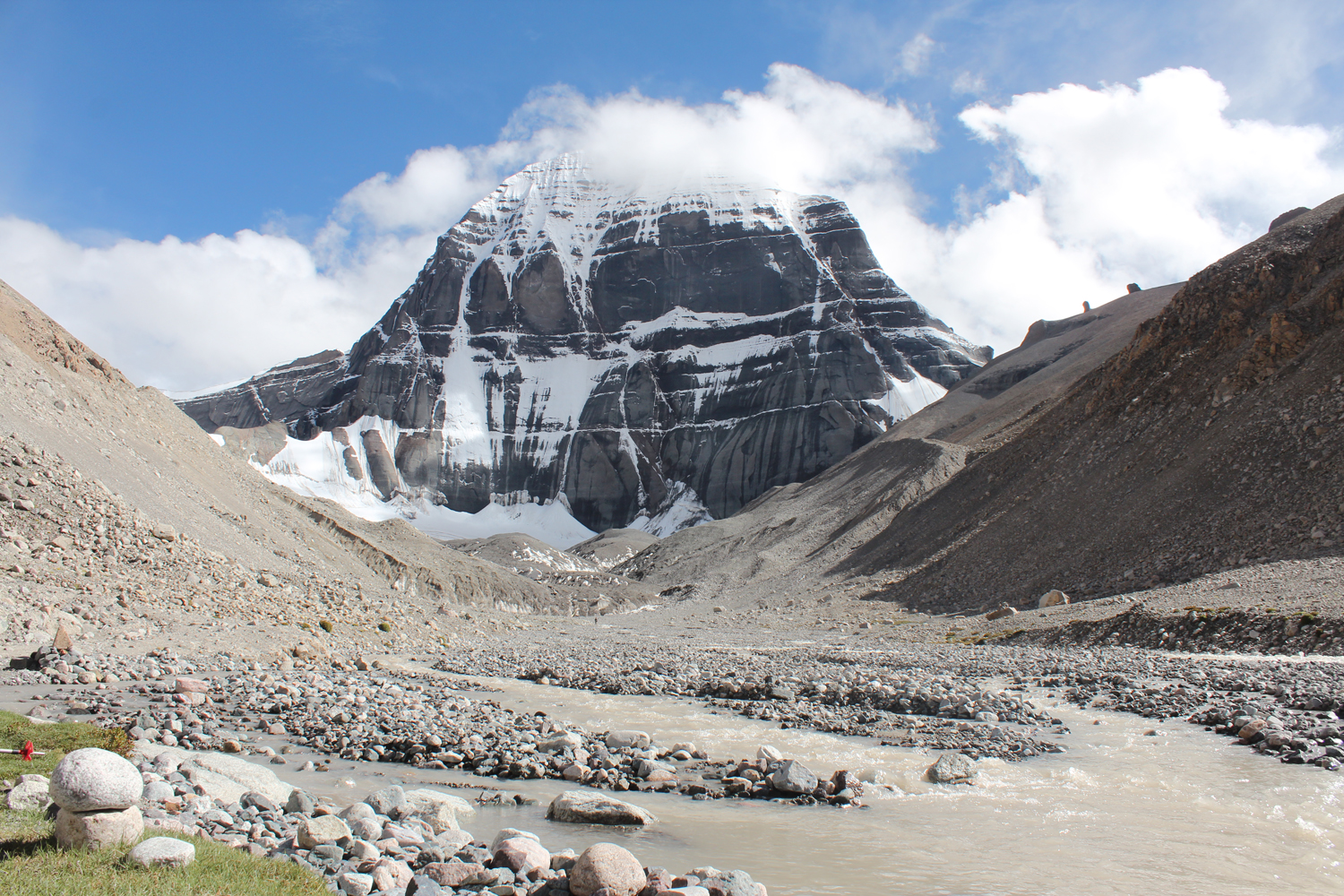
Mt Kailas (6,638m) is a granite monolith and is regarded by Hindus across the Subcontinent as the abode of Lord Shiva, his consort Parvati and the elephant god Ganesh. It is also revered by Buddhists of the Vajrayana tradition.
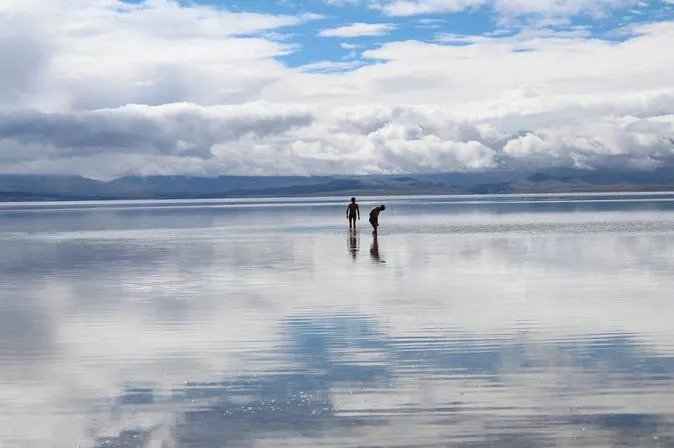
The glaciers of Mt Kailas feed Lake Mansarovar (4,590m) where Hindu and Buddhist pilgrims take a ritual dip for spiritual cleansing. Most of the Subcontinent’s major rivers, including the Sutlej, Indus, Ganges, Karnali and Brahmaputra have their origins within 100km of the mountain and lake.
Aside from its geological and religious significance, Mt Kailas and Lake Manasarovar also lie along geo-strategic fault lines. Regionals between China and India are strained, and their militaries clash frequently along the disputed Himalayan border.
The area also lies just north of the Kalapani-Lipu Lek region of northwestern Nepal which is presently occupied by India, and is at the tri-junction of Chinese, Indian and Nepalese borders.
Indian pilgrims have traditionally taken a 5-day trek up to Lipu Lek Pass to cross over into Tibet. But in 2020, the Indian Army built a road nearly to the top of the pass, reigniting the border dispute with Nepal.
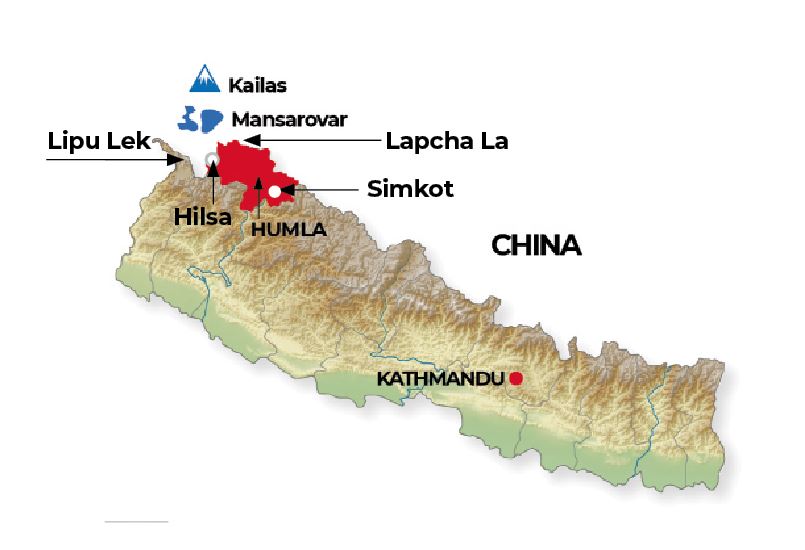
There is a quota on the number of pilgrims who can take this route, which is why many Indians flew to Simikot in Nepal’s Humla district to take helicopter ferries to the border at Hilsa, then driving 45km to Mansarovar by car.
A more expensive route was to fly to Lhasa and drive across the Tibetan Plateau for four days to reach the lake. Lhasa is now also connected to a new airport at Ngari Gunsa, 5-hour drive from Mt Kailas.
On 1 May, China reopened the Rasuwa-Kerung and Hilsa-Purang checkpoints that had been closed since early 2020 to revive overland trade. It also announced that it was opening Kailas-Mansarovar pilgrimages for Nepalis, but they needed to travel in groups of at least four and had to come to Kathmandu to get visas and biometrics at the Chinese Embassy.
Nepal Tourism Board said over 250,000 Indian tourists visited Nepal in 2019, and that one-third of them were booked on tours to Mansarovar and Kailas paying up to $3,000 each. The number of Indian tourists visiting Nepal has already exceeded 167,000 in the first six months of this year.