Heinrich Meyer came to Nepal in 1975 to work on the German government-supported Bhaktapur Development Project to restore the old town and its glorious architectural heritage.
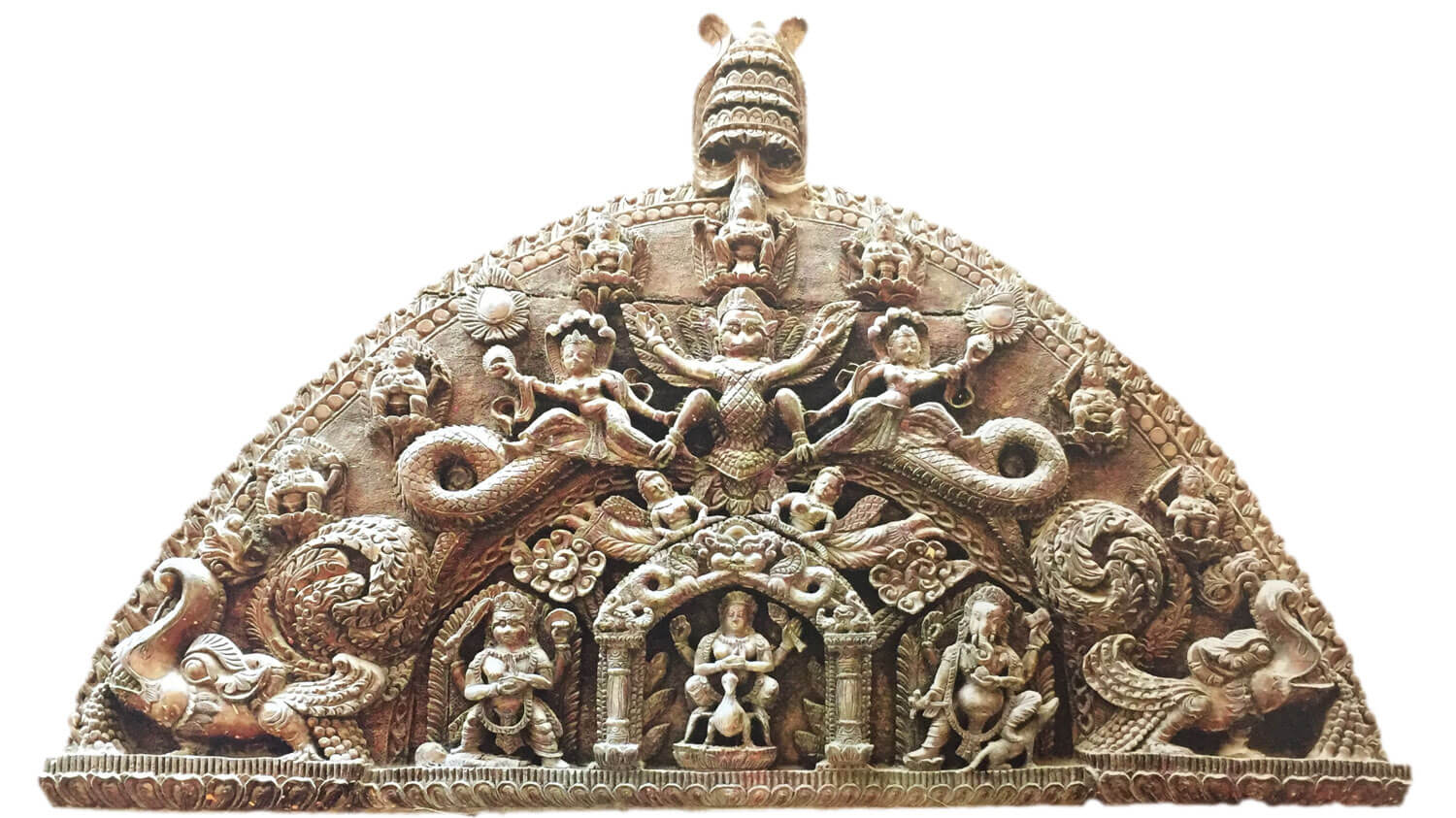
As a cultural conservationist, his job was to rescue some of the magnificent but crumbling buildings of the historical kingdom, as well as the devotional art that decorated them: mainly carved wooden struts, windows, doors and eaves.
Between 1975 and 1979, Meyer worked to set up a cooperative to revive woodcarving and to make the profession sustainable again. He worked with the Shilpakar clan, the traditional woodcarving family of Bhaktapur, in which the craft has been passed down through generations. By the time he left, the Shilpakars had revived the skills they had nearly lost.
Read also: In with the old, in with the new, Sewa Bhattarai
After the 2015 earthquake, which devastated Bhaktapur, in his hometown in Germany, Meyer took out boxes of slides from his time in Nepal and found photographs taken 40 years ago of the woodcarvings of Bhaktapur.
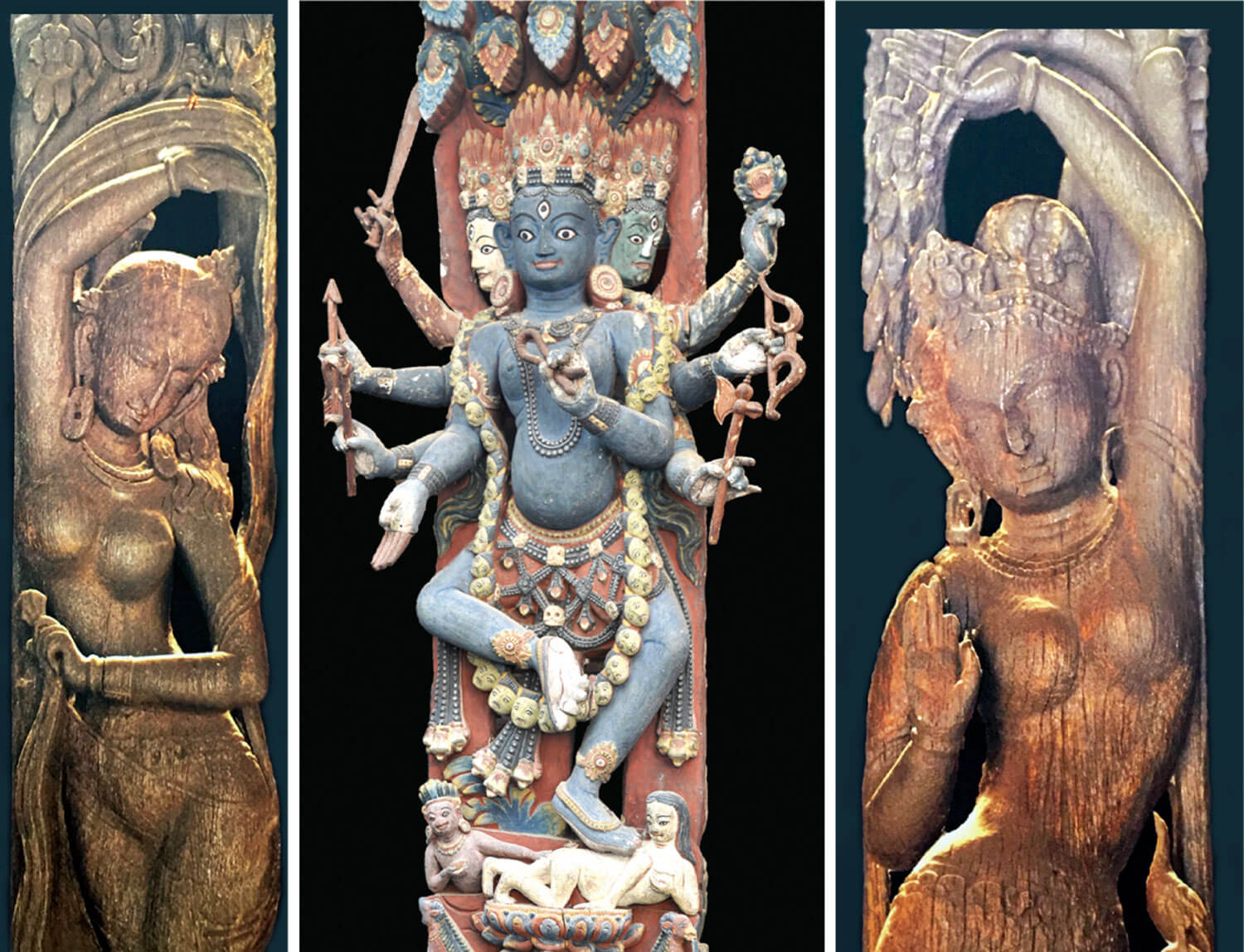
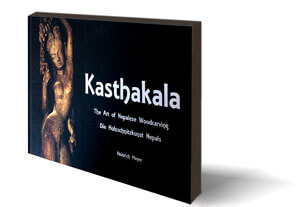
‘The photos were unique because many of them cannot be photographed in the same setting again, and that prompted me to start this book project,’ Meyer writes in his preface to Kasthakala: The Art of Nepalese Woodcarving. ‘Many of the valuable historical carvings in Nepal had been lost over time through neglect, decay, earthquakes and theft.’
Indeed, the book is an image-rich documentation of what has been lost, and what is still left of this priceless facet of Nepali heritage. The numerous close-ups of the carvings provide detailed information of the grain, the texture and components of the pieces for posterity.
Meyer gives full credit to the Shilpakars for setting up the Kasthakala Sajha Sansthan and upholding the tradition. He writes: ‘Today Indrakaji Shilpakar is one of the best carvers in Nepal.’
Read also:
Crafting a heritage,Shriluna Shrestha
Wood carving was a component of the Kathmandu Valley civilisation from at least as long ago as the Licchavi Period (3rd-9th century CE) till the Malla Period (12th-18th century CE). Thereafter it suffered a decline during the Rana and Shah Periods, and it was not until the revival of Bhaktapur and its artisans in the 1970s that woodcarving came out of the woodwork, as it were.
Unlike stone sculptures in Kathmandu Valley, which go back at least 2,000 years, the fact that wood is perishable material means it is less durable. Still, the oldest wood carvings found in Kathmandu are from the 6th-7th century CE, surviving mainly because they were carved in hardwood sal timber.