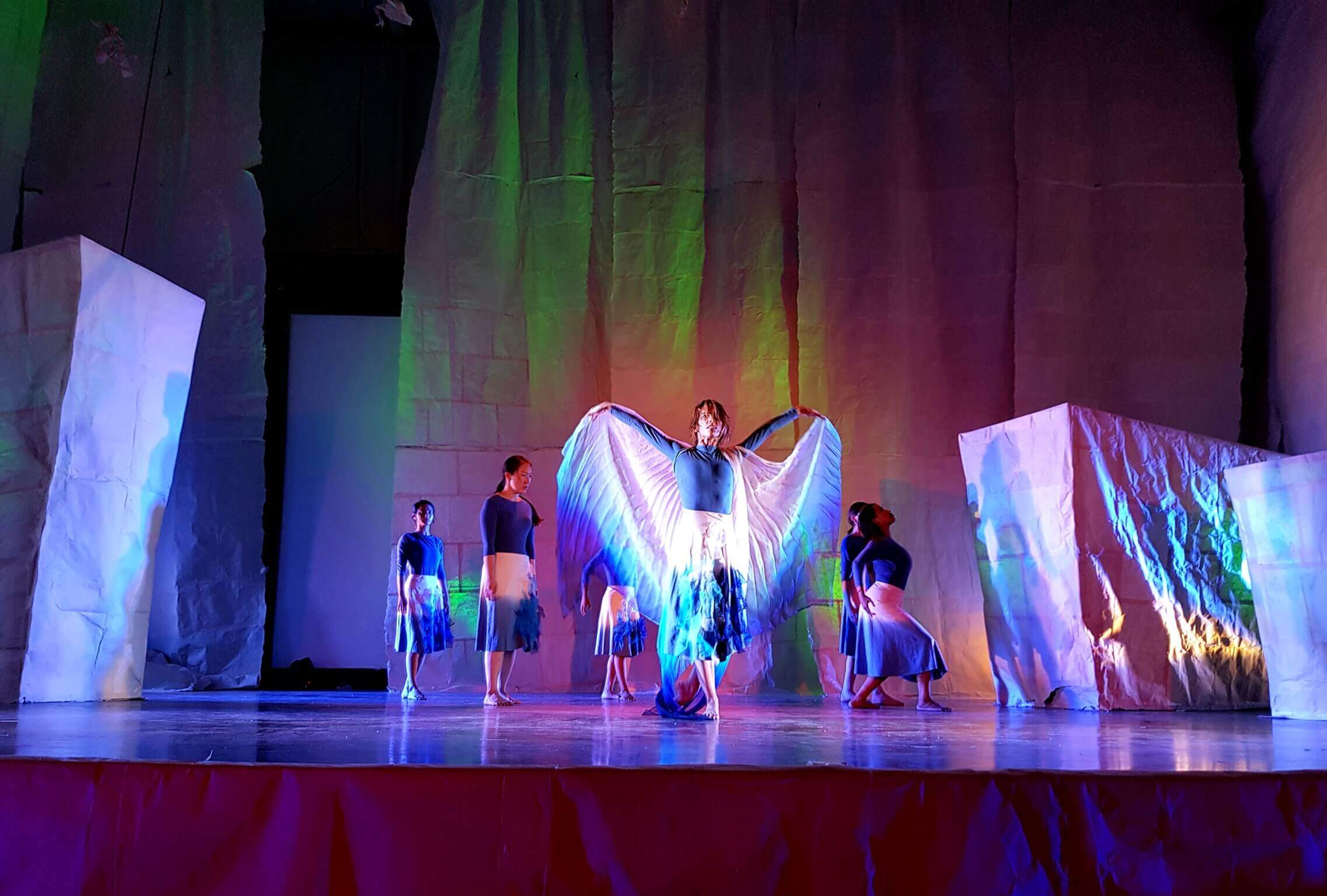
Human trafficking makes for dramatic stories of suffering, struggle and survival, which is why it is frequently the theme on stage and screen performances. But few, perhaps, with the grace and poignancy of The Flight, presented by Solis Performing Arts and One World Theatre at the Russian Cultural Centre 4-7 July.
This immersive musical dance-drama directed by Alizé Biannic portrays not just the victimisation of young women and their emotional journeys, but tells their story through contemporary European-style dance steps.
The sheer physicality of the play makes the strongest impression, whether it is the women with the trembling knees, the exhibition of half-dressed, cowering women in front of leering men who, measuring each woman with their eyes and hands, menacingly circle them and haul them over their shoulders like sacks of potatoes.
Read also: All the world is a stage, Sewa Bhattarai
With minimal dialogue, every emotion -- terror, anger, guilt, hope -- is communicated through body movements, which is fitting because the subject matter revolves around physical relationships. Every action sequence has been framed carefully for visual appeal even when the emotions depicted are negative.
“I wanted every scene to look like a painting, because visual impact is very important in such a performance,” explained director Biannic, who trained the actors, most of whom Nepali non-dancers, in ballet-inspired moves so that they look almost as graceful as her.
The play does not just take us through the physical journeys of the characters, but also their emotional, spiritual and psychological ones. It starts with a young man whose family is involved in the ‘flesh trade’, and he wonders if he should join in. His journey begins with confusion, then acceptance, then guilt and finally abandonment of this trafficking activity.
Read also: Private is political, Sewa Bhattarai
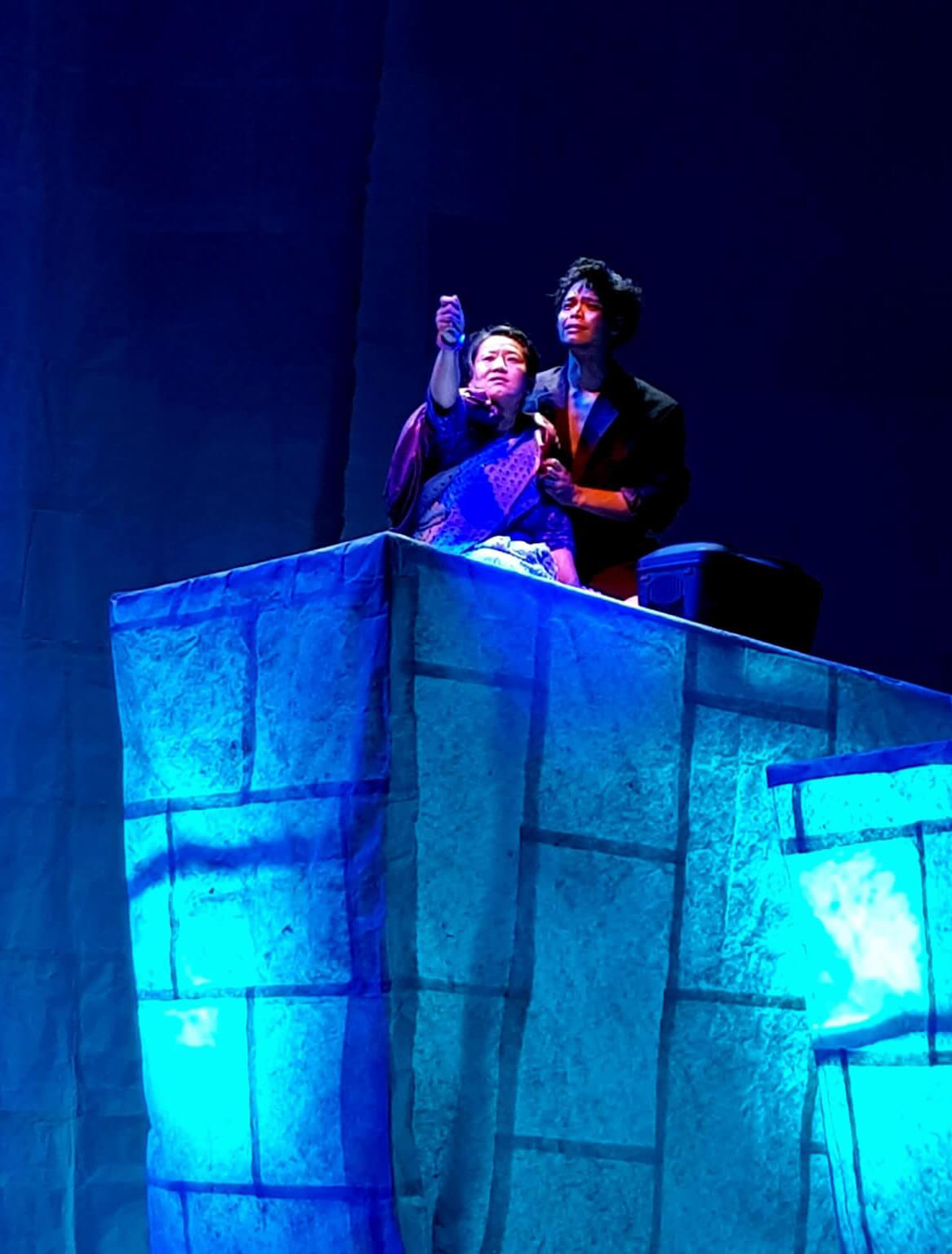
“I want to depict the phenomenon from many aspects, including the story of how young men are unwittingly trapped in this vicious circle. Violence breeds violence, and you cannot expect love out of someone who has never seen it. This creates a chain of negativity where young men reproduce the behaviour they have seen,” says Biannic who met with several trafficking victims before writing and directing this play.
She wants to draw attention to continued trafficking of Nepali women to brothels in Nepal and abroad. The journey of the women is artfully invoked through symbols and visual metaphors. An eagle, a bird associated with power and spirituality, brings hope to the women. The women bathe, suggesting a spiritual cleansing even when their bodies have been defiled. The women look for an escape from their hell, their bodies writhing and contorting with agony. When they together overcome their pain, the choreography turns fluid and lithe.