
As Nepal prepares long-term recovery and risk-reduction strategies, we offer insights from our collaborative research about post-disaster reconstruction and displacement following Nepal’s 2015 earthquake, as well as ongoing mountain hazards, to highlight areas of concern for the country’s affected communities.
Policies and funding must protect people’s livelihoods and rights while the global community must meet Nepal’s demands for climate justice and reparation. A focus on the climate impact may help reduce long-term risk and vulnerability, but must proceed in tandem with in-depth engagement with affected communities, including many Indigenous Peoples, to determine what their immediate future will look like.
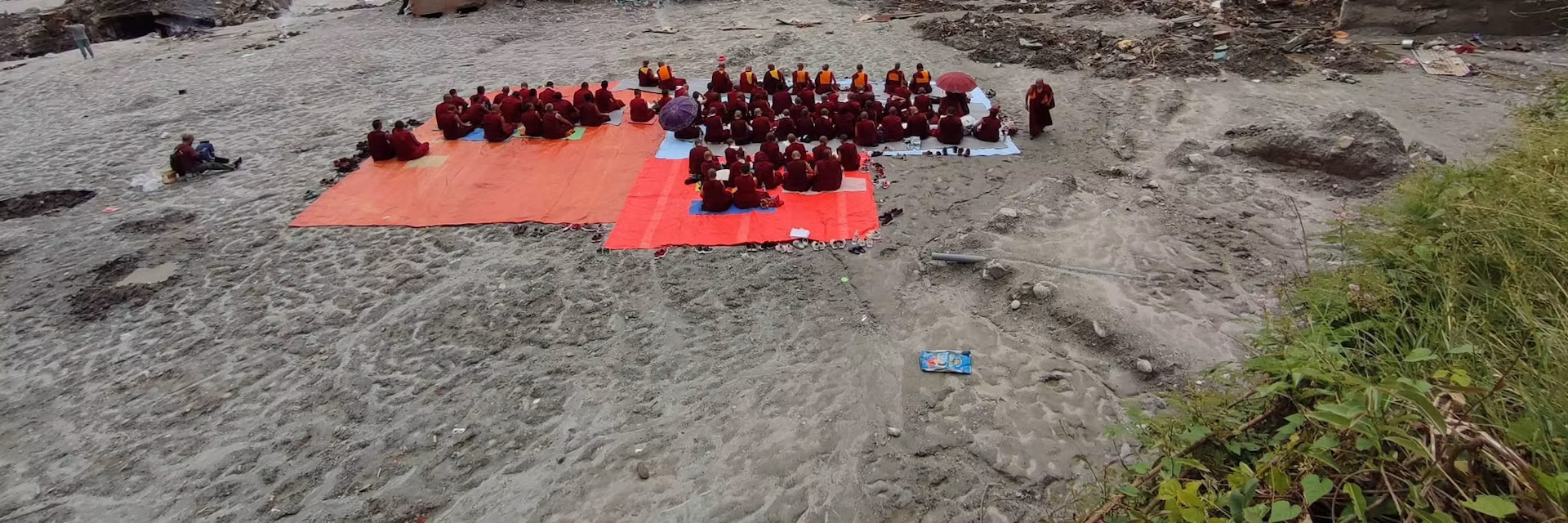
The destruction of entire villages, road-bridge networks and economic hubs raises major reconstruction challenges for Nepali communities and households. But families affected by the current disaster may find little point in rebuilding their homes if there are no nearby roads, schools or economic opportunities. For many farmers, the land that underpins their agricultural livelihoods has been washed away.
Nepal’s National Disaster Risk Reduction and Management Authority recently released a Rapid Disaster Needs Assessment (RDNA) highlighting many of the challenges facing disaster-affected Nepalis, including the approximately 33,000 who have lost their homes.
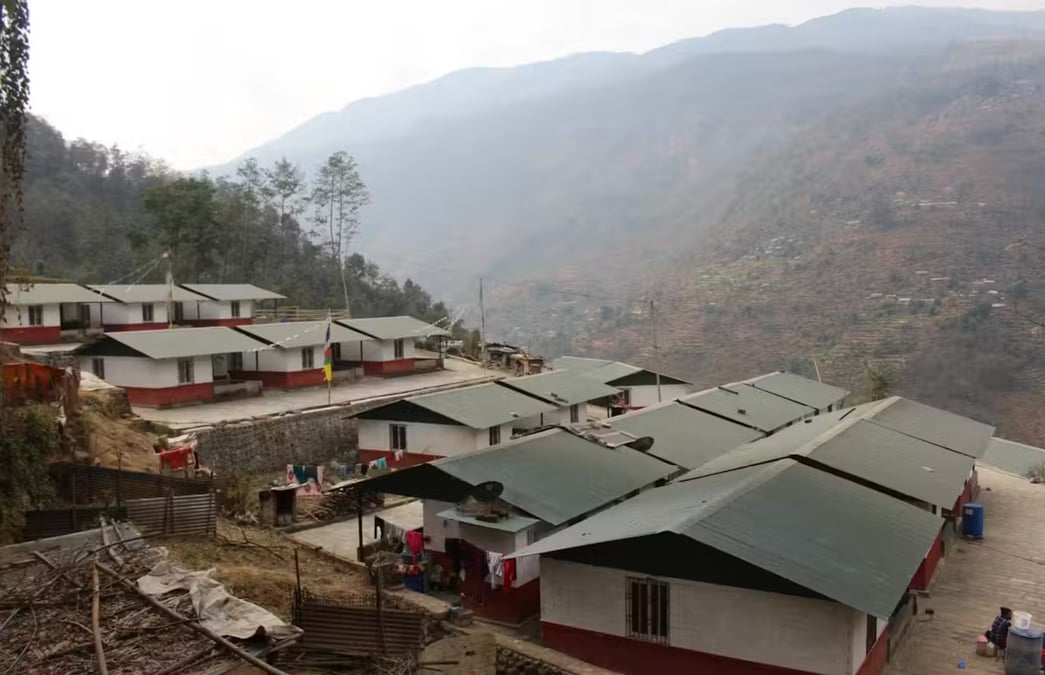
The RDNA rightly states that ‘household recovery … depends on the restoration of connected services and access’, which in turn requires viable terrain. Some households may find that upcoming technical assessments deem their land too hazardous to rebuild on. As in past disasters, ‘integrated settlements’ are being discussed to collectively resettle displaced communities.
But our research has shown that integrated settlements set up after the 2015 earthquake struggled most when livelihood needs and caste-ethnic relations among resettled communities weren’t prioritised.
Relocation away from hazards like landslides and floods may reduce exposure, but it does not address other forms of risk, including economic precarity and inequality.
Any approach to rebuilding will first require beneficiary identification: who is entitled to compensation or support, and on what basis? The RDNA acknowledges that ‘building ownership alone does not identify all households requiring assistance’ and notes the challenges with verification, especially when documents are permanently lost.
These are important lessons from the post-earthquake experience, when property ownership was the primary criteria for reconstruction grants, leaving many affected people ineligible. This created additional vulnerability through a disaster recovery process that was meant to help them.
Nepal’s 2015 constitution devolved significant legal responsibility for disaster risk-reduction and management to provincial and municipal governing bodies.
But in the initial days after the recent flash floods, affected local authorities understandably had limited capacity to oversee disaster response, with the Nepal army leading search-and-rescue efforts directed by the central government. It’s now time to refocus on local capacity and aspirations.
Each municipality will likely have different preferences and priorities for reconstruction, relocation and restoration. These will depend on the specific disaster impacts experienced in their jurisdictions and the cultural and economic dynamics of their constituencies.
A one-size-fits-all recovery approach mandated by the federal government following a ‘one-door policy’ is unlikely to succeed fully. Instead, needs-based, municipality-specific plans should be negotiated carefully in relation to relevant federal, provincial and municipal policies.
The RDNA says ‘no household survey, key informant interviews, focus groups, structured community consultation, or detailed engineering assessment was undertaken’ to prepare its initial report three weeks after the flood.
Such person-to-person learning is the necessary next step. Affected Indigenous Peoples and local communities must not be treated as simply informants for central government programs, but rather as political entities with the capacity to lead assessment and craft policy.
The Bhote Kosi-Trisuli floods swept over homelands of the Tamang community and other Indigenous Peoples whose identities are deeply connected to place. Indigenous nationalities comprise approximately 38 to 90 per cent of the population in nine of the 15 affected municipalities.
Even when relocation would offer greater physical safety, many Indigenous participants in our post-earthquake researchsaid they didn’t want to move away from their ancestral territory.
At the same time, many communities in Nepal have long histories of mobility. The populous, disaster-affected market towns on the Bhote Kosi and Trisuli riverbanks reflect historic downhill and river-centred migration trends linked to national development planning and hydropower investment.
The disastrous consequences of ad hoc, river-centric development in the Himalayas cannot be clearer. When rivers are conceived only as corridors for economic development, roads, services and opportunities become concentrated in flood- and landslide-prone areas. People migrating for work find themselves exposed to levels of risk they cannot mitigate.
It remains an open question what responsibility Nepal’s hydropower sector will take for worker compensation and regional rebuilding. Rather than reconstruction in the same risky locations, there should be a systems-wide rethink of settlement and development patterns.
Those who moved to take advantage of riverside economies might consider moving uphill once again if connectivity and collective needs are appropriately addressed and resourced. Ultimately, people should not have to choose between place-based attachment and safety, or between traditional territory and economic opportunities.
Rampant development in known hazard zones is creating untenable risks for communities globally.
With financial support from the international community and private sector corporate social responsibility, Nepal has an opportunity to show the world how to reconsider economic development in relation to climate and geohazard risks and in consultation with communities and local governments. This will also require a reframing of transboundary geopolitical relationships.
Rather than ‘building back better’, as the mantra goes, Nepal can build back differently by upholding human-centred values, emphasising sustainability, recognising the inequitable distribution of risk and its causes, and prioritising communities’ autonomy over their futures.
Sara Shneiderman is Associate Professor, Department of Anthropology and School of Public Policy & Global Affairs, University of British Columbia
Amy Leigh Johnson is Assistant Professor of Anthropology, Berry College.
Republished from The Conversation.