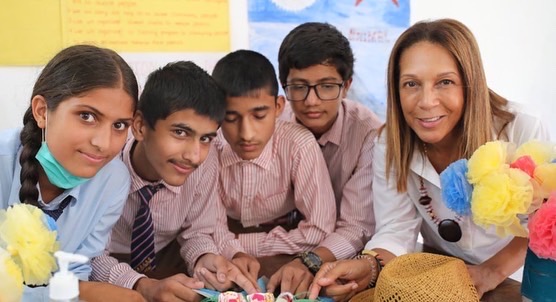
As the UK Prime Minister’s Special Envoy on Girls’ Education, I am lucky enough to meet girls and governments in many different countries.
Last week I was delighted to visit Nepal to learn more about the challenges, and solutions, to increase girls’ education in response to the school closures because of the devastating Covid-19 pandemic. I wanted to understand first-hand the climate change threats, and how girls and women have a vital role in Nepal’s response.
From Kathmandu to Karnali, I saw the impact of the ‘perfect storm’ of Covid-19 and climate change. It’s clear that girls’ education has been particularly badly affected. I heard how families’ finances are under pressure, making it increasingly likely girls will drop out of school and be forced into early marriage. I saw the aftermath of climate-related damage like flooding and landslides to school buildings, creating further disruption for students.
These challenges are not minor setbacks, especially when we recognise how important education is in shaping a global response to climate change. Education builds the skills, confidence and capacity of young women and men, and therefore our collective ability to respond to more frequent natural disasters, extreme weather, and conflict over scarce natural resources.
The double burden of climate and Covid, Nepali Times
It’s #InternationalDayoftheGirl!
Today, and every day, girls’ education must be prioritised. In #Nepal last week, I saw first-hand the impacts that climate change is having on girls' education, but I also met inspiring women and girls who want to join the fight. More here 👇 pic.twitter.com/E7WmoMVRzw
— Helen Grant (@HelenGrantMP) October 11, 2021
And promisingly, it seems clear that young people will step up, if supported. UNICEF has interesting research showing that young people in South Asia want to know more about the science and practical examples of both climate-related damage and adaptation.
Most acknowledge that the effects of climate change are disturbing their education: heatwaves inevitably make it hard to concentrate, and flooding prevents them from travelling to school. But the good news is that 85% want to do something about it.
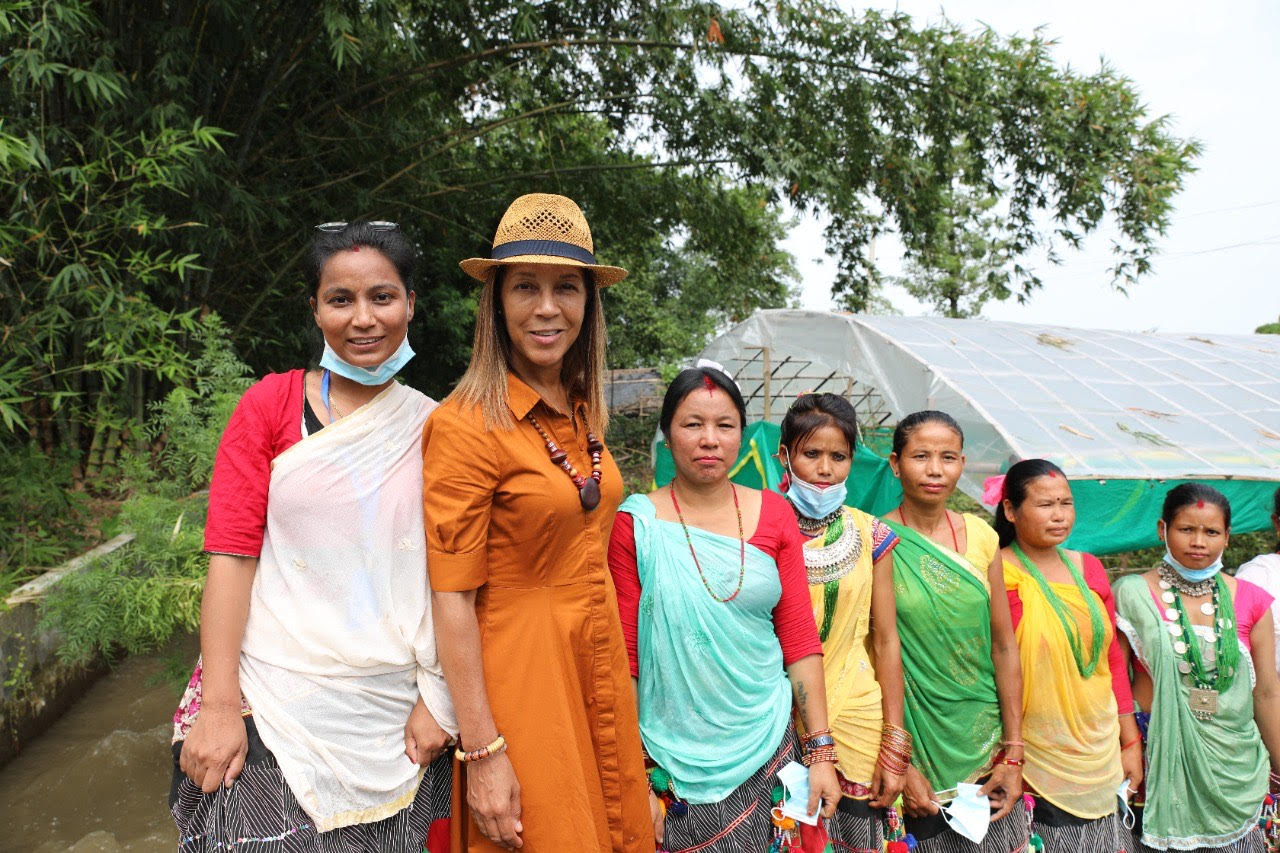
My experience in Nepal completely backs up that research. After majestic views of the Himalayas on a flight to Surkhet, I met a truly inspiring group of young women. They explained how Karnali province was susceptible to floods and landslides but emphasised how local action and female empowerment could lead the response.
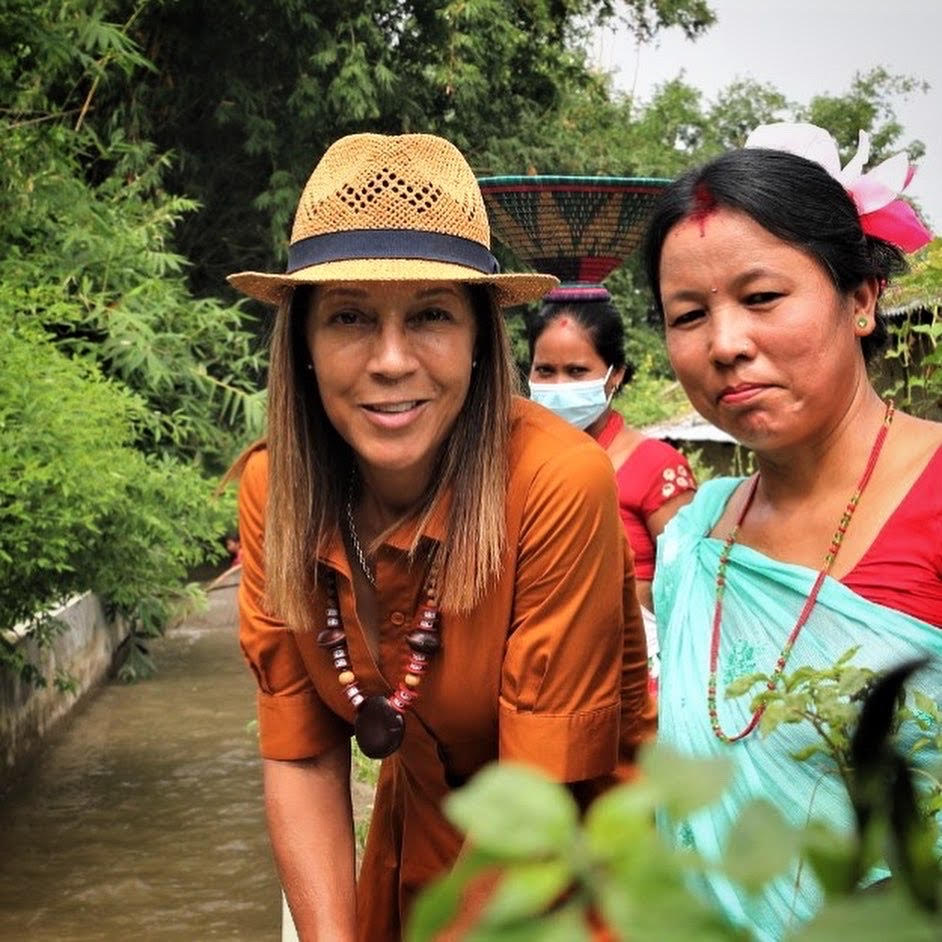
I am proud that British support to the Girls’ Education Challenge and wonderful organisations like the VSO helped this group to advance girls’ rights. They have supported marginalised younger girls to stay in school and learn effectively.
They have convinced parents and communities to outlaw child marriage, tackle menstrual taboos such as chhaupadi, and rebalance chores so they do not impede older girls’ education and empowerment.
As I continued my journey by road, to the green and golden Tarai lowland and the ‘river island’ delta of Rajapur, I saw their incredibly rich farmland. The monsoon and glacial melt combine to wash down a billion tonnes of alluvial silt, creating a threat for agriculture-dependent communities, at risk of severe flooding.