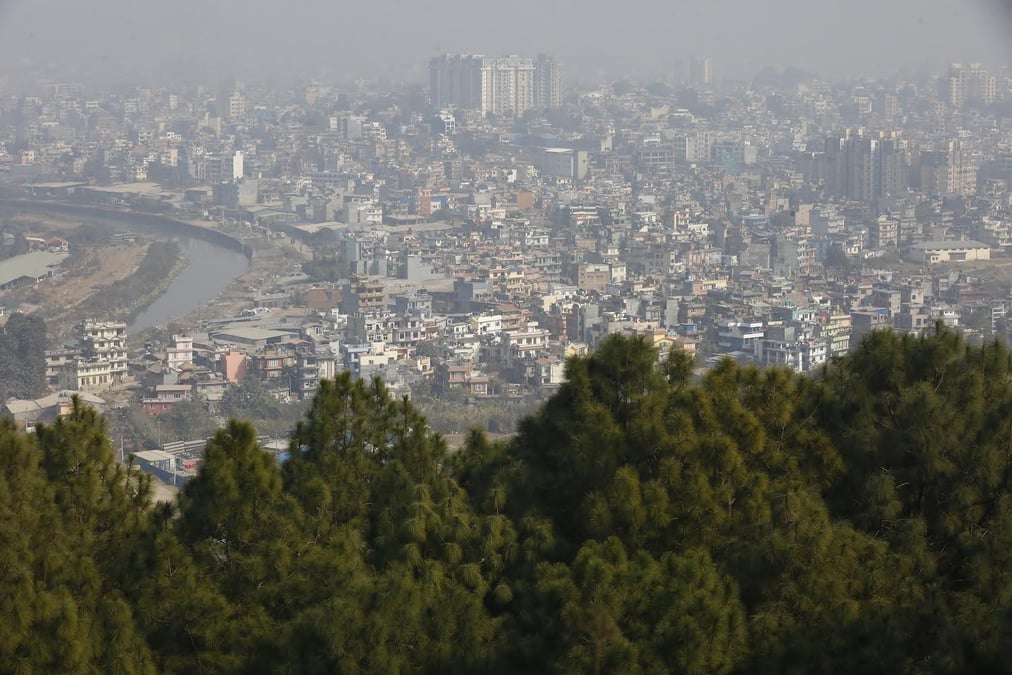
The deadly flood season is coming to a close, and soon Nepalis will be exposed to the season of lethal air pollution. Their government has done precious little to protect them from both calamities.
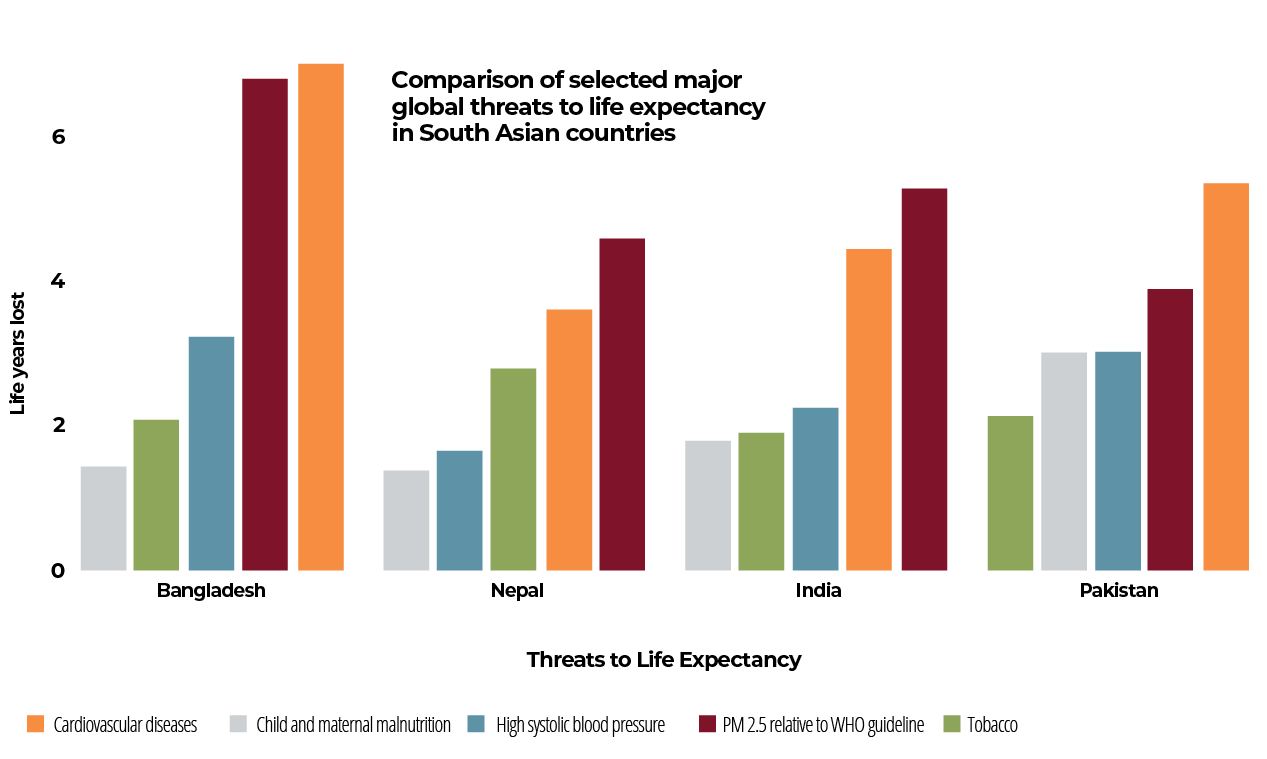
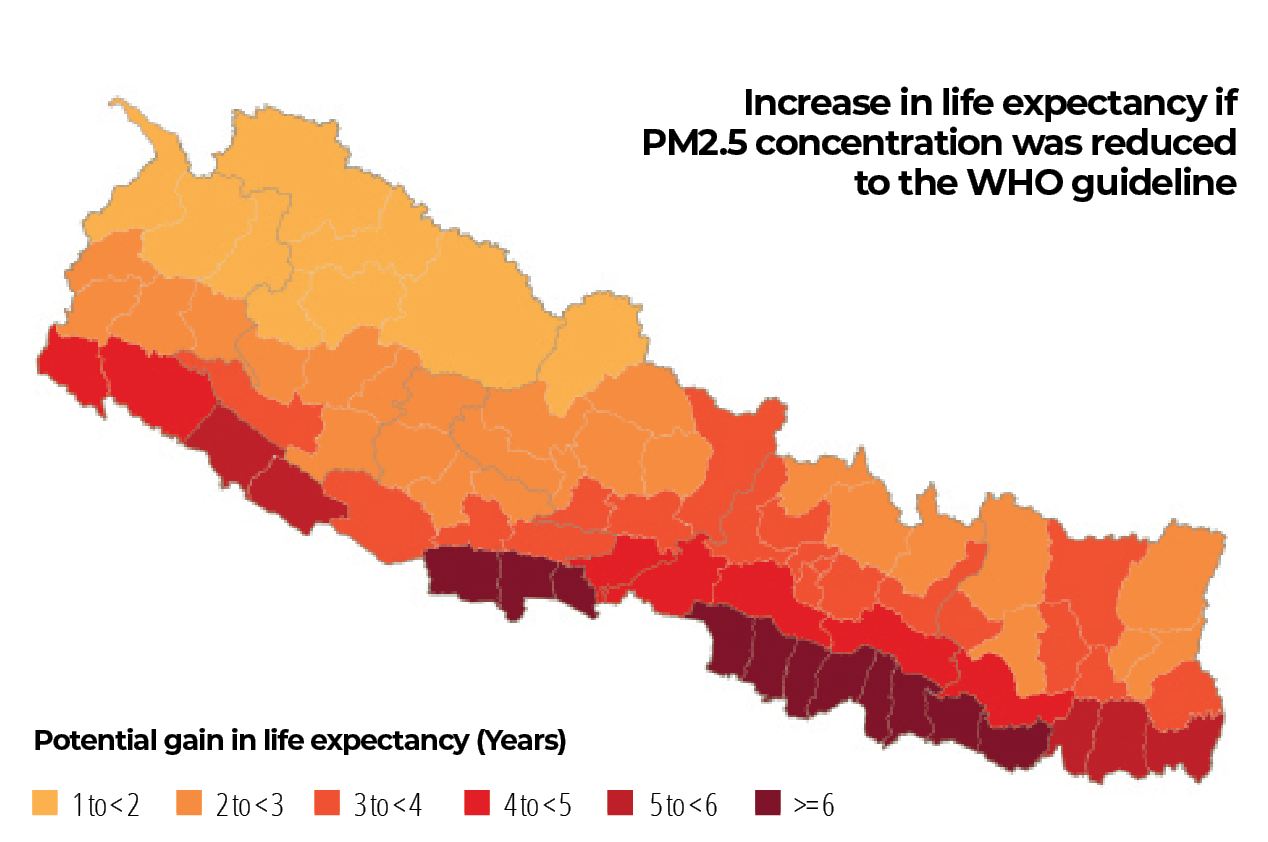
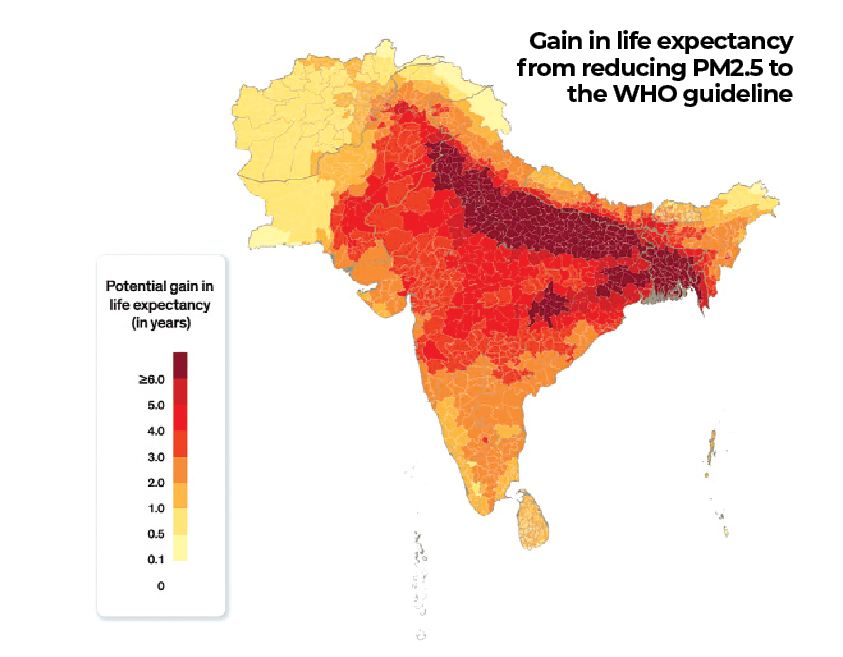
Air pollution kills more people than just about every other natural and human-made calamity afflicting Nepalis. Toxic air cuts 4.6 years off the average Nepali’s lifespan, the figure is higher for people in the Tarai who live nearly 7 years less because of transboundary pollution.
In comparison, tobacco use reduces life expectancy by 2.8 years and high blood pressure by 1.7 years. Furthermore, all of Nepal’s 30 million people live in areas where the annual average particulate pollution level exceeds the WHO guideline of 5µg/m3. From 1998 to 2021, the average annual particulate pollution in Nepal increased by 75.2%.
These and even more alarming statistics are highlighted in the latest Air Quality Life Index (AQLI) issued this week by the Energy Policy Institute of the University of Chicago.
The study shows that hazardous levels of particulate matter less than 2.5 microns in diameter (PM2.5) in the air has overtaken malaria, HIV/AIDS, malnutrition, unsafe drinking water, road traffic accidents and alcohol use to emerge as the biggest public health threat of the 21st century worldwide.
Read also: Cleaner Air = Longer Lives, Nepali Times
“Bad air is getting worse, I’m not really surprised. The AQLI report reinforces what we already knew,” says environmentalist Bhushan Tuladhar. “But the Tarai has gotten progressively worse both because of its own local emissions from industries, garbage and open burning as well as due to cross-border pollution from India.”
More specifically, the national annual average for PM2.5 has hovered around 50µg/m3 since 2018. In Kathmandu, the annual average has fluctuated in the vicinity of 35-50µg/m3, explains Christa Hasenkopf, the director of AQLI and air quality programs at EPIC. These figures are several times higher than WHO recommendations
Inversely, if Nepal were to clean up its dirty air, people in the mid and eastern Tarai region where 53% of the country's population lives would gain 6.5 years of life expectancy. Similarly, Kathmandu residents would live 3.5 years longer.
Madhes Province is the most polluted followed by Lumbini, while Karnali and Gandaki have the clearest air. The report reveals that PM2.5 is the biggest threat to life expectancy in Nepal ahead of cardiovascular diseases, chronic respiratory illnesses, tobacco consumption and blood pressure.
Vehicular emission, soot particles from brick kilns, open burning of trash as well as industries are the biggest contributors to air pollution in Nepal.
Read also: Breathing can kill you, Sonia Awale
The AQLI report calls South Asia the global epicentre for pollution, home to the world’s four most polluted countries and nearly a quarter of the global population. The region also accounts for 52.8% of the total life years lost globally due to high pollution, residents in the region are expected to lose about 5 years of life expectancy on average.
“Pollution in South Asia has been increasing over the past two decades, with PM2.5 annual average concentrations 1.5 times that of those at the turn of the century,” confirms Hasenkopf, one of the two authors of the report.
She adds: “While our study isn't equipped to precisely identify sources, generally speaking, the rising levels are likely due to a combination of economic development, population increase, and stubble burning across some parts of South Asia.”
But this shared problem of air pollution in the region should be an opportunity to collaborate instead of blaming each other, says Bhushan Tuladhar. “The emission sources are the same in South Asia, our economies are similar for the most part, we need to learn from each other, and bring our governments together to resolve the problem.”
Read also: How weather elevates air pollution in Kathmandu, Jagdishwor Karmacharya and Shanti Kandel
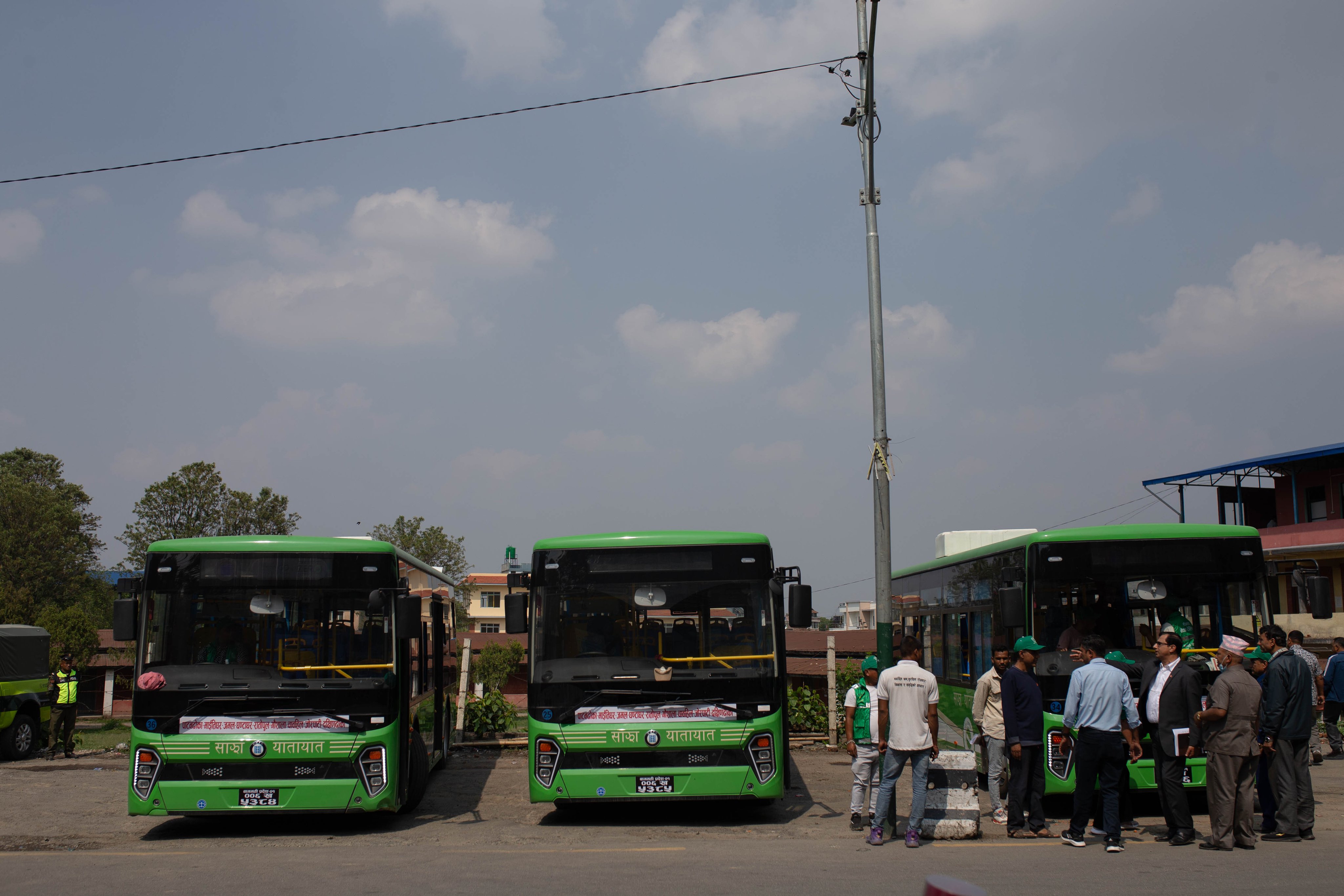
Within Nepal, electrification of transport and cooking are low-hanging fruit to reduce air pollution. Nepal now has surplus power generation at nearly 3,000MW with an additional 3,300MW under construction. Reducing petroleum imports by just 10% will save Nepal at least Rs30 billion a year. An electric transition will reduce the trade deficit with India.
“The government needs to do three things immediately to hit the ground running: subsidise big buses to reduce financial risks for private operators, build charging infrastructure on a large scale and overhaul the whole public transport sector,” says Tuladhar.