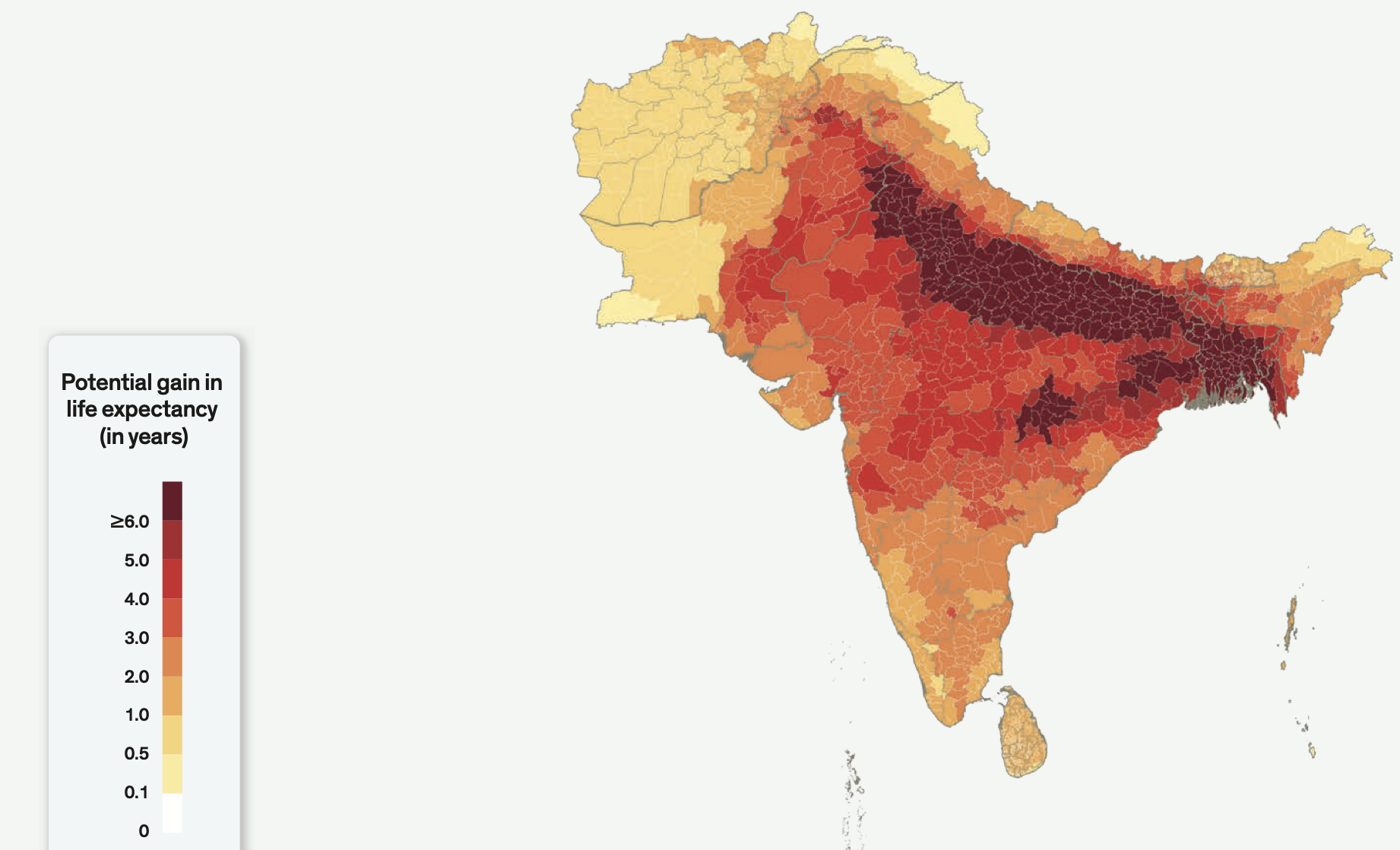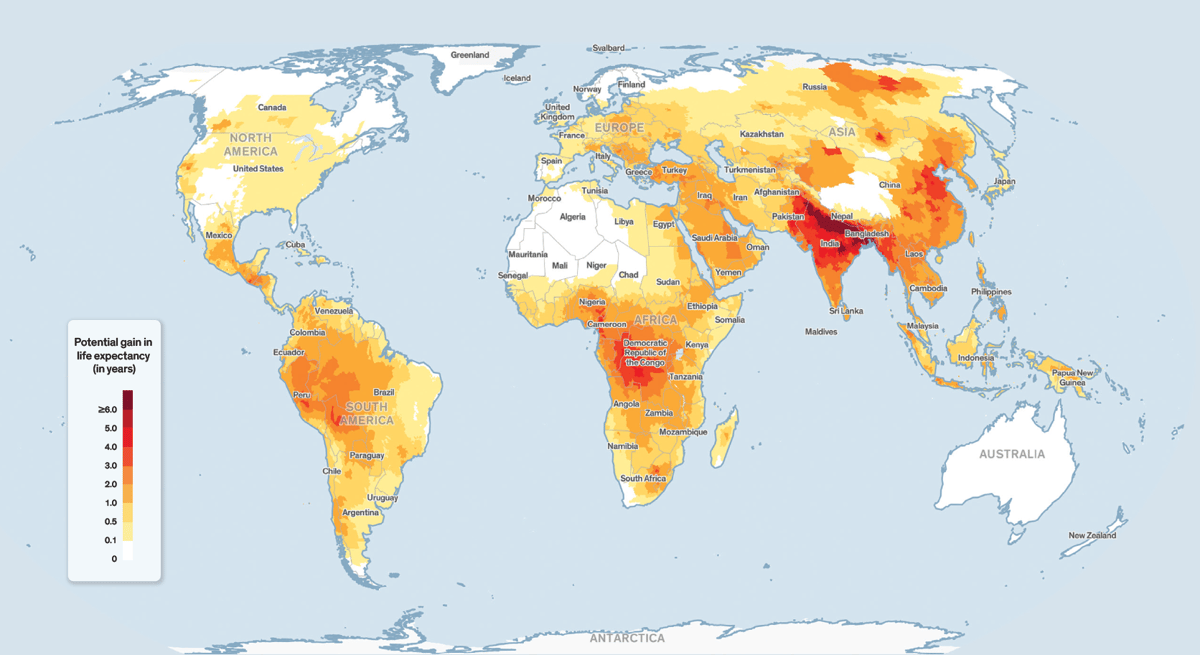
Even though heat waves, floods and wildfires are ravaging the planet, it is actually suspended particles in the air that pose the most serious immediate risk to human health, reducing average life spans across the world.
Moves to control carbon emissions by switching to renewable energy will help in also reducing pollution thereby improving public health and allowing billions of people around the world to live longer.
The latest data from the Air Quality Life Index (AQLI) issued by the Energy Policy Institute of the University of Chicago shows that fine soot particles in the air that are less than 2.5 microns (PM2.5) in diameter are the most dangerous.
Nepal is among countries most affected by particulate air pollution from its own vehicular emissions and open fires, and is downwind in winter from the most polluted parts of north India.
The report reveals that particulate pollution carries the greatest external risk to human health, with the impact on life expectancy comparable to that of smoking, more than 3 times that of alcohol use and unsafe water, and more than 5 times that of traffic accidents.
However, the risk is not spread equally across the world. Six countries in the world are at much greater risk than others and most of them are in Nepal’s neighbourhood.
“Three-quarters of air pollution’s impact on global life expectancy occurs in just six countries, Bangladesh, India, Pakistan, China, Nigeria and Indonesia, where people lose one to more than six years off their lives because of the air they breathe,” says Michael Greenstone, Professor in Economics at the Energy Policy Institute at the University of Chicago (EPIC).
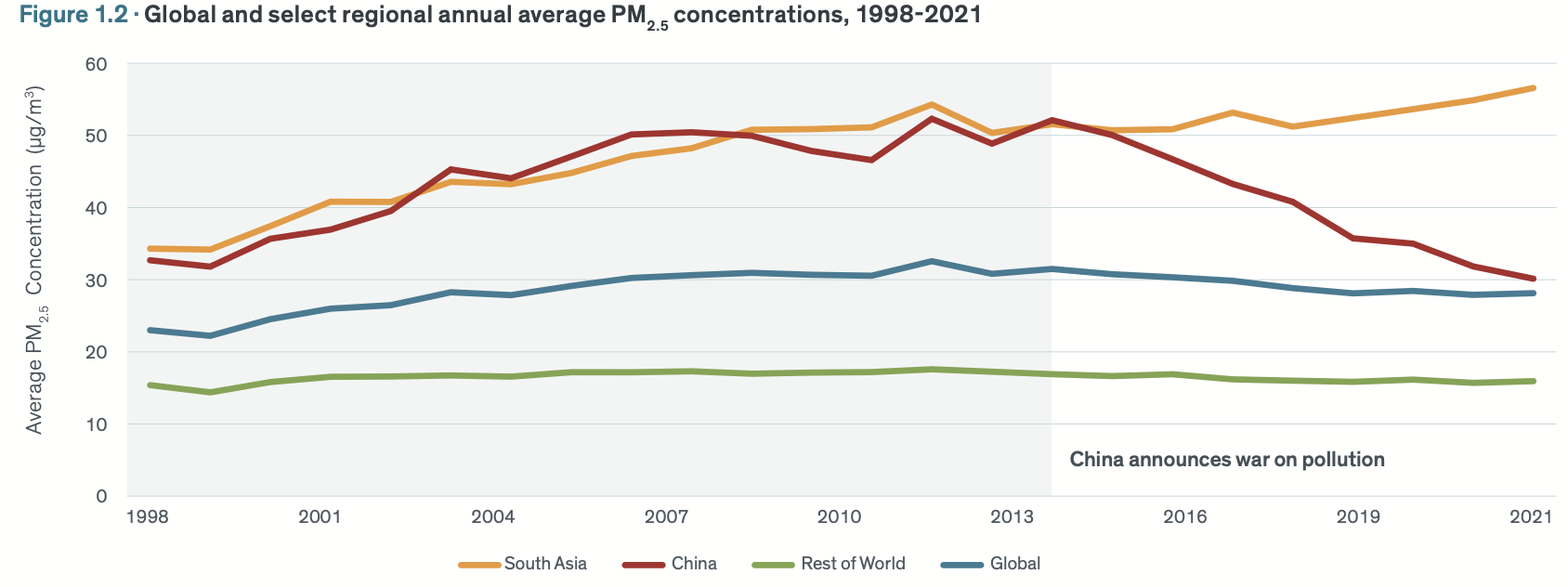
Even though awareness about the danger of pollution is growing, slow changes in state energy policy have not led to meaningful action. The pollution is also being transported across national boundaries, which means regional cooperation to improve air quality is as important.
The first priority is to provide citizens with real-time open air quality data, yet only 6.8% of the Asia knows how dirty their air is. Knowledge about pollution can create public pressure on governments to act.
As it is only one-third of the countries in Asia have air quality standards, the basic building block for policies, the AQLI report says. Investment in air quality infrastructure also does not match where air pollution is having its greatest toll on human life.