
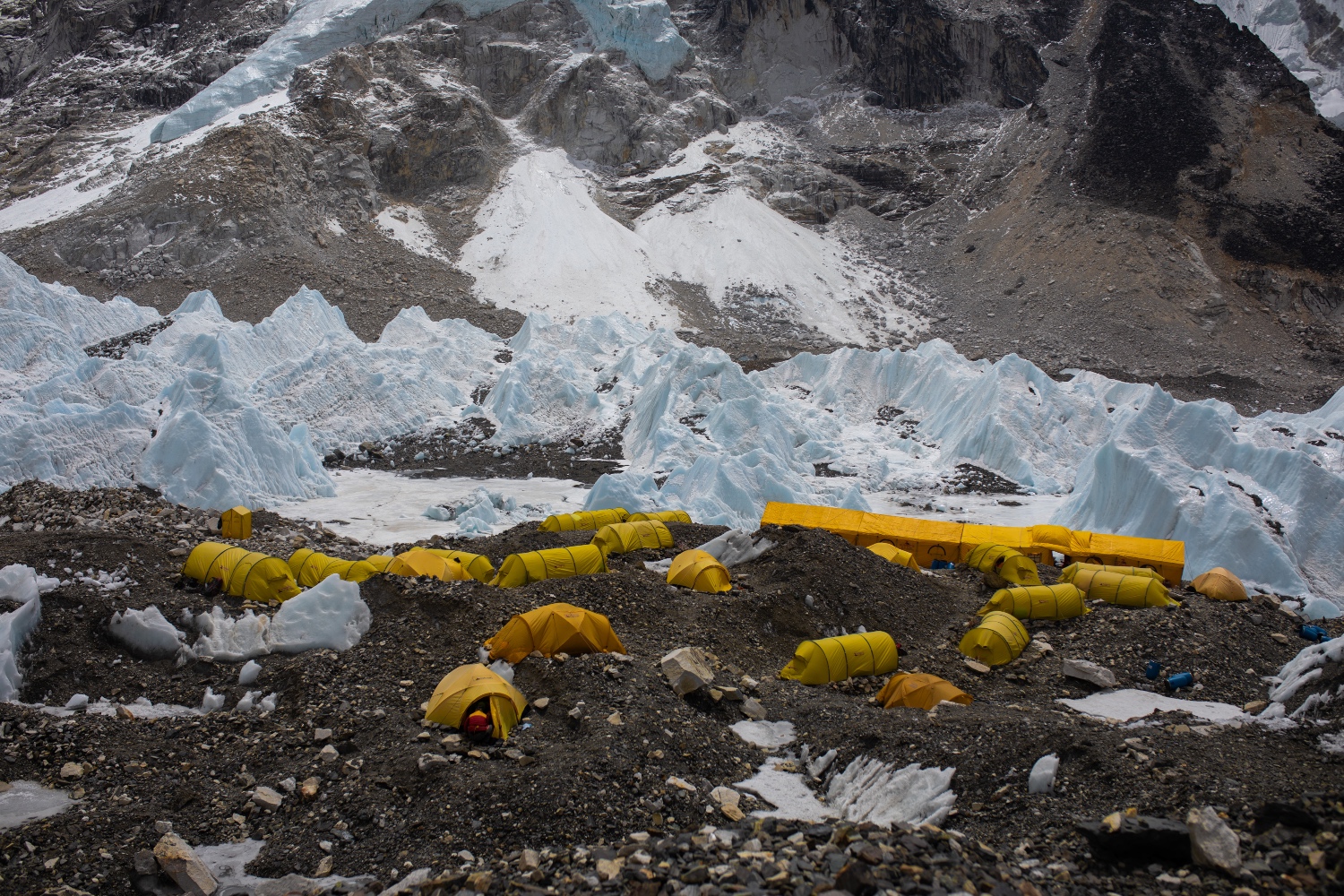
Nepal's spring mountaineering season, just recovering from avalanches, earthquakes, and a year of Covid-19 lockdown is once more looking uncertain with reports of coronavirus cases at the base camps of Mt Everest and Dhaulagiri.
The Nepal government has tried to keep a tight lid on information from the mountains, but hospital and expedition sources confirm that there have been at least a dozen sick climbers who had been helicoptered from the base of Mt Everest who had tested positive at hospitals in Kathmandu. Twenty climbers were evacuated from Dhaulagiri, five of them on Thursday, after testing positive in antigen tests at base camp.
“The breakout up in the mountains must be monitored but we have to look at this against the background of the latest surge which has ravaged the entire country,” says a physician at a hospital in Kathmandu.
Nepal saw another day with record high reported Covid-19 cases on Thursday with 9,070 testing positive — the seventh straight day with more than daily 5,000 cases.
Health Minister Hridayesh Tripathi had warned of 15,000 new cases a day by July but at the rate the infection is multiplying, Nepal is most likely to exceed the projected figures and much earlier at that.
The number of daily deaths from coronavirus is also rising, with 54 more in the last 24 hours. Active cases have surpassed 70,000. Kathmandu Valley registered 3,972 cases.
So far, none of the 42 expeditions and 408 foreign climbers aiming to climb Everest has cancelled, and a strict protocol on isolation and evacuation appears to have brought things under control. There are 100 other mountaineers and staff of the 11 expeditions on Lhotse, 25 climbers headed up to Nuptse, and ten climbers attempting Pumori. They all share the same tent city, which now has a population of nearly 2,000 people at 5,634m altitude.
Despite Covid-19, climbers are back on Everest, Monika Deupala
Everest ER, run by the Himalayan Rescue Association doctors, says it has treated 227 patients so far this season, most of them for the ‘Khumbu cough’. The non-profit volunteer group says on its site: ‘This year it's especially challenging in light of the Covid pandemic. We do not have the capacity for rapid point of care testing at the moment.’