
Khim Lal Devkota is Nepal’s foremost expert on local government, and is the person journalists and even politicians turn to find out why it is so difficult to decentralise decision-making away from Kathmandu.
He was summoned by the seven chief ministers of all provinces when they gathered in Hetauda last week to show them a way out.
“I told chief ministers that they need to come to Kathmandu and do a sit-in protest in front of Singha Darbar, nothing less will work,” recalls Devkota.
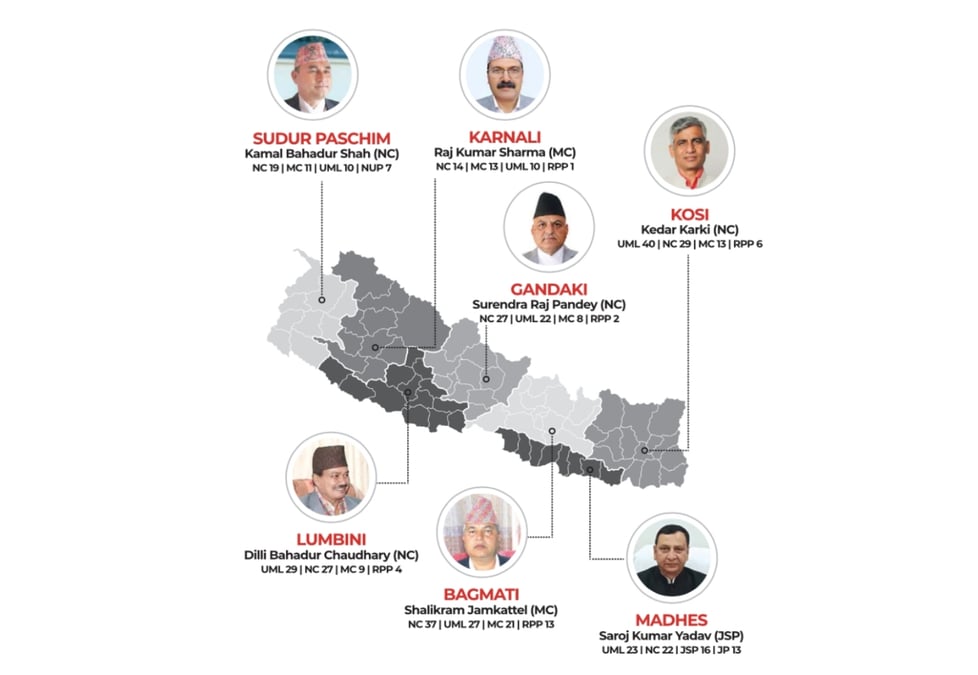
The Chief Ministers from all seven provinces have put up a united front against the centre with a list of demands that would devolve constitutionally guaranteed power to them.
Among their demands is the passage of laws on autonomy, the authority over the police to be handed over, transfer of property currently used by the provincial governments, cooperation in law-making, use of natural resources including the forests, revenue collection and federal grants. They are demanding 50% of the share of national revenue to provinces and local governments, up from the existing 30%.
Read : The F word, Editorial
“Sub-national governments have been constitutionally empowered but only on paper,” says Devkota, adding that the provinces do not have enough civil service staff, which are still mobilised by the centre making them accountable only to the federal government.
The three levels of the government all have their roles clearly defined in the Constitution. The federal government is responsible for defence, foreign policy, and guarding the national border, as well as setting minimum standards for education and health care.
The provinces are supposed to create new job opportunities, develop infrastructure and municipalities are tasked with grassroots service delivery.
But Kathmandu is still holding on to most of those powers and resources, not allowing provinces and local governments to actually function as per their mandate, says outgoing National Assembly member and former foreign minister from the UML Bimala Rai Paudyal.
“They do not have laws, they do not have enough civil service staff which means people cannot even access the little services they previously could. The centre is more in control than ever before, directing every move,” she adds.
Read also: Un-centralising the federal structure, Chandra Kishore
One of the main reasons for public frustration with federalism is the increased cost of maintaining provincial assemblies, ministers, line agencies in all seven provinces.
“Nepalis had thought federalism meant better service delivery, direct access to leaders they elected, but what they see instead is more and more ministers, their security guards and fancy cars, houses, it is natural that they are frustrated,” Rai Paudyal adds.
This means that those who were at the bottom of the socio-economic ladder, like Dalits and Madhesis in the Tarai are still where they were, and have felt no difference in their lives.
The public disenchantment is being exploited by parties like the Rastriya Prajatantra Party (RPP) which has conflated an anti-federalism platform with a call for a restoration of the Hindu kingdom — even though it is the fourth largest party in provincial assemblies.