

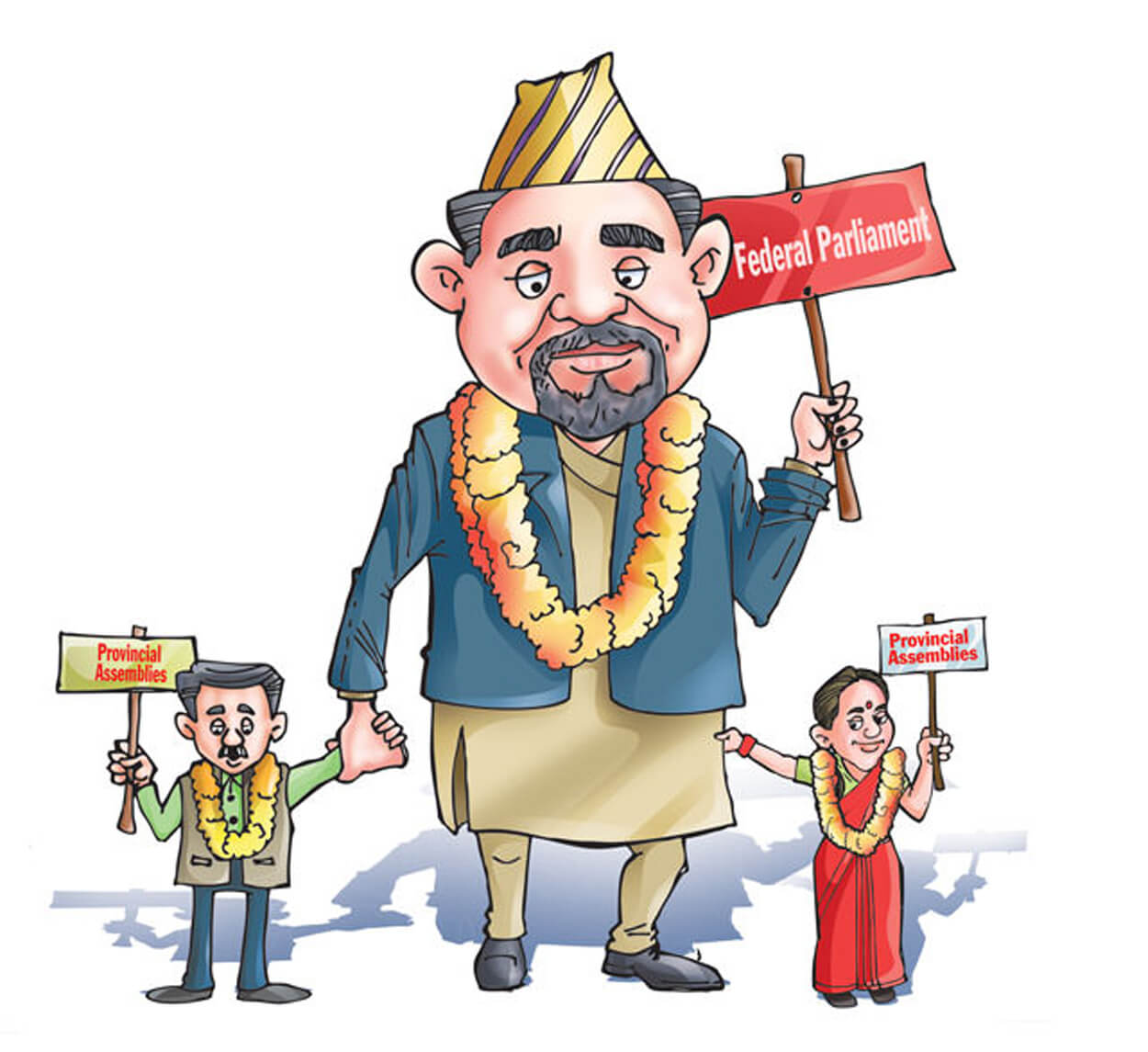
The 2015 Constitution and arrival of fresh political leaders through nationwide elections in 2017 promised a more equal and inclusive New Nepal. Political power would be devolved from elite-captured Kathmandu, and development balanced across all regions of the country, with greater appreciation for religious and ethnic diversity and increased participation of the marginalised in governance.
There is broad acceptance that this ongoing transformation will have durable effects on the quality of the country’s governance. Yet there remains widespread anxiety that those now in decision-making positions in government will shirk their responsibility and opt for cosmetic adjustments rather than fundamental change.
Part 2: Constitutional guardianship in Nepal, George Varughese and Iain Payne
The Constitution promises to bring government closer to citizens through a new federal structure wherein federal, provincial and local governments are coequal. With 753 local governments, seven new provinces, and local and provincial assemblies with more than 35,000 elected representatives, the executive and legislative levels of government are now functional and more visible to citizens.
However, minimal attention has been given to the judiciary’s key role in impelling constitutional values in government — starting with the rule of law and access to justice — and contributing to the success of the ongoing transformation.
This is neither mysterious nor casual: neglect of the judiciary is quite usual in Nepal. The undermining and sidelining of the judiciary over many years is part of a sordid story of collusion by political parties across the spectrum to weaken, co-opt and subordinate state institutions that deter impunity and constrain opportunism.
A quick measure of this neglect is the steady decline in the already-meagre annual allocation of state resources for the judiciary, today at its lowest levels of funding in years — a mere 0.34% of the government’s budget, down from 0.57% in 2015-16. Continued failure to invest in this co-equal branch of government — the one meant to constrain unlawful action — undermines the transformational project of the 2015 Constitution.