
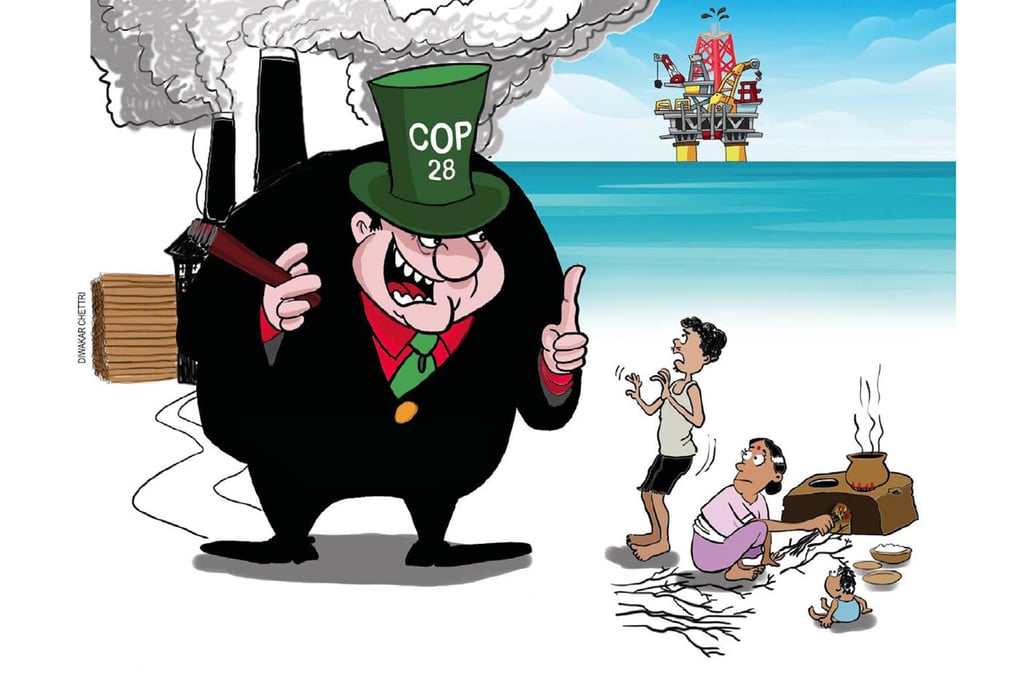
With weather records being broken planetwide, the COP28 climate summit in Dubai this month is being ridiculed as a greenwash even before it begins. The UAE is the world’s fifth biggest exporter of refined petroleum, and the president of the conference is the head of the Abu Dhabi National Oil Company (ADNOC).
There is an even bigger irony: Expo City in Dubai is being readied for the conference 30 November-12 December by migrant workers from Nepal and other South Asian countries labouring outdoors in 42°C heat.
“Greenwashing, that is exactly what it is going to be,” says Shilshila Acharya of Avni Center for Sustainability in Kathmandu. “Every day we are bombarded with one dire projection after another which needs emergency action, but we now have oil barons leading climate talks.”
She adds: “COPs have become a necessary evil but having this summit in the UAE sends the wrong message. The fossil fuel industry will obviously protect its own interests. We know the problems, we know the solutions but we do not have the right people in decision-making positions.”
In September, the human rights group FairSquare found evidence of Asian and African migrants working outdoors in excessive heat and humidity despite laws prohibiting it when the wet-bulb temperature exceeds 25°C.
Humans can handle wet-bulb temperatures up to 35°C for a limited time, but above that the body can no longer effectively cool itself via perspiration. Most Gulf countries have summer daytime curfew hours, but FairSquare found migrants working at the COP28 conference site even when the wet-bulb temperature reached 33°C.
Similar charges were made ahead of the 2022 Qatar World Cup when South Asian migrant workers were similarly made to work outdoors building football stadiums with many fatalities.
Nepal and other South Asian nations hope that the Dubai summit will take steps to set up the Loss and Damage Fund to help cope with climate-induced disasters. But the Biden administration has outright rejected it, and other industrialised countries are not too keen.
In July, COP28 president Sultan Al Jaber said the summit would fast-track phase out of fossil fuels, push climate finance, and allow climate activists access.
Bangladeshi climate scientist Saleemul Huq was a strong proponent of the Loss and Damage Fund, but passed away suddenly this week in Dhaka. In an op-ed printed posthumously in the Guardian 1 November and co-authored by Farhana Sultana of Syracuse University, he wrote: ‘The fossil fuel industry continues to produce, maintain and benefit from greenhouse gas emissions, and must fundamentally change its business model. Meanwhile, greater efforts by local governments, civic groups and nonprofits remain crucial.’