
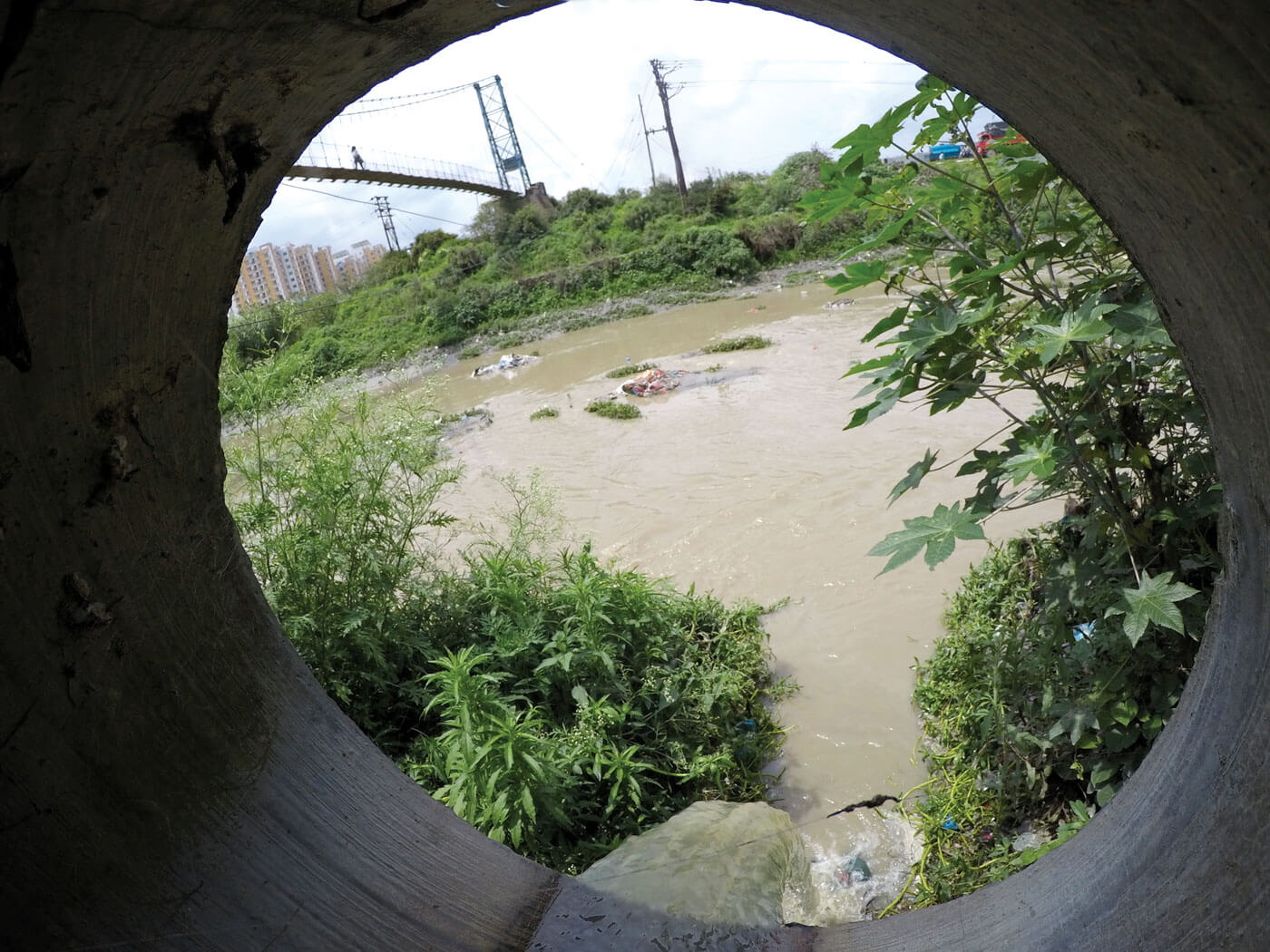
At personal, family, community or national levels, we Nepalis are generally not given to maintaining high hygienic standards. Waste management is not our forté. Littering is a national trait, we are genetically programmed to dump garbage at our own doorstep, we let household sewage flow into the drainage system which empties into the river we worship.
Jesuit missionaries who were the first European travellers to pass through the Nepal Valley en route from Tibet to India in the 17th century described the towns here as the dirtiest they had seen in their journey. In those days, that was saying something.
Read also: Toilet trained, Sonia Awale
Granted, Kathmandu eradicated open defecation in the streets within one generation. But other than that, we have regressed in every other respect of urban management, acquiring an international reputation for polluting our rivers, poisoning the air, and tolerating squalour.
Google Mt Everest, and the top news items will be about expedition garbage. Search Kathmandu Airport and this pops up: fetid toilets and a terminal building redolent with the odour of urine. Kathmandu is no longer known as a valley with historic temple towns, but a dust bowl with garbage landfills along a reeking river, and air so toxic it is unbreathable.
Read also: Nature calls, Sonia Awale
We spoke to anthropologists, urban planners, ecologists and governance experts to get to the bottom of this chronic failure to pick up after ourselves. They said the problem is not confined to Nepal: disregard for waste management pervades the subcontinent from Peshawar to Chittagong.
Flush toilets were invented during the Indus Valley civilisation, but today Pakistan’s rivers are sewers. Mass defecation by the tracks greets passengers on early-morning train rides in northern India. Plastic landfills are new topographical features on Dhaka’s outskirts.
Are there cultural reasons that span religions, ethnicities and nationalities for this regional inability to recognise and handle waste? Is it the inherent fatalism in our societies? Does it have a gender angle in our patriarchies? Are individualism, greed and selfishness factors? Are we hardwired to wallow in our own waste?
Read also: Where to take a dump?, Bhushan Tuladhar
Finding an excuse in cultural determinism for unhygienic behaviour is a cop-out. The reasons lie instead in the failure of education, collapse of governance, lack of accountability, in corruption and impunity. It is filthy politics that force people to live in filth. Dirty streets are a metaphor for dirty politics.